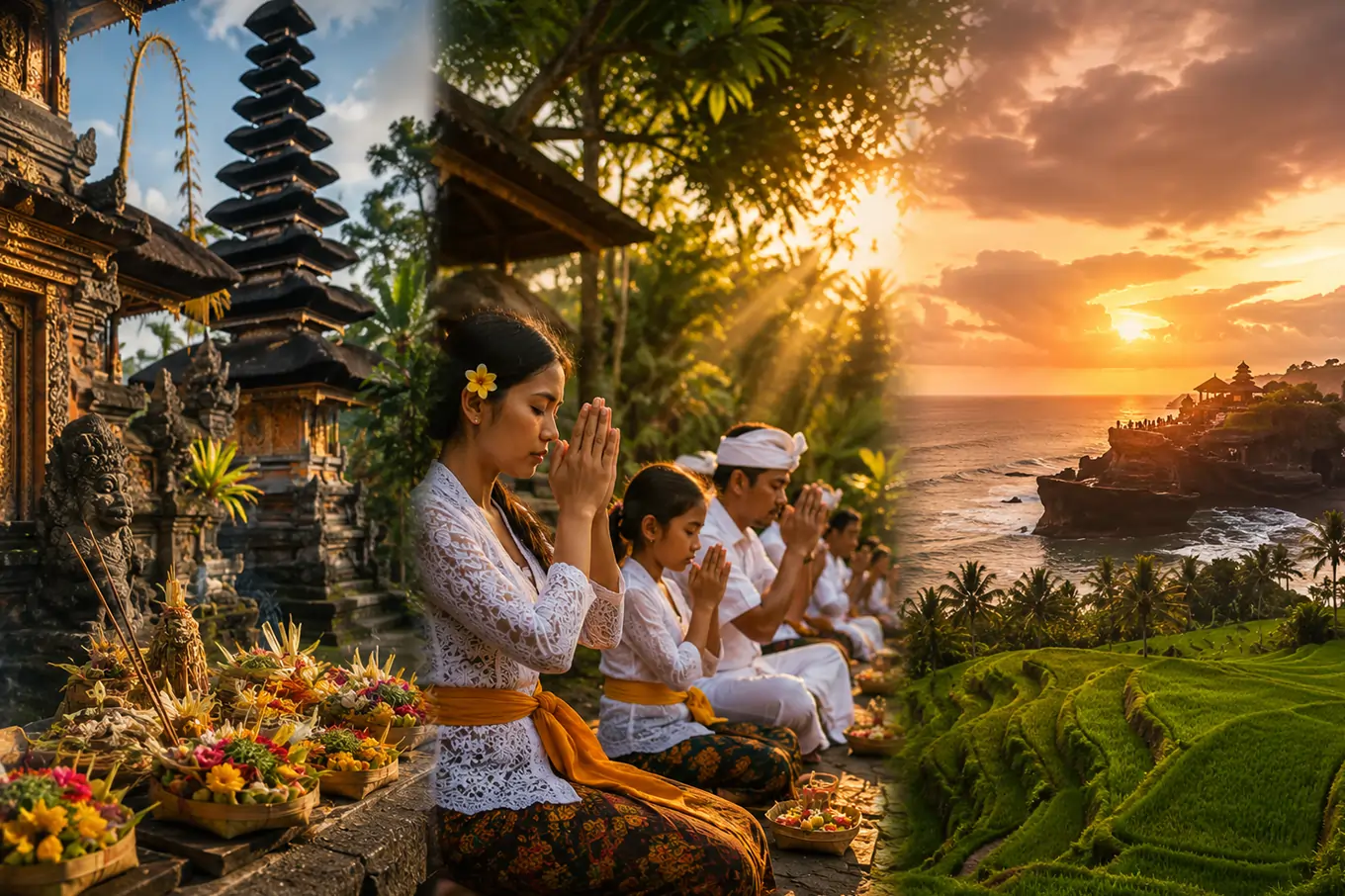
What makes Bali feel different from other destinations around the world? Beyond its beautiful landscapes and vibrant culture, there is a deeper philosophy that shapes everyday life across the island. Known as bali tri hita karana, this traditional concept has guided Balinese communities for generations and continues to influence how people interact with spirituality, society, and the environment.
What Is Tri Hita Karana?
Bali Tri Hita Karana is a traditional Balinese philosophy that guides how people live in balance with themselves, others, nature, and spiritual values. The phrase tri hita karana comes from Sanskrit and Balinese roots: tri means three, hita means happiness or prosperity, and karana means causes. Together, the concept refers to the three causes of well being and harmonious living.
For centuries, bali tri hita karana has become an essential foundation of Balinese culture. Rather than being viewed only as a religious idea, tri hita karana is practiced as a daily lifestyle. It influences social relationships, environmental care, community activities, architecture, and even economic development across the island.
People often describe bali tri hita karana as the philosophy that keeps Bali unique despite modernization and growing tourism. It reflects the belief that true happiness cannot be achieved through material success alone but through maintaining harmony in every aspect of life.
Today, visitors who explore Bali can still observe how tri hita karana remains deeply integrated into local traditions and public life.
The Three Principles of Harmony
At the heart of bali tri hita karana are three interconnected principles that create balance and sustainable living.
1. Parahyangan: Harmony Between Humans and the Divine
The first principle focuses on spiritual connection. In tri hita karana, people are encouraged to maintain a respectful and meaningful relationship with God.
This value can be seen throughout Bali in daily offerings, temple ceremonies, and religious celebrations. Balinese communities dedicate time to spiritual practices because they believe inner peace begins with gratitude and devotion.
Through this principle, bali tri hita karana teaches that spiritual awareness strengthens personal well being and social harmony.
2. Pawongan: Harmony Among People
The second element of bali tri hita karana emphasizes healthy relationships between individuals and communities.
Balinese society values cooperation, mutual respect, and collective responsibility. Community gatherings, local ceremonies, and neighborhood support systems demonstrate how social harmony is maintained.
In tri hita karana, people are encouraged to prioritize understanding, empathy, and shared prosperity. This principle creates strong social bonds that continue to define Balinese identity.
3. Palemahan: Harmony Between Humans and Nature
The third principle highlights environmental responsibility.
According to bali tri hita karana, humans should live in balance with the natural world instead of exploiting it. Land, water, forests, and surrounding ecosystems are treated with respect because they support life and future generations.
This value appears in traditional irrigation systems, local environmental initiatives, and the design of many Balinese spaces that integrate natural surroundings into everyday living.
Together, these three principles form the foundation of tri hita karana and explain why harmony remains central to Balinese culture.
How Tri Hita Karana Shapes Daily Life
The influence of bali tri hita karana can be found in ordinary daily routines across the island.
Each morning, many Balinese families prepare offerings as a symbol of gratitude and spiritual connection. Community members also participate in local activities and ceremonies to strengthen social relationships.
Traditional housing layouts often reflect tri hita karana by organizing spaces to create balance between spiritual, social, and environmental functions. Public areas and homes are commonly designed to support peaceful interaction while preserving open spaces.
Education and family values also reflect bali tri hita karana. Children are introduced early to concepts of respect, responsibility, and environmental awareness.
In agriculture, farmers continue to preserve cooperative systems that support shared water management and collective success. These practices demonstrate that tri hita karana is not simply an idea discussed in cultural settings it actively shapes decisions and behaviors.
Because of this philosophy, many residents view success as something broader than economic achievement. Personal fulfillment comes from maintaining healthy relationships, caring for nature, and practicing spiritual values.
The Role of Tri Hita Karana in Tourism
As Bali became one of the world’s most recognized travel destinations, bali tri hita karana also evolved into an important principle for sustainable tourism.
Many tourism businesses and hospitality providers seek inspiration from tri hita karana by creating environments that respect local culture, support communities, and reduce environmental impact.
Hotels, co-living spaces, wellness retreats, and tourism initiatives increasingly focus on preserving cultural identity while offering meaningful experiences for visitors.
The influence of bali tri hita karana encourages travelers to experience Bali beyond beaches and attractions. Visitors are invited to understand local customs, support community based activities, and appreciate the island’s spiritual and environmental values.
Responsible tourism aligns naturally with tri hita karana because it promotes balance between economic growth, cultural preservation, and ecological sustainability.
This approach helps ensure that Bali remains a destination where local traditions continue to thrive alongside global tourism.
Lessons from Balinese Philosophy
The enduring relevance of bali tri hita karana offers lessons that extend beyond Bali itself.
First, the philosophy reminds people that well being depends on balance rather than constant growth. Success becomes more meaningful when relationships, spirituality, and environmental care receive equal attention.
Second, tri hita karana demonstrates that communities become stronger through cooperation and shared values.
Third, the philosophy highlights the importance of protecting natural resources as part of everyday responsibility.
Modern lifestyles often prioritize speed and productivity, but bali tri hita karana encourages reflection, connection, and sustainability.
Whether applied personally, professionally, or socially, the values within tri hita karana provide a practical framework for building a more balanced and fulfilling life.
If you visit Bali, you can stay at Alzeto Co Living, one of the co-living spaces in Bali for tourism who want to relax and connect.
Published on 30 June 2026

