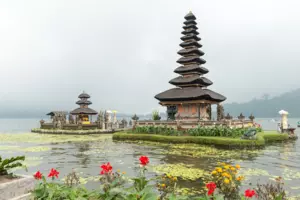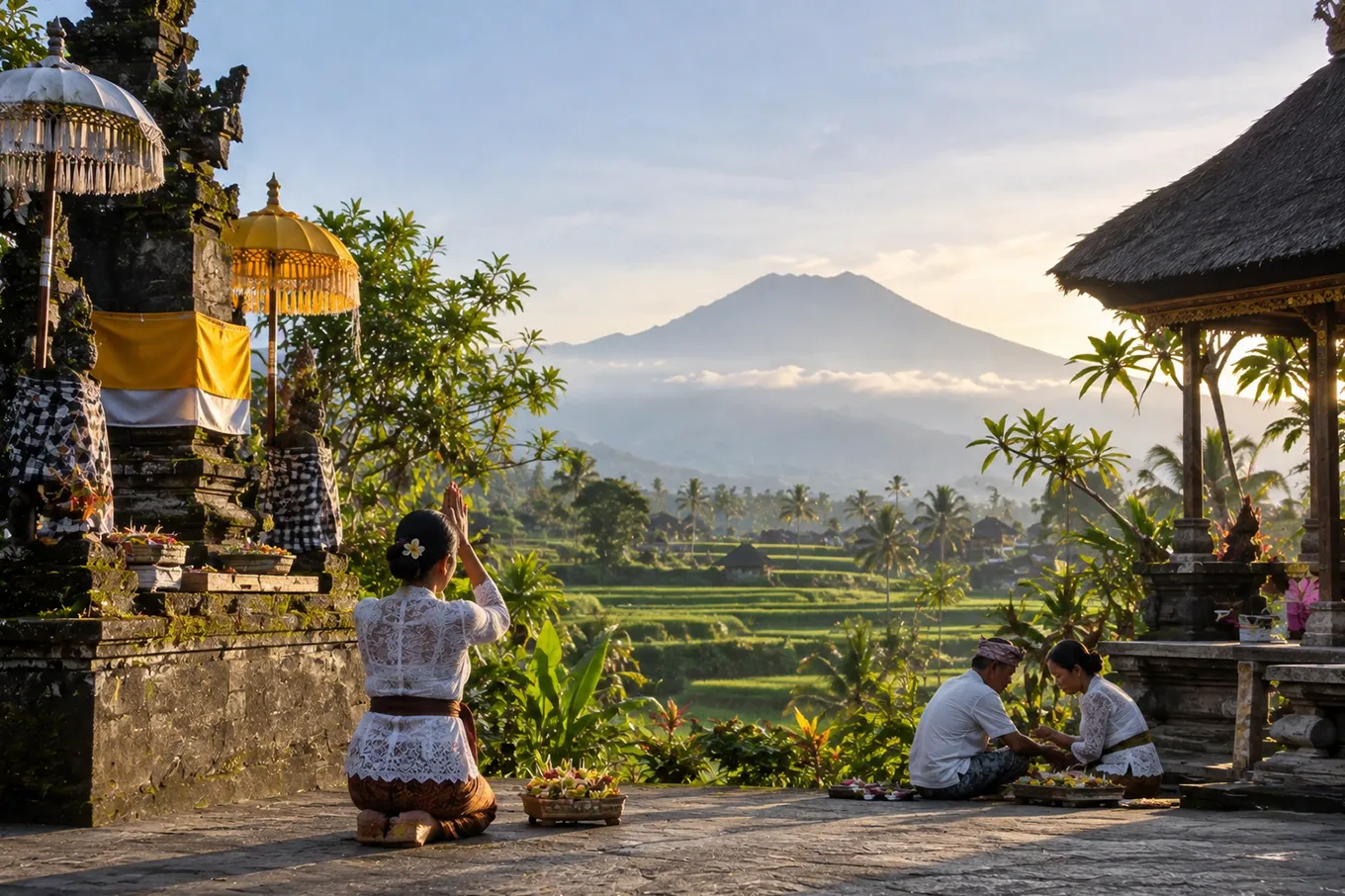
Bali is known for its beautiful beaches, traditional temples, and unique cultural traditions. However, behind many aspects of Balinese life is a philosophy that emphasizes harmony and balance. One of the most important concepts is tri hita karana, a principle that connects spiritual life, relationships between people, and the natural environment.
Understanding the tri hita karana meaning can help visitors see Bali from a deeper cultural perspective. This philosophy is not only found in religious ceremonies but can also be seen in community traditions, daily life, architecture, agriculture, and the way people interact with nature.
What is Tri Hita Karana?
Tri Hita Karana is a Balinese philosophy about living in harmony. The concept is rooted in Hindu traditions in Bali and encourages balance between spiritual life, relationships with other people, and the natural environment. Rather than being limited to religious ceremonies, this philosophy can be reflected in daily habits, community activities, architecture, agriculture, and tourism.
For visitors, understanding this philosophy offers a useful way to see Bali beyond beaches and attractions. It helps explain connections among temples, villages, rice fields, and community gatherings.
What is the Meaning of Tri Hita Karana?
The tri hita karana meaning can be understood through its name. “Tri” refers to three, “Hita” means prosperity, happiness, or well being, and “Karana” means cause or way. Together, the tri hita karana meaning refers to three causes or paths that support harmony and well being.
The tri hita karana meaning suggests that a balanced life requires more than individual success. People are encouraged to respect the divine, maintain good relationships, and care for nature.
Understanding the tri hita karana meaning also provides cultural context for visitors. A temple ceremony may represent a relationship with God, a village meeting can strengthen social connections, and maintaining an irrigation system can demonstrate respect for nature. These activities may look different, but they can all reflect the same principle of balance.
What are the Three Principles of Tri Hita Karana?
The three principles are Parahyangan, Pawongan, and Palemahan, forming the foundation of this philosophy.
Parahyangan focuses on the relationship between humans and the divine. Balinese Hindus express this relationship through prayer, temple ceremonies, offerings, and other religious practices. Temples are important spaces for spiritual activities and community worship.
Pawongan concerns relationships between people. Respect, cooperation, mutual assistance, and community responsibility are important parts of this principle. Traditional village organizations and communal ceremonies show how social relationships can be maintained through shared responsibilities.
Palemahan refers to the relationship between humans and the natural environment. Caring for water, land, plants, animals, and surrounding spaces is part of this principle. The Subak irrigation system shows how agriculture and community cooperation can connect with spiritual values.
How does Tri Hita Karana influence Balinese life?
tri hita karana meaning influences Balinese life in ways that can be seen in homes, villages, workplaces, and ceremonies. Balinese architecture often considers spiritual and environmental relationships when organizing spaces. Homes and community areas can include spaces for worship, family activities, and interaction with the surrounding environment.
In rural areas, the philosophy can be reflected in farming traditions and water management. Farmers depend on cooperation to manage irrigation, while religious ceremonies are connected to agricultural cycles. This demonstrates how the three dimensions of this philosophy can operate together instead of existing separately.
Community life is another important example. Balinese people may participate in communal activities, ceremonies, and preparations that require cooperation. Through these activities, tri hita karana meaning encourages people to consider how individual actions affect families, communities, and the environment.
The philosophy can also influence tourism. Some hotels, restaurants, cultural attractions, and community based tourism projects incorporate environmental care, local participation, and cultural traditions into their operations. This approach can therefore provide a framework for tourism that values both visitors and local communities.
How can visitors experience Tri Hita Karana in Bali?
Visitors can experience the philosophy by approaching Bali with cultural awareness and respect. Visiting a temple while following local dress and behavior guidelines is one way to understand the spiritual dimension. Joining a cultural activity with permission can also help visitors learn about community traditions.
Nature based experiences can provide another perspective. Exploring rice terraces, learning about traditional irrigation, or visiting a village conservation project can show how communities interact with their environment. Choosing locally owned businesses can also support local communities and encourage responsible tourism.
It is important to remember that tri hita karana meaning is not simply a tourism activity. It is connected to Balinese culture and everyday life. Visitors can appreciate it most by observing respectfully, learning from local people, and avoiding practices that damage cultural or natural spaces.
By understanding the tri hita karana meaning, travelers can gain a deeper appreciation of Bali’s culture. The philosophy highlights that happiness and prosperity are connected to spiritual awareness, healthy relationships, and environmental responsibility. These ideas can add depth to travel experiences.
If you visit Bali, you can stay at Alzeto Co Living, one of the co-living spaces in Bali for tourism who want to relax and connect.
FAQ
1. What does this Balinese philosophy mean?
It describes three ways of creating harmony between people, spirituality, and the natural environment.
2. What are its three main principles?
The three principles are Parahyangan, Pawongan, and Palemahan.
3. Is this philosophy connected to Hinduism?
Yes. It is closely connected to Balinese Hindu traditions and also influences social and environmental practices.
4. How can tourists experience this philosophy?
Visitors can respect local customs, learn about Balinese traditions, support communities, and care for the environment.
5. Why is this philosophy important in Bali?
It provides a cultural framework for balance, cooperation, spiritual connection, and environmental responsibility.
Published on 30 September 2026