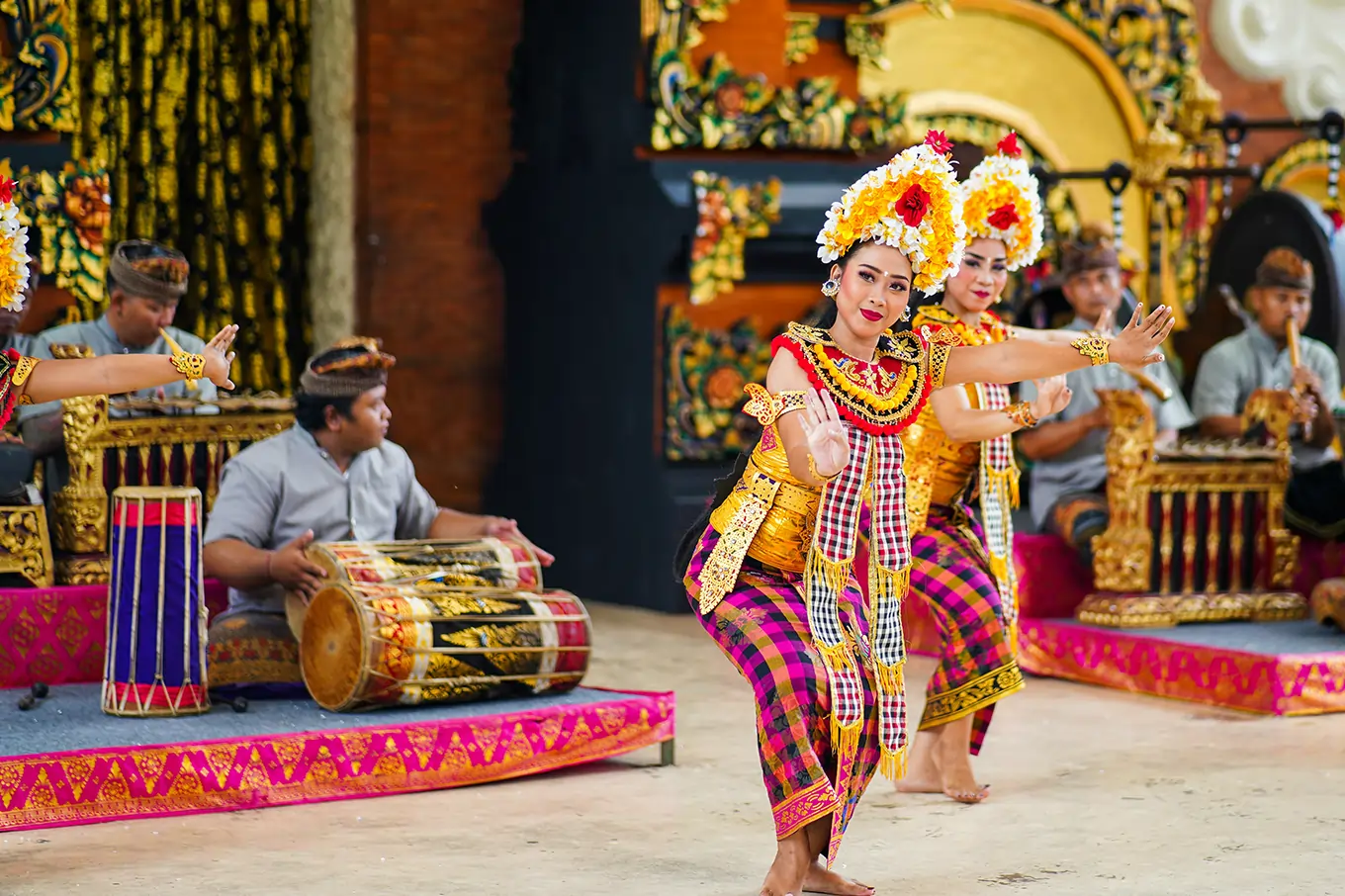
The Enchanting World of Balinese Dance and Sacred Movements
The world of balinese dance is deeply connected to Bali’s spiritual traditions, its ancient rituals, and its cultural heritage. More than just a form of entertainment, balinese dance is a sacred art that blends mythology, devotion, and expressive storytelling. Every gesture, expression, and movement in traditional balinese dance carries symbolism, making this art form one of the most fascinating cultural treasures in Indonesia.
The essence of balinese dance lies in the balance between physical expression and spiritual communication. Dancers perform not only to entertain but also to honor deities, invite blessings, and preserve centuries old stories. Because of this depth, balinese dance remains one of the most enchanting cultural experiences for anyone visiting Bali.
The Spiritual Foundation of Traditional Balinese Dance
At the heart of traditional balinese dance is the belief that dance is a bridge between the human world and the divine. Many dances are performed during temple ceremonies, festivals, and religious celebrations. Through graceful movements and expressive facial gestures, dancers transform themselves into characters from epics or spiritual entities.
In balinese dance, the eyes play a critical role. Sharp glances, shifting eye directions, and deliberate expressions give life to the story. Meanwhile, precise hand movements represent emotions, natural elements, or symbolic messages. These artistic elements are what give balinese dance its uniquely captivating charm.
Gamelan music accompanies almost every form of traditional balinese dance. The rhythmic melodies of gongs, metallophones, and drums guide the dancers and create a mystical atmosphere. Without gamelan, balinese dance would lose much of its emotional and spiritual power.
Types of Traditional Balinese Dance
1. Legong Dance
Legong is one of the most iconic forms of balinese dance, known for its elegance and precision. Usually performed by young girls, Legong involves highly detailed finger movements, graceful body gestures, and expressive facial mimicry. As part of traditional balinese dance, Legong is admired for its refined beauty.
2. Barong Dance
The Barong represents a mythical protective creature, symbolizing goodness and positive energy. This form of balinese dance portrays the eternal battle between good and evil. The Barong performance is considered sacred and often integrated into religious rituals.
3. Kecak Dance
Perhaps the most famous among tourists, the Kecak Dance stands out because it features no musical instruments. Instead, groups of men chant rhythmic “cak-cak-cak” sounds to create a hypnotic atmosphere. As a dramatic style of traditional balinese dance, Kecak often retells scenes from the Ramayana epic.
4. Rejang Dance
Rejang is a ceremonial dance performed by village women as an offering to the gods. It is one of the purest forms of balinese dance, rarely seen outside temple grounds. This dance highlights the spiritual purpose of traditional balinese dance, emphasizing harmony, devotion, and purity.
Costumes, Symbolism, and Cultural Meaning
Costumes in balinese dance are rich in color, detail, and symbolism. Gold headdresses, vibrant fabrics, and intricate accessories are chosen not only for beauty but for what they represent. In traditional balinese dance, each color and pattern carries meaning prosperity, purity, courage, or divinity.
The costumes elevate the overall experience of balinese dance, ensuring every performance feels majestic, sacred, and deeply rooted in Balinese identity.
Why Balinese Dance Attracts Travelers Worldwide
Visitors from across the globe are drawn to balinese dance because it offers more than entertainment it offers cultural immersion. Watching traditional balinese dance in its true setting, such as a temple or an open air stage under Bali’s night sky, is a memorable experience. It reveals the soul of Bali, its respect for tradition, and its strong spiritual foundation.
Travelers often describe balinese dance as mesmerizing, powerful, and transformative. The combination of music, movement, mythology, and energy creates a performance unlike any other in the world.
Preserving the Legacy of Traditional Balinese Dance
Communities in Bali play an essential role in preserving traditional balinese dance. Many children begin learning balinese dance at a young age, practicing in community halls or family compounds. This early introduction ensures that the legacy of balinese dance continues from one generation to the next.
Festivals, cultural schools, and temple ceremonies also help maintain the authenticity and spirit of traditional balinese dance, keeping it alive amid modern changes.
The world of balinese dance is enchanting, spiritual, and filled with meaning. Through sacred movements, dramatic storytelling, and symbolic costumes, traditional balinese dance expresses the soul of Bali and keeps its cultural heritage alive. Watching this captivating art form allows you to explore the island’s identity and witness traditions that have been cherished for centuries.
If you visit Bali, you can stay at Alzeto Co Living, one of the co-living places in Bali for tourists who want to relax and connect.
Published on 03 December 2025

