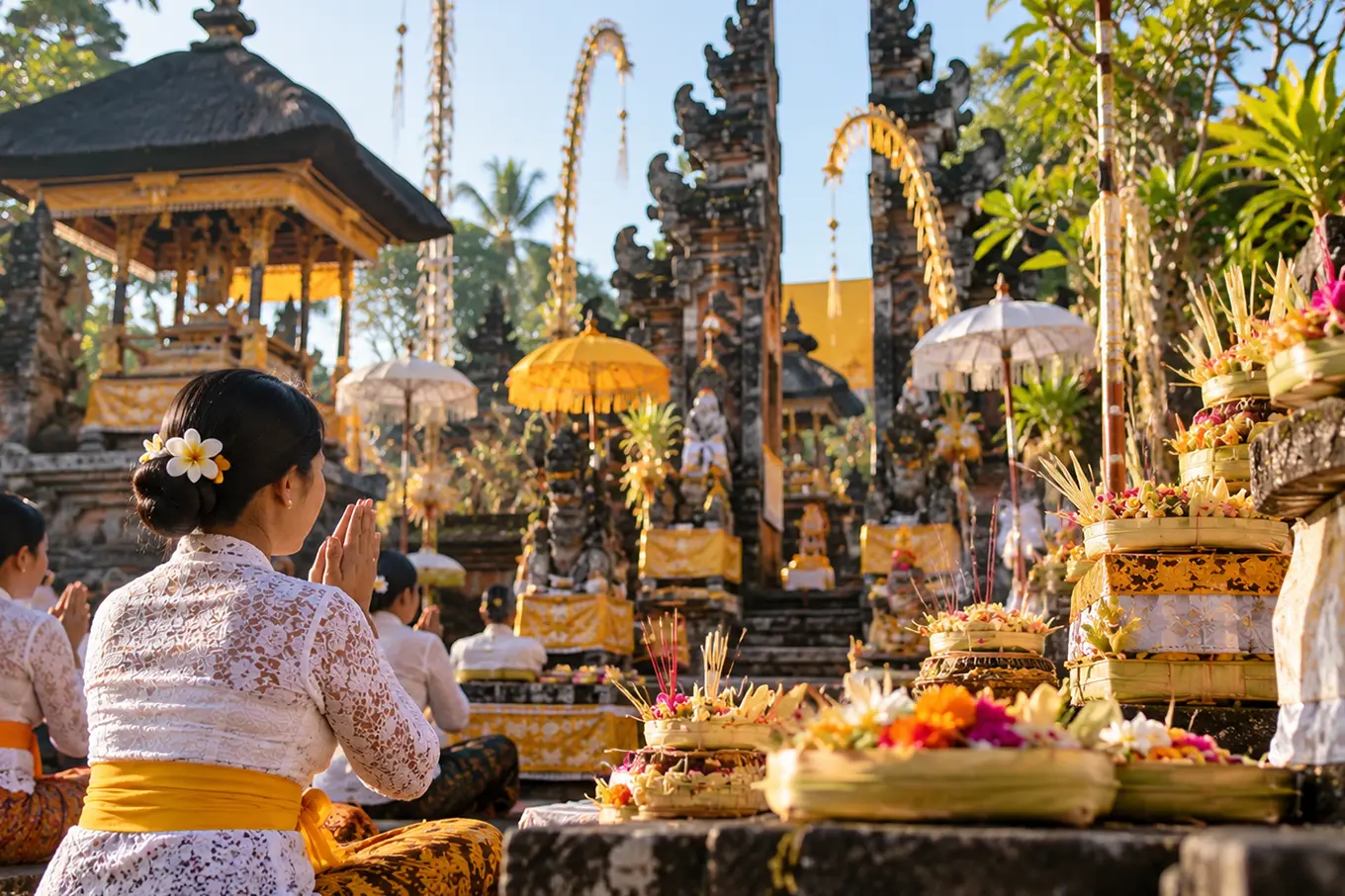
Saraswati Day Bali is an important Hindu celebration that honors the goddess of knowledge, wisdom, arts, and learning. This sacred day holds a special place in Balinese culture because education and spiritual understanding are considered essential parts of life. During the celebration, temples, schools, and homes become places of prayer, with offerings prepared to express gratitude for the knowledge people receive.
For travelers, experiencing Saraswati Day in Bali offers an opportunity to understand the island's spiritual traditions beyond its beaches and tourist attractions. You may notice books decorated with offerings, students wearing traditional clothing, and families gathering for prayers. Understanding the meaning behind these customs can help you appreciate the cultural significance of Saraswati Day Bali while visiting the island respectfully.
What Is Saraswati Day in Bali?
Saraswati Day in Bali is a Hindu holy day dedicated to Dewi Saraswati, the goddess associated with knowledge, wisdom, literature, music, and the arts. In Balinese Hindu tradition, knowledge is viewed as a valuable gift that helps people distinguish right from wrong and develop a deeper understanding of the world.
The celebration takes place every 210 days according to the Balinese Pawukon calendar, specifically on Saniscara Umanis Watugunung. Because the calendar follows a different cycle from the Gregorian calendar, the date changes each year.
During Saraswati Day Bali, devotees commonly pray at temples, schools, family shrines, and other sacred places. Books, manuscripts, and learning materials may receive special attention because they represent sources of knowledge. Students and teachers also participate in prayers to express gratitude for the opportunity to learn and share their understanding with others.
Although Saraswati Day is a religious observance, visitors can learn about Balinese values through its ceremonies, traditional clothing, and offerings.
What Is the Meaning of Saraswati Day?
The meaning of Saraswati Day goes beyond honoring a goddess. It represents the importance of knowledge as a foundation for personal growth, wisdom, and spiritual development. Balinese Hindus believe that knowledge should be used responsibly to support harmony, improve people's lives, and encourage positive behavior.
Dewi Saraswati is often depicted holding a book, a stringed instrument, prayer beads, and a water pot. Each object represents different aspects of wisdom, creativity, spiritual practice, and the flow of knowledge. These symbols explain why education and artistic expression are closely connected to the celebration.
For many Balinese families, Saraswati Day Bali is also an opportunity to reflect on how knowledge influences everyday decisions. Learning is not limited to formal education but includes understanding traditions, developing good character, and maintaining relationships with other people.
The celebration encourages devotees to appreciate books and learning materials as valuable resources rather than ordinary objects. It also reminds people that knowledge becomes more meaningful when combined with humility, responsibility, and compassion.
How Do Balinese People Celebrate Saraswati Day?
The celebration of Saraswati Day in Bali involves prayers, offerings, and activities connected to education and religious devotion. Customs can vary between families, schools, villages, and temples, but several traditions are widely observed across the island.
Common ways people celebrate include:
-
Praying at temples and family shrines: Devotees offer prayers to Dewi Saraswati and express gratitude for knowledge, wisdom, and creativity.
-
Preparing offerings: Families arrange flowers, fruits, and other traditional items as expressions of devotion.
-
Honoring books and learning materials: Books, manuscripts, and school materials may be placed in designated areas and blessed through prayers.
-
Wearing traditional clothing: Many devotees wear Balinese ceremonial attire when visiting temples or participating in religious activities.
-
Attending school ceremonies: Students and teachers may gather for prayers and religious observances at their schools.
During Saraswati Day Bali, some schools and educational institutions organize ceremonies that connect learning with spiritual values. Visitors may see students participating in prayers or families bringing offerings to temples.
If you encounter a ceremony while traveling, observe quietly and follow any instructions from temple staff or local residents. Ask permission before taking photographs, especially when people are praying.
What Should You Not Do on Saraswati Day?
Saraswati Day is considered sacred, so visitors should be mindful of local customs and religious practices. Although specific expectations may differ between communities, respectful behavior is important when visiting temples, schools, or other places where ceremonies take place.
Here are several things to avoid:
-
Disrespecting books or sacred materials: Books represent knowledge and may receive special attention during the celebration. Avoid deliberately stepping on, throwing, or treating them carelessly.
-
Disturbing religious ceremonies: Keep conversations quiet, avoid blocking devotees, and follow instructions from temple attendants.
-
Entering temples without following dress rules: Wear modest clothing and use a sarong and sash when required.
-
Taking photographs without permission: Always consider the privacy of worshippers and ask before photographing people or restricted areas.
-
Ignoring temple etiquette: Follow local guidance about where visitors may walk, stand, or enter.
Some traditional observances may also involve restrictions concerning reading or writing during particular parts of the day. These practices are not necessarily followed identically by every family or institution. Visitors should avoid assuming that one custom applies everywhere and should follow the guidance of local hosts.
Respecting these traditions makes it easier to experience Saraswati Day in Bali without disrupting the spiritual atmosphere.
What Offerings Are Made During Saraswati Day?
Offerings play an important role in Saraswati Day Bali because they express gratitude and devotion to Dewi Saraswati. Balinese Hindu offerings, commonly called banten, are carefully prepared using materials that carry religious and symbolic meanings.
The items used can vary according to family traditions, local customs, and the type of ceremony being performed. Common offerings include flowers, fruits, incense, and arrangements made from young coconut leaves.
Flowers are often used to symbolize purity and devotion, while incense accompanies prayers and creates a sacred atmosphere. Fruits and other food items may also be included as expressions of gratitude and respect.
Books and learning materials are another important part of the celebration. Rather than serving as offerings in exactly the same way as flowers or fruit, they are often honored through prayers and ceremonial arrangements. This practice reflects the belief that knowledge deserves appreciation and responsible use.
At homes, schools, and temples, offerings may be placed near family shrines, educational materials, or designated sacred areas. Visitors should not touch or move these arrangements without permission, even when they appear unattended.
Understanding these offerings helps travelers recognize that Saraswati Day is not simply a colorful cultural event. Every prayer and ceremonial object reflects a deeper connection between knowledge, gratitude, and spiritual life.
Experience Balinese Culture During Saraswati Day
Saraswati Day Bali offers travelers a meaningful opportunity to discover the island's Hindu traditions and the importance of knowledge in everyday life. From prayers and traditional offerings to ceremonies at schools and temples, the celebration reveals a side of Bali that goes beyond its popular tourist destinations.
If you visit Bali, you can stay at Alzeto Co Living, one of the co-living spaces in Bali for tourism who want to relax and connect. It can be a comfortable place to stay while exploring the island's cultural traditions, local communities, and memorable experiences.
Published on 16 October 2026