Bali is famous for its beautiful temples, traditional ceremonies, and deeply rooted spiritual traditions. Among the most meaningful Hindu celebrations on the island is the melasti ceremony, a sacred purification ritual held before Nyepi, Bali’s Day of Silence. This ceremony brings communities together to cleanse themselves physically and spiritually while preparing for the sacred day of silence.
For visitors, witnessing a melasti ceremony Bali can provide a deeper understanding of Balinese Hindu culture. The ceremony combines prayers, offerings, traditional clothing, sacred objects, and community processions. Although tourists can observe the ritual, it is important to understand that Melasti is a religious ceremony rather than a tourist attraction.
What is the Melasti Ceremony?
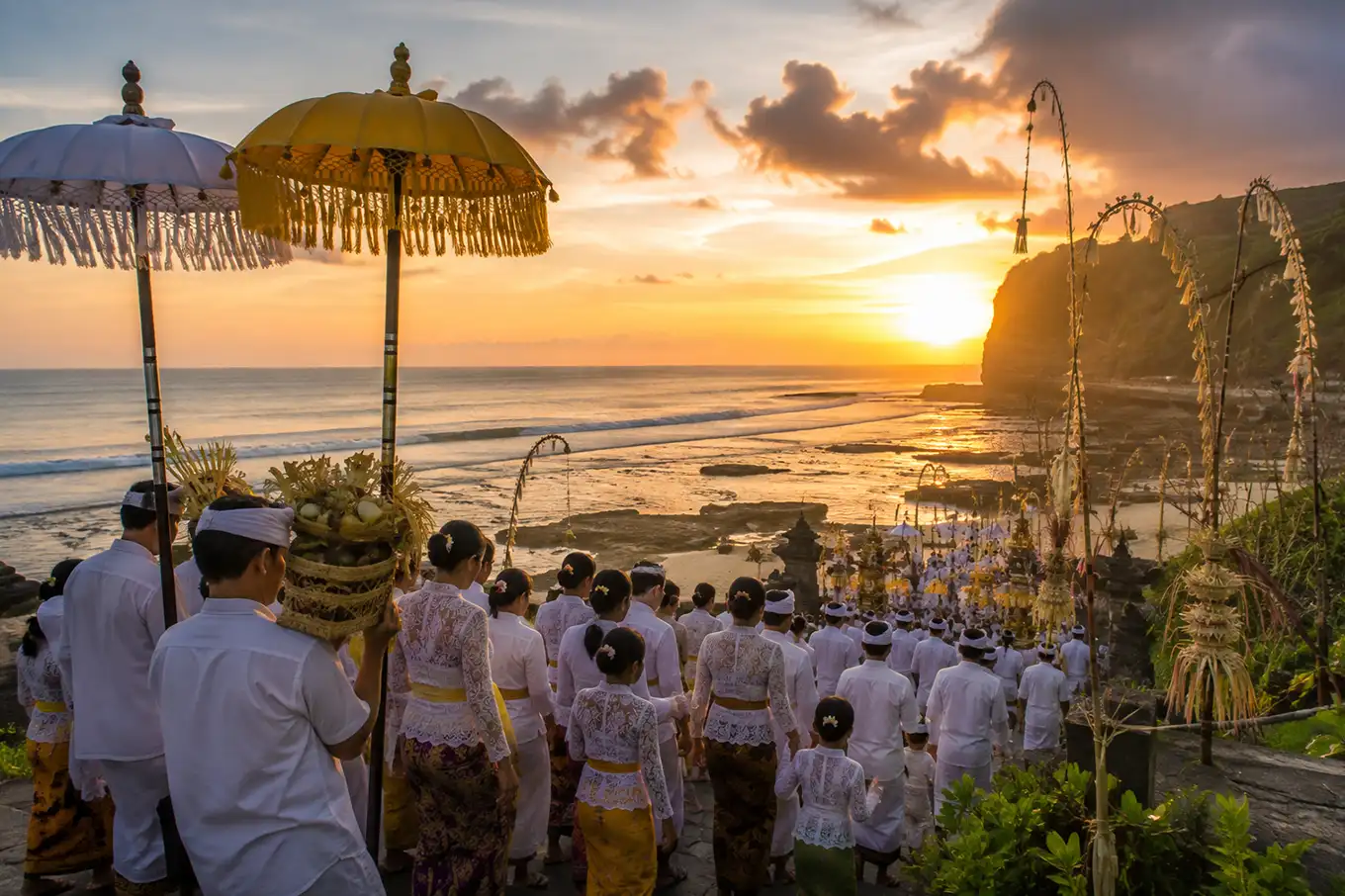
The melasti ceremony is a Hindu purification ritual traditionally conducted before Nyepi. It is intended to purify the body, mind, and environment while cleansing sacred objects belonging to temples. Balinese Hindu communities gather together and travel in processions toward the sea, rivers, lakes, or other sources of water considered spiritually significant.
Water plays an important role in the purification process. During the ceremony, participants pray and perform rituals near the water. Sacred objects from temples may also be carried in the procession and purified as part of the preparations for Nyepi.
The melasti ceremony Bali is also a community event. Families and members of traditional villages participate together, often wearing traditional Balinese clothing. Women may carry offerings on their heads, while men and other community members accompany sacred objects and ceremonial items.
The exact rituals and traditions can vary between villages and locations. This diversity is part of what makes Balinese Hindu culture so fascinating.
Why is Melasti Important in Bali?
The melasti ceremony has an important spiritual meaning for Balinese Hindus. It is closely connected with the concept of purification and preparation before Nyepi. The ritual is intended to cleanse impurities from individuals and the natural environment while preparing the community for a new spiritual beginning.
Melasti is also significant because it reinforces the relationship between people, nature, and spirituality. Water is viewed as an essential element for purification and life. By conducting rituals near the sea or other bodies of water, participants symbolically seek purification and balance.
Beyond its religious meaning, the melasti ceremony Bali strengthens community relationships. People work together to prepare offerings, organize processions, carry sacred objects, and participate in prayers. The ceremony therefore represents not only individual purification but also collective responsibility.
For travelers interested in Bali's culture, understanding the meaning behind the melasti ceremony can make the experience much more meaningful. Instead of simply watching a colorful procession, visitors can appreciate the spiritual and cultural values behind it.
When is the Melasti Ceremony Held?
The melasti ceremony is generally held several days before Nyepi, although the exact date and schedule can vary depending on the Balinese calendar and local traditions. Nyepi itself marks the Saka New Year and is observed with a full day of silence across Bali.
In the days leading up to Nyepi, communities prepare for several important traditions. Melasti is one of the major preparations before the Day of Silence. Participants gather at designated locations, often near beaches or other water sources, to conduct prayers and purification rituals.
Because the date of Nyepi changes according to the Balinese Saka calendar, the date of the melasti ceremony Bali also changes each year. Travelers planning to experience the ceremony should check the local schedule before visiting.
It is also important to remember that different villages may organize their ceremonies at different times. A procession in one area may not take place on exactly the same day as another community's ritual.
Where Can Tourists Watch the Ceremony?
Visitors can potentially observe a melasti ceremony in various parts of Bali, especially coastal areas where communities traditionally gather near the sea. Beaches and coastal temples may become gathering points for local communities during the days before Nyepi.
Popular tourist areas can offer opportunities to see processions, but smaller villages may provide a more intimate view of local traditions. However, travelers should not assume that every beach or temple will host a ceremony at a particular time.
The best way to experience a melasti ceremony Bali is to check local information, accommodation staff, tourism offices, or community announcements before heading to a location. This helps visitors avoid arriving at the wrong place or disturbing an ongoing religious ritual.
Photography may be possible in some areas, but visitors should always observe the atmosphere and follow local instructions.
What Etiquette Should Visitors Follow?
The melasti ceremony is a sacred religious event, so visitors should behave respectfully. Wearing appropriate clothing is one of the most important considerations. Avoid overly revealing clothing, especially when entering temple areas or observing religious activities.
Visitors should also maintain a respectful distance from participants and sacred objects. Do not touch ceremonial items, offerings, or objects being carried in the procession unless explicitly invited to do so.
Taking photographs should be done carefully. While the colorful clothing and processions can be visually impressive, visitors should avoid using flash or getting too close to people who are praying. If you are unsure whether photography is appropriate, ask a local guide or community member.
Silence and patience are also important. Avoid loud conversations, disruptive behavior, or blocking the procession. Remember that the melasti ceremony Bali is primarily a religious observance for the Balinese Hindu community.
Respecting these simple guidelines allows travelers to enjoy the cultural experience without interfering with the ceremony.
Experience Bali's Cultural Traditions
The melasti ceremony offers travelers an opportunity to see an important part of Bali's spiritual and cultural identity. From colorful community processions to sacred purification rituals near the water, the ceremony reflects the island's strong connection between spirituality, community, and nature.
Understanding the meaning of the melasti ceremony Bali can help visitors appreciate the tradition beyond its visual beauty. If you have the opportunity to witness the ceremony, approach it with curiosity, patience, and respect for the people participating in the ritual.
If you visit Bali, you can stay at Alzeto Co Living, one of the co-living spaces in Bali for tourism who want to relax and connect.
FAQ
1. What is the Melasti Ceremony?
The Melasti Ceremony is a Balinese Hindu purification ritual held before Nyepi to cleanse the body, mind, environment, and sacred temple objects.
2. Why is the Melasti Ceremony important?
It is important because it represents spiritual purification, preparation for Nyepi, and the connection between people, nature, and spirituality.
3. When is the Melasti Ceremony held?
The ceremony is generally held several days before Nyepi, but the exact date varies each year according to the Balinese Saka calendar and local traditions.
4. Where can tourists watch the Melasti Ceremony?
Tourists may observe the ceremony in coastal areas, beaches, and other locations where Balinese communities gather for purification rituals.
5. What should tourists do during the ceremony?
Visitors should dress respectfully, maintain distance from participants and sacred objects, avoid disruptive behavior, and ask permission before taking photographs.
Published on 09 September 2026