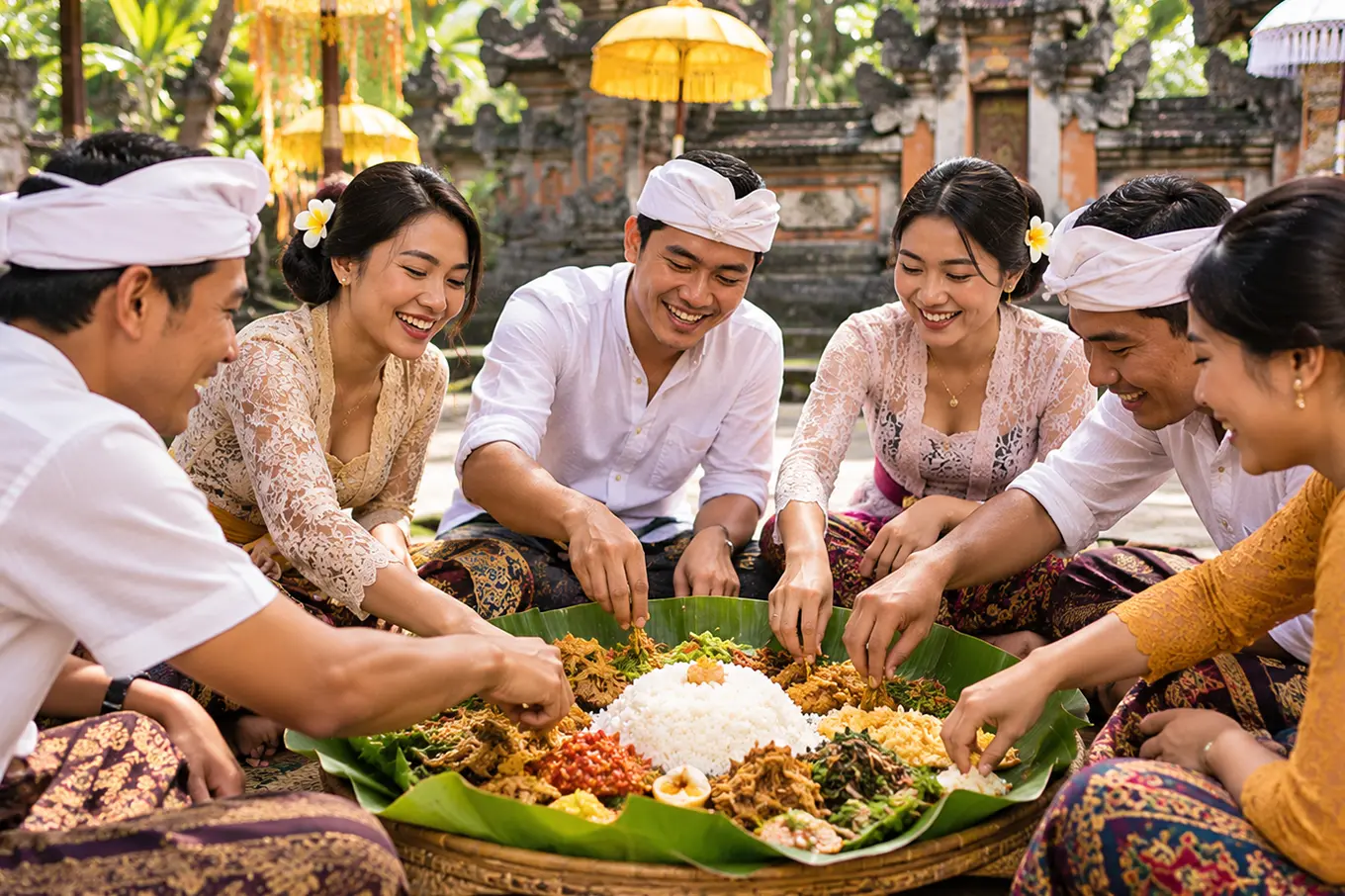
Bali is known for its beautiful landscapes, spiritual ceremonies, and rich cultural traditions. Beyond temples and traditional dances, the island also has a unique food culture that brings people together. One example is megibung, a traditional communal dining experience that reflects the importance of sharing, respect, and togetherness in Balinese society.
More than simply enjoying a meal, megibung allows people to gather, communicate, and strengthen relationships through food. This tradition is especially associated with Karangasem, a regency in eastern Bali where local communities continue to preserve it during cultural and religious occasions. Understanding megibung bali offers visitors a closer look at how food connects people with their heritage.
What Is Megibung in Balinese Culture?
Megibung is a traditional Balinese communal dining practice in which several people sit together in a circle and share food from common serving containers. Instead of receiving individual plates, participants enjoy rice, vegetables, and side dishes placed in the middle of the group.
The word comes from the Balinese term gibung, which refers to sharing or doing something together. The practice represents the idea that eating is not only about satisfying hunger but also about building relationships.
In megibung bali, participants usually sit on the floor and eat together using their right hands. Everyone shares the same dishes, creating an atmosphere where people can interact naturally regardless of their social background.
The tradition is commonly held during family gatherings, weddings, religious ceremonies, and other community celebrations. It remains an important expression of Balinese hospitality and social connection.
What Is the History and Origin of Megibung Bali?
The history of megibung is closely connected to the Kingdom of Karangasem during the 17th century. According to local historical accounts, the tradition was introduced by King I Gusti Agung Anglurah Ketut Karangasem around 1692.
At that time, the king was leading military expeditions to Lombok. During breaks from fighting, he encouraged his soldiers to sit together and share meals in a circular arrangement. The king reportedly joined them, creating a dining practice that helped strengthen unity among the troops.
This early practice eventually developed into a community tradition. What began as a way for soldiers to eat together became an important part of social and ceremonial life in Karangasem.
Today, megibung bali is still associated with the region's cultural identity. It is often organized during traditional celebrations and religious events, allowing families and neighbors to maintain connections while preserving customs passed down through generations.
How Is the Traditional Megibung Dining Ceremony Performed?
A traditional megibung gathering involves preparation, cooperation, and several dining customs. Before the meal begins, community members work together to prepare the food and arrange the dining area.
Participants are generally divided into groups called sela. Traditionally, each group consists of around eight people sitting in a circle. A shared portion of rice, known as gibungan, is placed in the center, while various side dishes are arranged around it as karangan.
In megibung bali, the oldest participant or designated group leader often has an important role in starting the meal. This person arranges or serves the accompanying dishes before inviting everyone to eat.
Participants are expected to wash their hands before eating and use their right hands when taking food. They should also avoid disturbing others, wasting food, or leaving the group before the meal is finished.
These customs make megibung more than an ordinary gathering. Every participant contributes to maintaining a respectful and comfortable dining atmosphere.
What Foods Are Typically Served During Megibung?
Food is one of the most interesting parts of megibung because the dishes showcase the flavors of traditional Balinese cuisine. The menu can vary depending on the location, occasion, and ingredients available in the community.
White rice is usually the main component, served in a shared container. It is accompanied by several traditional dishes, including:
-
Lawar: A traditional mixture of vegetables, grated coconut, herbs, and minced meat, prepared with Balinese spices.
-
Sate lilit: Minced meat mixed with seasonings, wrapped around bamboo sticks or lemongrass stalks, and grilled.
-
Ares: A traditional vegetable dish made from the soft inner stem of a banana tree, commonly cooked with spices.
-
Balung: A savory preparation made using bones and spices, often served as part of a traditional meal.
-
Sambal: A spicy condiment that adds flavor and heat to the shared dishes.
In megibung bali, food preparation is often a collective activity. Families and community members help cook, arrange, and serve the dishes. This cooperation makes the meal meaningful even before everyone sits down to eat.
What Cultural Values Does the Megibung Tradition Represent?
The most important meaning of megibung lies in the values it teaches. Sharing food from the same serving arrangement encourages participants to appreciate equality and recognize their connection with others.
First, the tradition represents togetherness. Sitting in a circle creates opportunities for conversation and helps strengthen relationships between family members, friends, and neighbors.
Second, it reflects respect and tolerance. Participants are expected to follow shared dining customs, consider other people's needs, and maintain good manners throughout the meal.
Third, megibung bali carries religious and cultural significance. When organized during ceremonies, the tradition becomes part of a wider expression of gratitude, cooperation, and respect for local customs.
It also demonstrates the importance of gotong royong, or mutual cooperation. Preparing a communal meal requires people to contribute their time, skills, and effort.
For travelers, experiencing megibung can provide a meaningful perspective on Balinese life beyond popular tourist attractions. It offers an opportunity to understand how everyday activities, such as sharing a meal, can preserve cultural identity and strengthen community relationships.
If you visit Bali, you can stay at Alzeto Co Living, one of the co-living spaces in Bali for tourism who want to relax and connect. It can be a comfortable place to stay while exploring the island's cultural traditions, discovering local communities, and experiencing the spiritual side of Bali.
Published on 20 November 2026