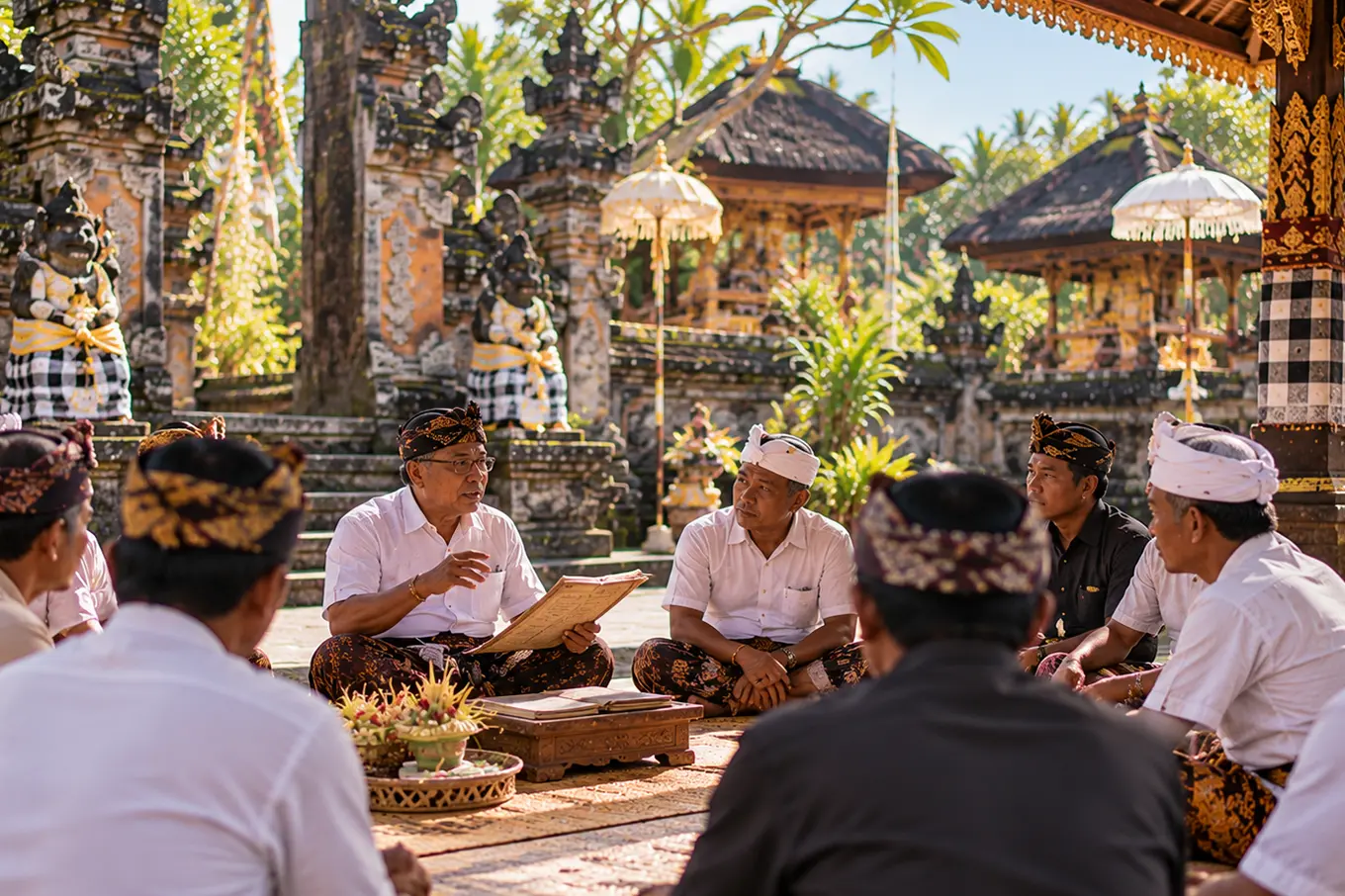
Bali is known for its temples, ceremonies, and strong sense of community. Behind many local traditions is a system of customary rules that helps residents organize shared responsibilities and preserve cultural values. Awig awig guides how members of a traditional village live together, care for communal spaces, and take part in social and religious activities. Understanding awig awig bali helps visitors see that Balinese culture is expressed not only through ceremonies, but also through everyday cooperation.
What Is Awig Awig in Bali?
Awig awig refers to customary rules agreed upon by a traditional village community in Bali. These rules describe the rights, duties, and expected conduct of community members. Rooted in local customs and shared values, their details can differ from one village to another.
The rules may cover participation in ceremonies, care for temples and public areas, community meetings, and responsibilities toward other residents. They can also explain how a village responds when someone does not fulfill an agreed duty. For this reason, the system is more than a list of restrictions: it provides a framework for cooperation and cultural continuity.
The phrase awig awig bali is often used when discussing the customary systems that help traditional villages maintain their identity. However, there is no single rulebook that applies identically across the island. Each community has its own history and priorities.
What Is the Purpose of Awig Awig?
The main purpose of these rules is to maintain order, balance, and mutual responsibility. Shared rules make expectations clearer when residents prepare ceremonies, maintain temples, or manage communal resources.
These customary agreements can support harmony between people, the environment, and spiritual life. In Balinese Hindu communities, these relationships are closely connected to local cultural and religious values. Rules may establish practical responsibilities, such as keeping shared spaces clean or contributing time and resources to village activities.
For visitors learning about awig awig bali, it is useful to recognize that the rules are connected to community life, not tourism alone. They help residents coordinate responsibilities and protect traditions in a changing society.
What Rules Are Included in Awig Awig?
The contents vary by village, but customary rules commonly address community duties, religious ceremonies, meetings, and the care or use of shared spaces. Some explain how residents contribute to temple festivals and other important events. Others outline expectations for maintaining village facilities and respecting sacred areas.
Rules may also cover attendance at meetings, collective work, community contributions, and procedures for resolving disputes. Consequences, where specified, follow local agreements and customary processes.
When discussing awig awig bali, local context matters. A rule relevant to one traditional village may not apply in the same way elsewhere. These regulations should be understood through the community that created them, rather than treated as a universal code for the whole island.
Who Creates the Awig Awig Rules?
The customary village community generally develops and recognizes these rules, with customary leaders and residents involved in discussion and agreement. Traditional village institutions are often known as desa adat. Their leaders help coordinate meetings, explain obligations, and oversee agreed procedures, although the process can vary by location.
Community participation matters because the rules reflect shared responsibilities and local priorities. Residents may discuss changes as circumstances shift, while considering inherited customs.
The phrase awig awig bali does not mean that one central authority writes identical regulations for every village. Each desa adat has its own social and cultural setting. Visitors who want to learn more can ask respectfully about local traditions and follow guidance from residents.
How Does Awig Awig Affect Daily Life in Bali?
These customary rules can influence daily life in ways visitors may not immediately notice. Residents may share responsibility for ceremonies, attend customary meetings, maintain temples, or contribute to communal work. These activities require planning and cooperation, and customary rules help organize responsibilities.
The rules shape how residents handle disagreements and care for shared spaces, supporting accountability and belonging.
For travelers, understanding awig awig bali offers a more thoughtful way to experience the island. When visiting temples or traditional villages, dress appropriately, respect restricted areas, follow posted guidance, and ask before photographing ceremonies or people. Remember that a local event may be a religious or community occasion rather than a performance for visitors.
Learning about awig awig reveals how communities sustain traditions while balancing inherited practices with contemporary life. Approaching them with curiosity and respect can make a visit to Bali more meaningful.
If you visit Bali, you can stay at Alzeto Co Living, one of the co-living spaces in Bali for tourism who want to relax and connect. It offers a place to unwind while discovering the island’s culture, traditions, and local communities.
Published on 20 October 2026

