Tumpek Landep is one of the most meaningful Hindu ceremonies in Bali, reflecting the island's deep spiritual traditions and cultural identity. While many visitors associate Bali with beautiful beaches and temples, taking time to understand Tumpek Landep offers a deeper appreciation of Balinese life.
If you have ever wondered what tumpek landep is, this sacred celebration focuses on blessing objects made of metal while reminding people to sharpen their minds, wisdom, and character. Today, Tumpek Landep remains an important religious event observed by Balinese families across the island.
What is Tumpek Landep?
Many travelers ask, tumpek landep is a religious ceremony or a cultural festival? The answer is both. Tumpek Landep is a sacred Hindu ceremony dedicated to Sang Hyang Pasupati, the divine manifestation believed to bless objects made from metal with spiritual energy.
Historically, Tumpek Landep was associated with traditional weapons such as keris, spears, and farming tools. Over time, the ceremony has expanded to include modern items made from metal, including motorcycles, cars, bicycles, office equipment, and even work tools.
More importantly, Tumpek Landep symbolizes sharpening one's intellect. The word landep means "sharp," referring not only to physical objects but also to wisdom, awareness, and clear thinking. This deeper philosophy explains why understanding tumpek landep is more than simply observing objects being blessed.
For Balinese Hindus, Tumpek Landep serves as a reminder that intelligence and technology should always be guided by ethics and compassion.
Why Do Balinese Celebrate Tumpek Landep?
The primary purpose of Tumpek Landep is to express gratitude for the tools and technology that support daily life while asking for safety and blessings.
Many people mistakenly think tumpek landep is only about blessing vehicles. In reality, the ceremony represents a balance between material progress and spiritual responsibility.
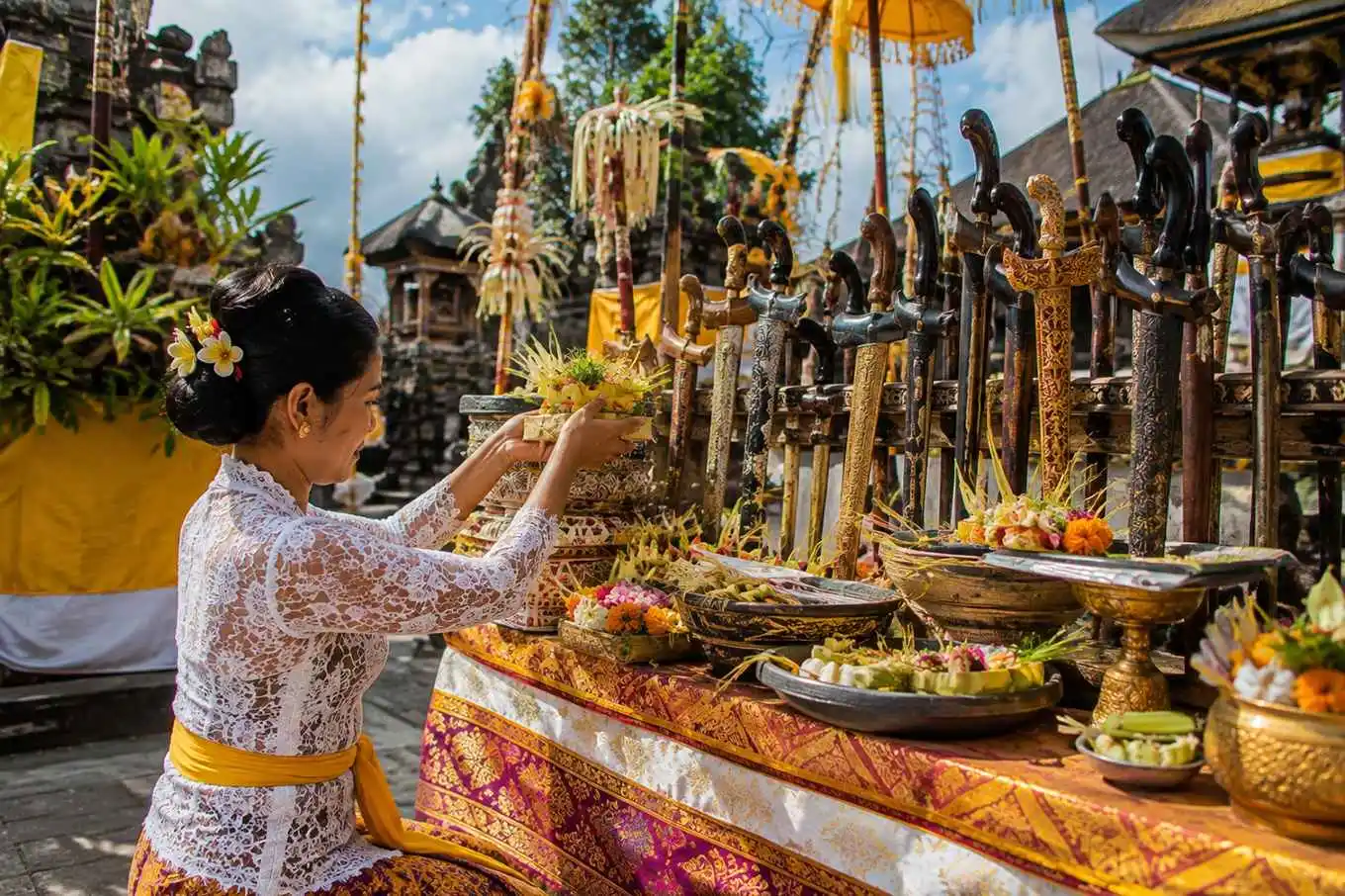
During Tumpek Landep, families prepare offerings known as banten, decorate important objects, and conduct prayers together. These offerings symbolize thankfulness for the benefits these objects provide.
Spiritually, Tumpek Landep encourages individuals to:
-
Sharpen wisdom instead of relying only on physical strength.
-
Use technology responsibly.
-
Show gratitude for everyday tools.
-
Pray for protection during work and travel.
-
Maintain harmony between humans, nature, and God.
Because of these values, Tumpek Landep continues to remain relevant even in today's modern society.
Learning tumpek landep is also helps visitors understand how Balinese traditions successfully adapt to changing times without losing their spiritual essence.
What Objects Are Blessed During Tumpek Landep?
One of the most interesting aspects of Tumpek Landep is the wide variety of objects included in the blessings.
Traditionally, priests blessed:
-
Keris (traditional daggers)
-
Spears
-
Farming equipment
-
Metal household tools
Today, Tumpek Landep also includes many modern items such as:
-
Cars
-
Motorcycles
-
Bicycles
-
Computers
-
Construction equipment
-
Office machinery
-
Musical instruments containing metal
-
Factory equipment
Some businesses also organize special ceremonies for company vehicles and machinery during Tumpek Landep, believing these blessings promote safety and smooth operations.
Understanding tumpek landep is easier when viewed as a ceremony expressing gratitude toward everything that helps humans perform their daily responsibilities.
Visitors may notice offerings placed on vehicle dashboards, handlebars, or machinery throughout Bali during Tumpek Landep, creating a unique cultural atmosphere across the island.
When is Tumpek Landep Celebrated?
Unlike holidays based on the Gregorian calendar, Tumpek Landep follows the Balinese Pawukon calendar.
The ceremony occurs every 210 days, specifically on Saniscara Kliwon Wuku Landep. As a result, the celebration does not fall on the same calendar date every year.
On Tumpek Landep, many Balinese begin the day by preparing colorful offerings before visiting family temples or local temples to pray. After prayers, offerings are placed on important metal objects around homes and workplaces.
Since tumpek landep is celebrated according to the Pawukon calendar, travelers planning to witness the ceremony should check local event schedules before visiting Bali.
Experiencing Tumpek Landep firsthand allows visitors to observe authentic religious practices that continue to shape Balinese daily life.
Can Tourists Observe the Ceremony?
Yes. Tourists are generally welcome to observe Tumpek Landep, provided they do so respectfully.
If you plan to witness Tumpek Landep, consider following these guidelines:
-
Wear modest clothing when visiting temples.
-
Follow instructions from local residents.
-
Avoid interrupting prayer ceremonies.
-
Ask permission before taking close-up photographs.
-
Maintain quiet behavior during religious rituals.
Remember that tumpek landep is primarily a sacred religious ceremony rather than a tourist attraction. Respectful observation allows visitors to appreciate the cultural significance without disturbing worshippers.
Many cultural villages and temples provide opportunities for visitors to witness the ceremony from designated public areas. Local guides can also explain the meaning behind each offering and ritual, helping tourists gain a richer understanding of Tumpek Landep and Balinese Hindu traditions.
For anyone interested in authentic cultural experiences, witnessing Tumpek Landep offers valuable insight into how spirituality, gratitude, and community remain deeply connected in Bali. Rather than simply blessing physical objects, Tumpek Landep reminds everyone that true strength comes from wisdom, responsibility, and respect for both tradition and modern life.
If you visit Bali, you can stay at Alzeto Co Living, one of the co-living spaces in Bali for tourism who want to relax and connect.
Published on 13 August 2026