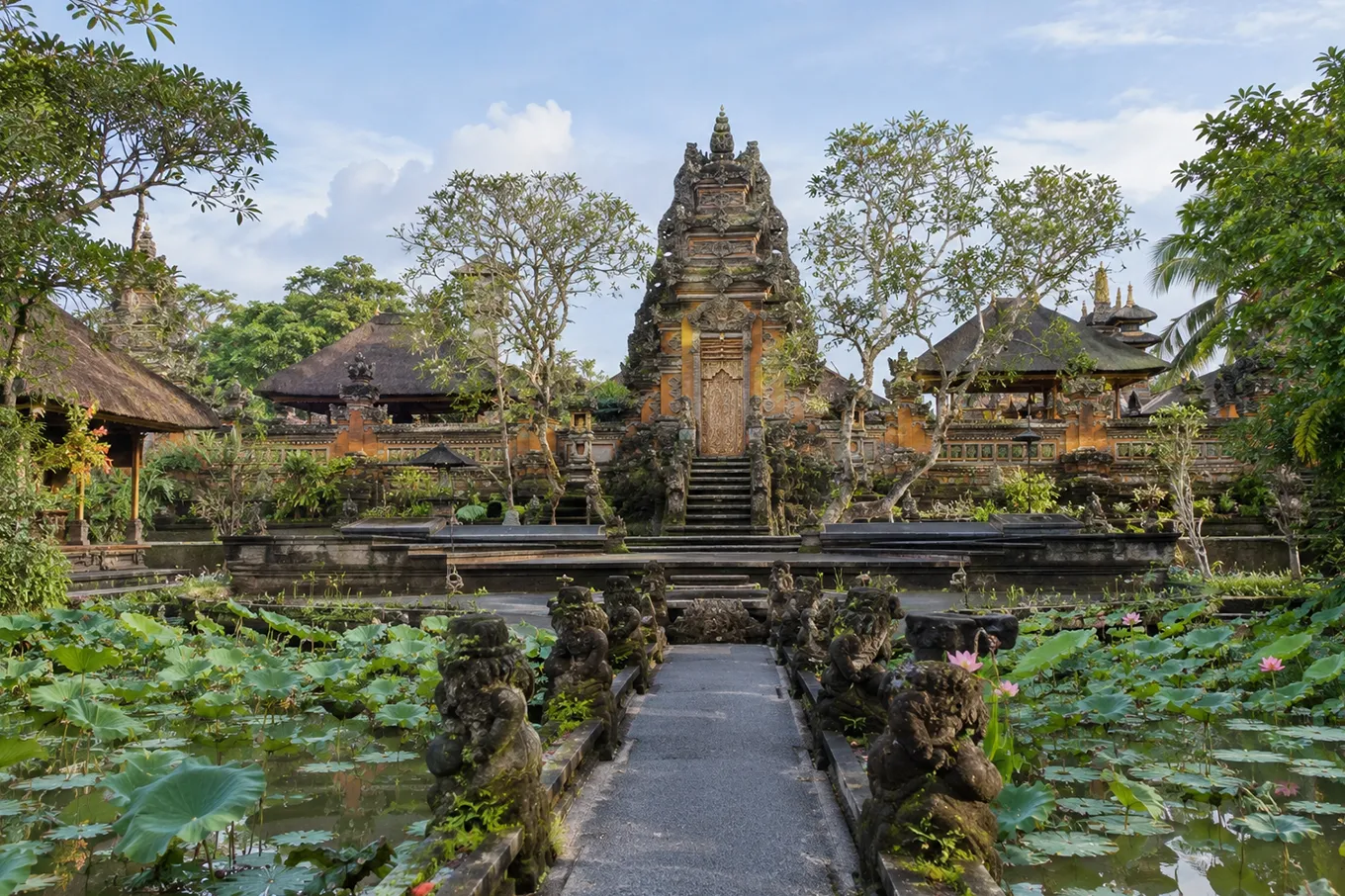
Saraswati Temple Ubud Bali is one of the cultural landmarks worth visiting when exploring the heart of Ubud, especially for travelers interested in Balinese art, architecture, and spiritual traditions. Also known as Pura Taman Saraswati, the temple is dedicated to Dewi Saraswati, the goddess of knowledge, wisdom, literature, music, and the arts.
Its traditional Balinese architecture, detailed stone carvings, statues, and beautiful lotus pond create a peaceful atmosphere that makes the temple stand out among Ubud's many attractions. Beyond its visual appeal, Saraswati Temple Ubud Bali also provides an opportunity to understand how religion, art, and local traditions are connected in everyday Balinese life. Before planning a visit, it is useful to learn about the temple's location, history, cultural meaning, things to see, and important visitor guidelines.
What is Saraswati Temple Ubud Bali?
Saraswati Temple Ubud Bali, also known as Pura Taman Saraswati, is a Balinese Hindu temple dedicated to Dewi Saraswati, the goddess associated with knowledge, learning, literature, and the arts.
The design features carved stone details, traditional gates, statues, and ornamental walls. Saraswati Temple Ubud Bali is therefore more than a sightseeing stop; it can help visitors observe how spirituality and art exist together in Balinese life.
Pura Saraswati Bali also provides a peaceful setting for travelers who want to slow down while exploring Ubud.
Where is Pura Saraswati Bali located?
Pura Saraswati Bali is located in central Ubud, Gianyar, Bali, making it convenient for an Ubud walking itinerary. Its central position allows travelers to combine a visit with other activities around Ubud.
Before traveling, check current access arrangements because temple areas may have different rules during ceremonies or special events. For travelers staying in Ubud, Pura Saraswati Bali is a practical cultural destination because it does not require a long journey from the central area. Saraswati Temple Ubud Bali is also easy to combine with nearby attractions during a day of sightseeing.
What is the History and Meaning of Pura Saraswati?
Saraswati Temple Ubud Bali has a story that reflects Ubud's cultural identity. The history of Saraswati Temple Ubud Bali is connected with Ubud's development as an important center of Balinese arts and culture.
The temple honors Dewi Saraswati, whose symbolism is associated with wisdom, knowledge, language, music, and creativity. Its religious purpose and artistic details show how Balinese cultural expression can connect with spiritual beliefs.
Understanding this meaning can make a visit more interesting. Travelers can appreciate the site as a functioning cultural and religious space rather than simply a photo location. Saraswati Temple Ubud Bali remains part of living traditions in the local community.
What Can Visitors See and Do at Saraswati Temple?
One of the first things visitors notice at Saraswati Temple Ubud Bali is the lotus pond. Depending on conditions, blooming lotus flowers create a scenic foreground for the entrance.
Pura Saraswati Bali also has a cultural atmosphere, so travelers can learn about local ceremonies and artistic traditions. Around the complex, visitors can observe traditional carvings, stone sculptures, decorative gates, and Balinese architectural elements.
However, visitors should remain respectful and follow signs or instructions from temple staff. Some areas may be restricted because they are intended for religious activities.
In the evening, travelers may be interested in cultural performances held at the temple or nearby venues, depending on the schedule. Planning ahead can make Saraswati Temple Ubud Bali easier to enjoy respectfully.
What Should Tourists Know Before Visiting the Temple?
Visitors should remember that Saraswati Temple Ubud Bali is a religious site, not simply a tourist attraction. Dress respectfully and follow local temple rules. If access to certain areas is restricted, travelers should respect those boundaries.
Tourists should avoid disturbing people who are praying or participating in ceremonies. Taking photographs is popular, but visitors should ask permission when photographing people during religious activities.
Another useful tip is to plan the visit around the time of day that suits your itinerary. The lotus pond and temple architecture can be attractive for photography, while a quieter visit may suit travelers who want to appreciate the atmosphere.
Learning about Balinese Hindu traditions before visiting can make the experience more meaningful. Pura Saraswati Bali is best appreciated with respect for its religious function and local community. Saraswati Temple Ubud Bali offers architecture, art, spirituality, and a peaceful setting in central Ubud.
Pura Saraswati Bali shows how cultural heritage continues to shape the identity of the area, while Saraswati Temple Ubud Bali remains a visible part of that heritage.
Saraswati Temple Ubud Bali gives visitors a chance to see how sacred spaces can become meaningful cultural landmarks for travelers. A visit to Saraswati Temple Ubud Bali can add a cultural experience to a busy Ubud itinerary throughout their trip. The temple offers cultural discovery and welcomes respectful visitors during each visit here.
If you visit Bali, you can stay at Alzeto Co Living, one of the co-living spaces in Bali for tourism who want to relax and connect.
FAQ
-
Where is the temple located?
It is located in central Ubud, Gianyar, Bali, and is easy to include in a walking itinerary. -
What is the temple dedicated to?
The temple is dedicated to Dewi Saraswati, the Balinese Hindu goddess associated with knowledge, learning, and the arts. -
What is the main attraction at the temple?
The lotus pond at the entrance is one of its most recognizable and photographed features. -
Can tourists take photographs there?
Yes, photography is popular in permitted areas, but visitors should respect restricted spaces and religious activities. -
What should visitors wear?
Visitors should wear respectful clothing and follow any local dress requirements or temple rules.
Published on 29 September 2026