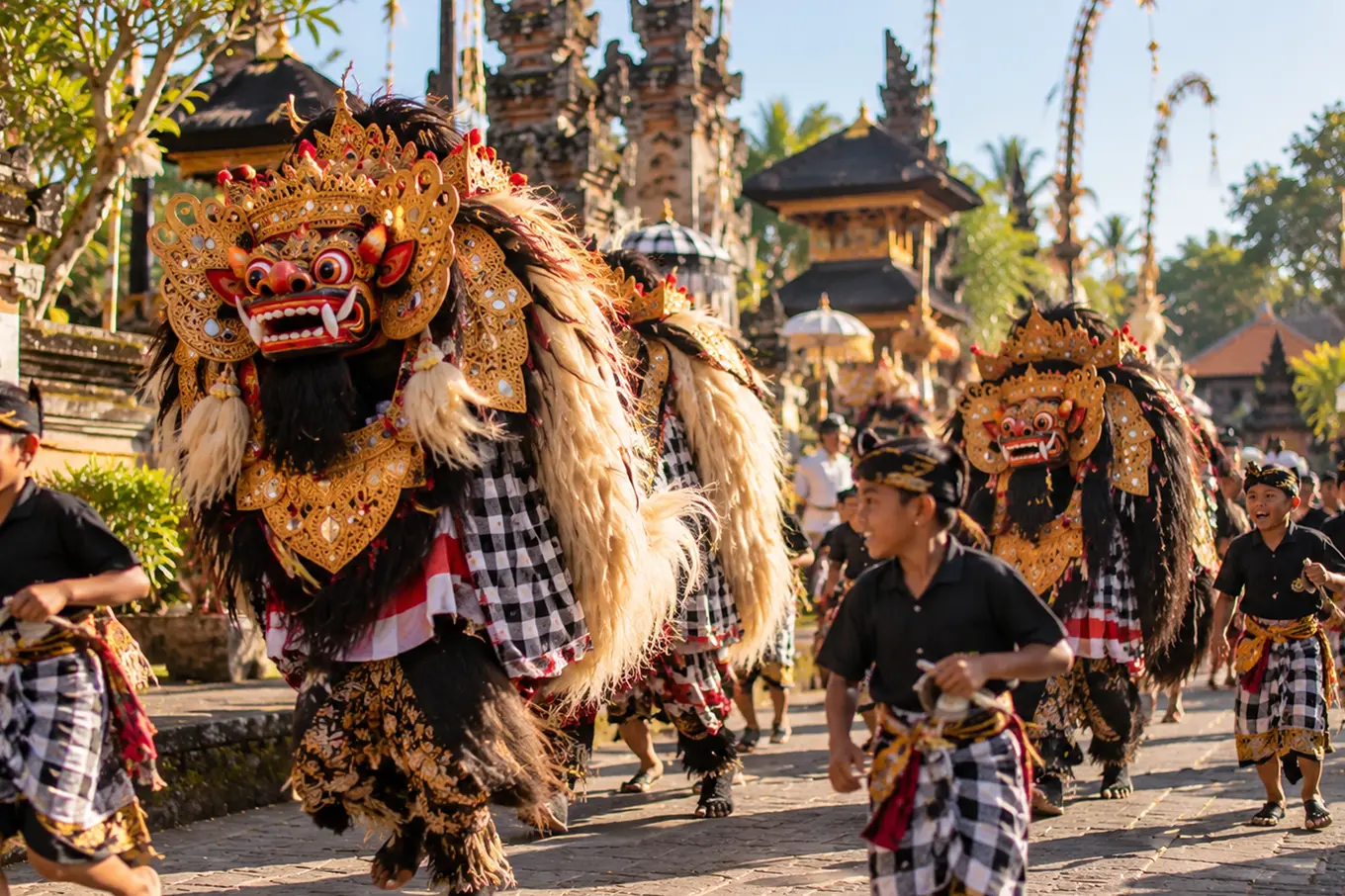
Ngelawang is a traditional Balinese ritual that brings together spirituality, community participation, and cultural heritage. During this ceremony, a sacred Barong figure is carried through village streets, often accompanied by traditional music and groups of local residents. The procession visits homes and public areas as part of a tradition believed to bring protection, balance, and positive energy to the surrounding community.
For travelers who want to explore Bali beyond its beaches and popular attractions, Ngelawang offers an opportunity to experience the island's living traditions. The ceremony reflects how Balinese Hindu beliefs influence everyday life and how communities preserve customs passed down through generations. Understanding the meaning of Ngelawang Bali can help visitors appreciate the ritual respectfully and recognize its importance to local residents.
What Is Ngelawang in Bali?
Ngelawang is a traditional Balinese ritual in which a Barong, a sacred figure associated with protection and the struggle between good and evil, is paraded through village streets. The word is commonly associated with going from one place to another, reflecting the movement of the procession through local neighborhoods.
During Ngelawang, participants carry the Barong while musicians play traditional instruments, creating a lively atmosphere throughout the village. Residents may gather along the streets, make offerings, or welcome the procession as it passes their homes. The event combines religious devotion with community participation.
The Barong used in Ngelawang can vary depending on local traditions. It is often associated with protective spiritual power and the presence of benevolent forces. For many Balinese communities, the ritual is more than a cultural performance because it carries religious meaning.
Ngelawang Bali also demonstrates the close connection between spirituality and everyday life on the island. Rather than being limited to temples, certain religious traditions take place in public spaces, allowing the wider community to participate.
Visitors who encounter Ngelawang should remember that the procession may be part of a sacred observance. Observing quietly, allowing participants to move freely, and asking permission before taking close up photographs are simple ways to show respect.
What Is the Purpose of the Ngelawang Tradition?
The main purpose of Ngelawang is traditionally connected to protection, purification, and maintaining harmony within the community. Balinese Hindu beliefs emphasize balance between people, nature, and the spiritual world. Through rituals such as Ngelawang, communities express their hopes for safety, well being, and protection from negative influences.
The Barong plays an important role in this belief system. It is commonly associated with benevolent forces that protect the village and help maintain spiritual balance. As the figure moves through the neighborhood, residents may regard its presence as a meaningful part of their religious observance.
Ngelawang Bali also strengthens relationships between community members. Preparing the Barong, organizing the procession, playing music, and welcoming participants require cooperation among residents. These shared activities help preserve local identity and pass cultural knowledge to younger generations.
Although visitors may see Ngelawang as a colorful traditional event, its significance extends beyond entertainment. The ritual reflects beliefs that remain important to many Balinese people and demonstrates how cultural practices can connect religious values with community life.
When Is Ngelawang Performed in Bali?
Ngelawang is particularly associated with the period around Galungan and Kuningan, important celebrations in the Balinese Hindu calendar. Galungan marks the victory of dharma, or righteousness, over adharma, or wrongdoing. Kuningan takes place ten days later and concludes this major festive period.
During this time, many Balinese homes and streets display penjor, decorative bamboo poles with offerings that create a distinctive festive atmosphere. In some communities, Ngelawang processions take place as part of the wider celebrations, bringing the Barong through residential areas.
However, the timing and frequency of Ngelawang Bali can differ between villages. Some communities may perform the ritual during particular religious occasions or according to local customs. Therefore, visitors should not expect to see the procession at every location during every Galungan or Kuningan celebration.
Travelers interested in witnessing Ngelawang should check local event information, ask accommodation hosts, or consult village representatives before planning a visit. Since the ceremony follows religious traditions, its schedule may not always be advertised like a regular tourist attraction.
What Is the Barong Used for During Ngelawang?
The Barong is central to Ngelawang because it represents protective spiritual power in Balinese tradition. Often presented as a distinctive figure with an elaborate costume and expressive face, the Barong is associated with goodness and the protection of communities against negative forces.
During the procession, designated participants carry and move the Barong through village streets. Traditional music often accompanies its movements, while residents gather to observe or take part in the religious activities surrounding the event.
The appearance of the Barong can vary according to the type and local tradition. Some Barong figures resemble lions, while others represent different animals or mythical forms. Their designs, costumes, and ceremonial roles reflect the diversity of Balinese cultural practices.
In Ngelawang Bali, the Barong is not simply a decorative object. It may be regarded as sacred and treated with particular respect during religious ceremonies. Its presence symbolizes the community's hopes for protection, harmony, and spiritual well being.
Visitors should avoid touching the Barong or its ceremonial accessories unless explicitly invited to do so. Following the guidance of local participants helps preserve the dignity of the ritual and ensures that the procession can continue without disruption.
Where Can Visitors See Ngelawang in Bali?
Visitors may encounter Ngelawang in traditional villages across Bali, particularly during the Galungan and Kuningan festive period. The procession is a community based tradition, so its location depends on local religious calendars and village customs rather than a fixed tourist schedule.
Areas with established Balinese cultural traditions, including parts of Ubud, Gianyar, and other traditional villages, may offer opportunities to observe related ceremonies. However, the presence of Ngelawang should be confirmed locally because not every village organizes the procession at the same time.
When looking for Ngelawang Bali, travelers can ask local accommodation hosts, community representatives, or tourism information centers about upcoming ceremonies. Visiting during major religious celebrations may also provide a broader understanding of Balinese customs, even if a particular procession is not taking place.
During the event, dress modestly when appropriate, avoid obstructing the procession, and follow instructions from residents. If you wish to photograph the Barong or participants, ask permission whenever possible. Respectful observation allows visitors to learn about the tradition without treating a sacred ritual as merely a performance.
Experience Balinese Traditions During Your Visit
Ngelawang offers a valuable glimpse into Bali's spiritual beliefs, community relationships, and cultural heritage. From the protective symbolism of the Barong to the procession through village streets, the tradition shows how religious practices continue to shape everyday life on the island.
If you visit Bali, you can stay at Alzeto Co Living, one of the co-living spaces in Bali for tourism who want to relax and connect. It can be a comfortable base for exploring traditional villages, discovering local customs, and connecting with the culture that makes Bali a memorable destination.
Published on 19 October 2026

