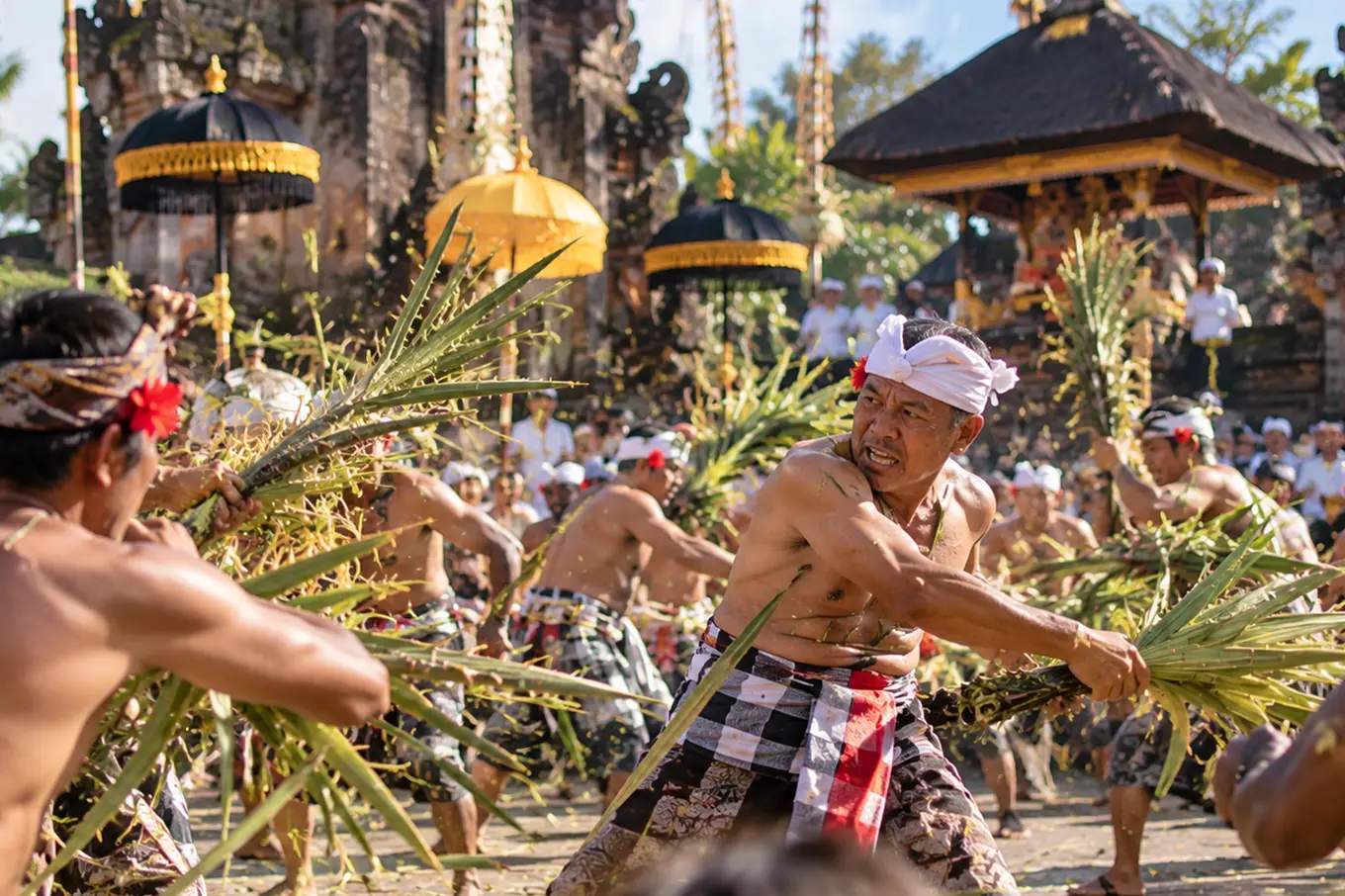
Mekare Kare is one of Bali's unique cultural traditions that reflects the courage, devotion, and community spirit of the island's people. Also known as the Pandan War, this traditional ceremony involves male participants engaging in a symbolic battle using thorny pandan leaves and protective shields. The event is accompanied by traditional music, religious rituals, and gatherings that bring the local community together.
For travelers interested in Balinese culture, Mekare Kare offers a fascinating opportunity to discover traditions that have been preserved for generations. The ceremony is closely connected to the beliefs of the Tenganan Pegringsingan village, where religious customs remain an important part of everyday life. Understanding the background of Mekare Kare Bali can help visitors appreciate its spiritual meaning and cultural significance rather than viewing it simply as a traditional performance.
What Is Mekare Kare in Bali?
Mekare Kare is a traditional ritual practiced by the Bali Aga community in Tenganan Pegringsingan, a village in Karangasem, East Bali. The ceremony is commonly called the Pandan War because participants use bundles of thorny pandan leaves as symbolic weapons during a ritual battle.
During Mekare Kare, male participants face one another while holding pandan leaves and woven shields. They make controlled movements and attempt to strike their opponents with the leaves. Although the activity may look intense, it takes place within a religious and cultural setting governed by local traditions.
The ceremony is accompanied by the sounds of traditional gamelan music, creating an atmosphere that combines excitement with spiritual significance. Community members gather to watch, support the participants, and take part in the broader series of rituals.
Mekare Kare Bali is not organized simply for entertainment. It forms part of the village's religious observances and reflects the community's commitment to preserving ancestral traditions. For this reason, visitors should approach the event with respect and recognize that it holds a deeper meaning for local residents.
What Is the Meaning of Mekare Kare?
The meaning of Mekare Kare is closely connected to devotion, courage, and the religious beliefs of the Tenganan community. The ceremony is traditionally associated with honoring Dewa Indra, the Hindu deity of war, who holds an important position in the spiritual traditions of the Bali Aga people.
Through the ritual battle, participants demonstrate bravery and willingness to take part in a ceremony that has been passed down through generations. The event also represents the community's relationship with its ancestors and the religious values that guide village life.
The thorny pandan leaves used during Mekare Kare have a symbolic role in the ritual. Participants may sustain scratches during the encounter, but the purpose is not to defeat an opponent in the ordinary sense. Instead, the activity forms part of a shared religious observance.
After the encounters, traditional care is provided for participants who have minor wounds. The community continues with its ceremonial activities, emphasizing togetherness rather than rivalry.
Mekare Kare Bali also demonstrates how cultural traditions can preserve collective identity. By participating in the ceremony, residents maintain a connection with their heritage and introduce younger generations to customs that remain meaningful today.
Where Is the Mekare Kare Ceremony Held?
The Mekare Kare ceremony is held in Tenganan Pegringsingan Village, located in Karangasem Regency, East Bali. The village is widely known for its distinctive Bali Aga heritage, traditional architecture, and the preservation of cultural practices that differ from some customs found elsewhere on the island.
Tenganan is also recognized for its traditional double ikat weaving, known as Geringsing cloth. This textile has a special cultural significance and is associated with local beliefs and ceremonial life.
Visitors traveling from popular destinations such as Canggu, Seminyak, or Ubud can plan a trip to East Bali to explore the village and learn about its traditions. Because travel times vary depending on traffic and the starting point, checking the route before departure is recommended.
When visiting Mekare Kare Bali, travelers should follow local instructions about where they can stand, walk, and take photographs. Some areas may be reserved for residents or participants involved in the ceremony.
It is also worth checking with local tourism offices or village representatives before visiting, as ceremony schedules and visitor arrangements can change. Planning ahead helps travelers experience the event without disrupting the community's religious activities.
Why Do People Participate in Mekare Kare?
People participate in Mekare Kare because the ceremony is an important part of their religious beliefs, cultural identity, and community traditions. For residents of Tenganan Pegringsingan, taking part is a way to honor Dewa Indra and maintain customs inherited from previous generations.
Participation also demonstrates courage and a willingness to contribute to the village's collective religious life. The ritual is not simply a competition between individuals. Its significance comes from the shared purpose behind the event and the community's involvement in preserving it.
Mekare Kare Bali also provides an opportunity for younger residents to learn about their heritage through direct participation. By observing the preparations, understanding the ceremonial rules, and joining community activities, younger generations become familiar with traditions that might otherwise become less visible over time.
For spectators, the ceremony offers insight into the relationship between religion and community life in Bali. However, visitors should remember that the ritual is primarily a cultural and spiritual observance for local residents, not merely a tourist attraction.
When Is Mekare Kare Celebrated?
Mekare Kare is traditionally celebrated during the Usaba Sambah festival in Tenganan Pegringsingan. The festival follows the village's traditional calendar and usually takes place around June or July, although the exact dates vary from year to year.
Usaba Sambah is a broader ceremonial period involving several traditional activities. Mekare Kare is one of its best known events, attracting attention because of its distinctive ritual battle and the strong community participation surrounding it.
The timing of Mekare Kare Bali should not be assumed to be identical every year. Travelers who want to witness the ceremony should confirm the schedule with reliable local sources before arranging accommodation and transportation.
Arriving early on the ceremony day can also help visitors find an appropriate viewing location and become familiar with the village environment. Modest clothing, respectful behavior, and sensitivity when photographing participants are important throughout the visit.
Experience Traditional Culture in Bali
Mekare Kare offers a meaningful look at the traditions of Tenganan Pegringsingan and the enduring relationship between spirituality, courage, and community. By understanding its origins, religious significance, and ceremonial schedule, travelers can appreciate why this distinctive tradition continues to be an important part of Balinese cultural heritage.
If you visit Bali, you can stay at Alzeto Co Living, one of the co-living spaces in Bali for tourism who want to relax and connect. From there, you can plan cultural trips around the island, discover traditional villages, and enjoy a more connected experience of Bali beyond its famous beaches.
Published on 19 October 2026

