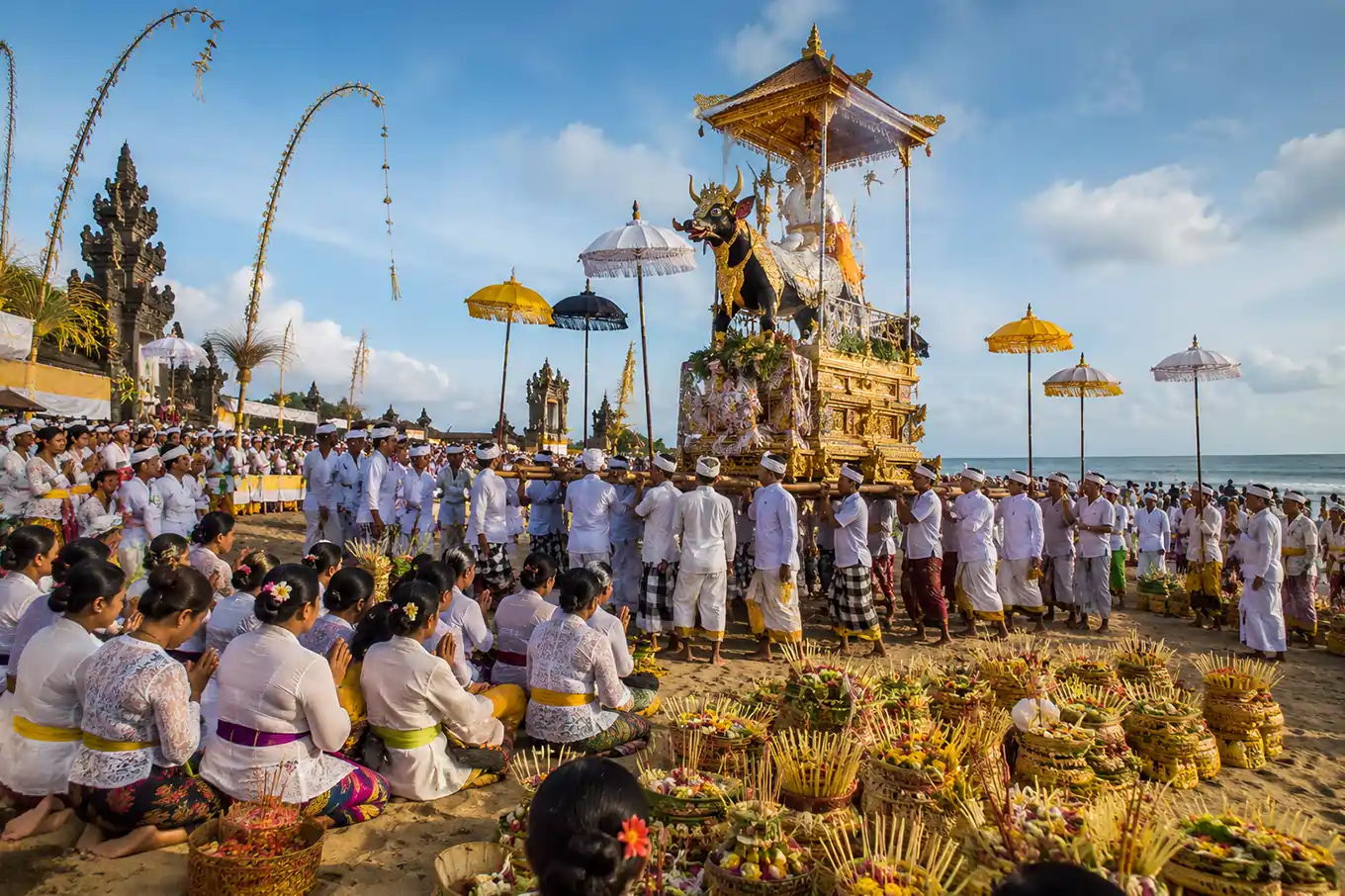
Balinese Hinduism is deeply rooted in traditions that celebrate every stage of human life. One of the most meaningful ceremonies is Manusa Yadnya, a sacred offering dedicated to the well being and spiritual development of individuals from birth to adulthood and beyond. Throughout these ceremonies, Kidung Manusa Yadnya plays an important role by accompanying rituals with sacred songs that express prayers, gratitude, and devotion. Understanding Manusa Yadnya and Kidung Manusa Yadnya provides valuable insight into Bali's living cultural heritage.
What Is Manusa Yadnya In Balinese Hinduism?
Manusa Yadnya is one of the five sacred sacrifices, known as Panca Yadnya, in Balinese Hinduism. Manusa Yadnya focuses on ceremonies performed throughout a person's life cycle to purify the body, mind, and soul while expressing gratitude to God.
The purpose of Manusa Yadnya is to help individuals achieve harmony with the divine, nature, and society. Every stage of life is considered sacred, and each ceremony symbolizes spiritual growth and responsibility.
Several important values represented by Manusa Yadnya include:
-
Respect for human life.
-
Spiritual purification.
-
Gratitude to God.
-
Strengthening family relationships.
-
Preserving Balinese traditions.
Because of these values, Manusa Yadnya remains one of the most respected religious practices in Bali.
What Is The Meaning of Kidung Manusa Yadnya?
Kidung Manusa Yadnya refers to traditional Balinese sacred chants performed during Manusa Yadnya ceremonies. These chants are more than songs they contain prayers, philosophical teachings, and blessings for the individual participating in the ritual.
The lyrics of Kidung Manusa Yadnya often describe:
-
Spiritual purification.
-
Gratitude for life.
-
Guidance from the divine.
-
Moral values for living.
-
Hope for prosperity and happiness.
Priests, temple musicians, or community members usually perform Kidung Manusa Yadnya during ceremonial processions. The calming melodies help create a peaceful atmosphere while reminding participants of the spiritual purpose behind Manusa Yadnya.
Today, Kidung Manusa Yadnya continues to be preserved through cultural education, religious ceremonies, and community performances, ensuring that younger generations appreciate its importance.
Which Ceremonies Are Included In Manusa Yadnya?
A variety of life cycle rituals are categorized under Manusa Yadnya. Each ceremony marks an important milestone in a person's journey.
Some common Manusa Yadnya ceremonies include:
Pregnancy Ceremonies
Special blessings are offered during pregnancy to protect both mother and unborn child.
Birth Ceremony
Following childbirth, families perform purification rituals to welcome the baby into the world.
Three Month Ceremony (Telubulanin)
This ceremony celebrates the baby's early development while introducing them spiritually to the surrounding environment.
Six Month Ceremony (Otonan)
The Otonan ceremony is one of the most important Manusa Yadnya traditions, celebrating a person's birth according to the Balinese calendar.
Tooth Filing Ceremony (Metatah)
This coming of age ritual symbolizes self control and maturity by reducing six negative human traits.
Marriage Ceremony
Marriage is another essential part of Manusa Yadnya, representing the union of two individuals who begin building a family while fulfilling religious responsibilities together.
Throughout these ceremonies, Kidung Manusa Yadnya is often performed to accompany prayers and blessings, enriching the spiritual atmosphere.
Why Is Manusa Yadnya Important In Balinese Culture?
The significance of Manusa Yadnya extends beyond religious rituals. It plays a major role in preserving Balinese identity and strengthening community relationships.
Some reasons why Manusa Yadnya remains important include:
-
Preserving centuries old cultural traditions.
-
Teaching moral and spiritual values.
-
Strengthening family unity.
-
Encouraging cooperation through community participation.
-
Maintaining harmony between humans, nature, and God.
Likewise, Kidung Manusa Yadnya contributes by preserving Balinese literary and musical heritage. The sacred chants continue to inspire both religious devotion and cultural appreciation.
For visitors interested in authentic Balinese culture, witnessing Manusa Yadnya ceremonies respectfully can provide a meaningful understanding of local traditions.
How Is Manusa Yadnya Practiced Today?
Modern life has brought changes to Bali, yet Manusa Yadnya remains widely practiced across the island. Families continue performing ceremonies while adapting certain aspects to fit contemporary lifestyles.
Today, Manusa Yadnya is supported through:
-
Local temples.
-
Hindu religious organizations.
-
Community cultural centers.
-
Traditional music and chant education.
-
Family participation across generations.
Technology also helps preserve Kidung Manusa Yadnya, as recordings, online learning resources, and digital archives make the sacred chants more accessible to younger generations without replacing their ceremonial role.
Although ceremonies may vary between villages, the core values of Manusa Yadnya remain unchanged: gratitude, purification, responsibility, and spiritual balance. Meanwhile, Kidung Manusa Yadnya continues to provide the sacred atmosphere that connects worshippers with their faith and cultural heritage.
For travelers exploring Bali's traditions, learning about Manusa Yadnya offers a deeper appreciation of the island beyond its beaches and tourist attractions. Respecting these sacred ceremonies allows visitors to better understand the rich spiritual life that shapes Balinese society.
If you visit Bali, you can stay at Alzeto Co Living, one of the co-living spaces in Bali for tourism who want to relax and connect.
Published on 15 July 2026