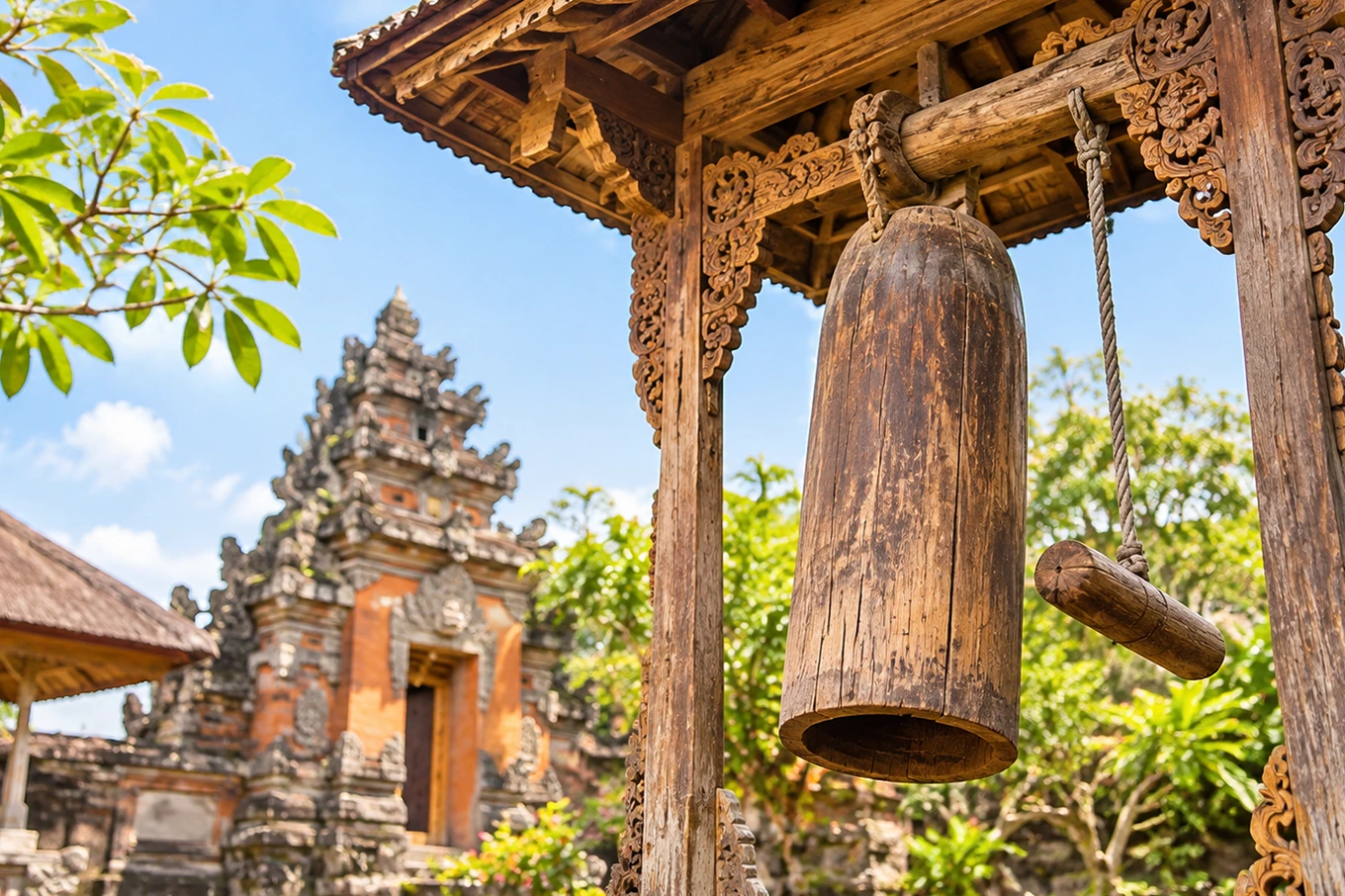
Bali is an island known for its unique traditions, strong community values, and rich cultural heritage. Among the many traditional objects found in Balinese villages, the kulkul bali holds an important place in everyday community life. This traditional wooden bell is more than just a musical instrument or village decoration. It serves as a communication tool that connects residents and helps maintain harmony within the community.
For generations, the kulkul bali has been used to deliver messages, announce important events, and gather villagers for communal activities. Its distinctive sound carries different meanings depending on the rhythm and situation. Even though modern communication technology is widely available, the bali kulkul remains an important symbol of togetherness and cultural identity.
What Is Kulkul Bali and What Is It Used For?
The kulkul bali is a traditional wooden percussion instrument commonly found in Balinese villages. It is usually made from a large piece of wood with a hollowed-out center that produces a deep, distinctive sound when struck with a wooden beater.
In traditional village life, the kulkul bali functions as a communication system. Before mobile phones and modern announcements existed, villagers relied on its sound to share information across residential areas.
The instrument is commonly placed in a structure called a bale kulkul, which is often located in a strategic area of the village. This makes its sound easier for residents to hear.
Some common purposes of the kulkul bali include:
-
Gathering villagers for community meetings or traditional activities.
-
Announcing important religious ceremonies and village celebrations.
-
Informing residents about emergencies or unexpected situations.
-
Coordinating communal work and neighborhood responsibilities.
-
Maintaining communication between members of the traditional village community.
Beyond its practical functions, the bali kulkul represents the importance of cooperation and collective responsibility in Balinese society.
What Does the Sound of a Traditional Bali Kulkul Mean?
The sound of a kulkul bali is not simply a random signal. Different striking patterns can communicate different messages to villagers. People who understand local traditions can recognize the meaning behind particular rhythms.
For example, a regular and familiar rhythm may indicate that residents need to gather for a village meeting or community activity. Meanwhile, a faster or unusual striking pattern can serve as a warning about an emergency that requires immediate attention.
The meaning of each sound may vary depending on the village and its local customs. Therefore, there is no single universal rhythm used throughout the island.
The bali kulkul also reflects the traditional communication system that connects people without requiring written messages. Its sound travels through the village, reminding residents that they are part of a larger community.
In some areas, the instrument is also sounded before religious ceremonies or important cultural activities. This helps create a shared sense of preparation and encourages people to participate.
What Are the Different Types of Kulkul in Balinese Culture?
In Balinese culture, the kulkul bali can serve different purposes depending on the community and its social structure. Although the basic design is similar, its function and location can distinguish one type from another.
Some commonly recognized types include:
Kulkul Banjar
Kulkul banjar is used within a traditional neighborhood community. It helps gather residents for meetings, communal work, and social activities. This type plays an important role in maintaining communication among members of a banjar.
Kulkul Desa
Kulkul desa serves a broader village community. It may be used to announce village wide activities, important meetings, or collective responsibilities involving multiple neighborhoods.
Kulkul Subak
Kulkul subak is associated with Bali's traditional irrigation organization. It helps coordinate activities among farmers, including meetings and matters related to agricultural water management.
Kulkul for Religious Activities
Some communities use a kulkul bali to signal religious ceremonies and other spiritual activities. Its sound helps residents recognize when an important ritual or communal event is taking place.
These different uses demonstrate how the traditional wooden bell is closely connected to the social, agricultural, and spiritual aspects of Balinese life.
How Is a Traditional Balinese Kulkul Made?
A traditional kulkul bali is generally made from solid wood selected for its durability and sound quality. The choice of material is important because the wood must produce a clear sound when struck.
The production process usually begins with selecting a suitable tree trunk or large piece of wood. Craftspeople then cut and shape it according to the desired size.
Next, the inside of the wood is carefully hollowed out. This creates an empty space that allows the instrument to produce its characteristic resonant sound. The thickness of the remaining wood can influence the tone and volume.
After the hollowing process, the surface is smoothed and shaped to create a finished appearance. Some traditional instruments may also feature decorative carvings that reflect local artistic styles.
A wooden beater is then prepared to strike the instrument. The final sound depends on several factors, including the type of wood, the size of the hollow space, and the way it is struck.
Although modern tools can make production easier, traditional craftsmanship remains an important part of preserving the bali kulkul as a cultural object.
Why Is Kulkul Still Important in Balinese Village Life?
Despite the development of smartphones and digital communication, the kulkul bali continues to hold cultural and social significance in many traditional villages. Its importance goes beyond its original function as a communication tool.
First, it represents community unity. When the wooden bell sounds, residents are reminded of their shared responsibilities and the importance of participating in village activities.
Second, the kulkul bali helps preserve traditional knowledge. Younger generations can learn about its meanings, rhythms, and functions through community participation and cultural education.
Third, it reflects the values of cooperation that are central to Balinese village life. Activities such as communal work, religious ceremonies, and traditional meetings encourage people to maintain strong relationships.
The bali kulkul also represents a connection between the past and present. While communication methods continue to evolve, this traditional instrument remains a recognizable symbol of Balinese identity.
For visitors, learning about the kulkul bali offers a deeper understanding of how local communities organize their daily lives and preserve cultural traditions. It also provides an opportunity to appreciate the relationship between traditional objects, social harmony, and spiritual values in Bali.
Understanding the bali kulkul is one way to discover the island beyond its beaches and popular tourist attractions. It reveals how even a simple wooden instrument can carry meaningful messages and bring an entire community together.
If you visit Bali, you can stay at Alzeto Co Living, one of the co-living spaces in Bali for tourism who want to relax and connect. It can be a comfortable place to stay while exploring the island's cultural traditions, discovering local communities, and experiencing the spiritual side of Bali.
Published on 17 November 2026

