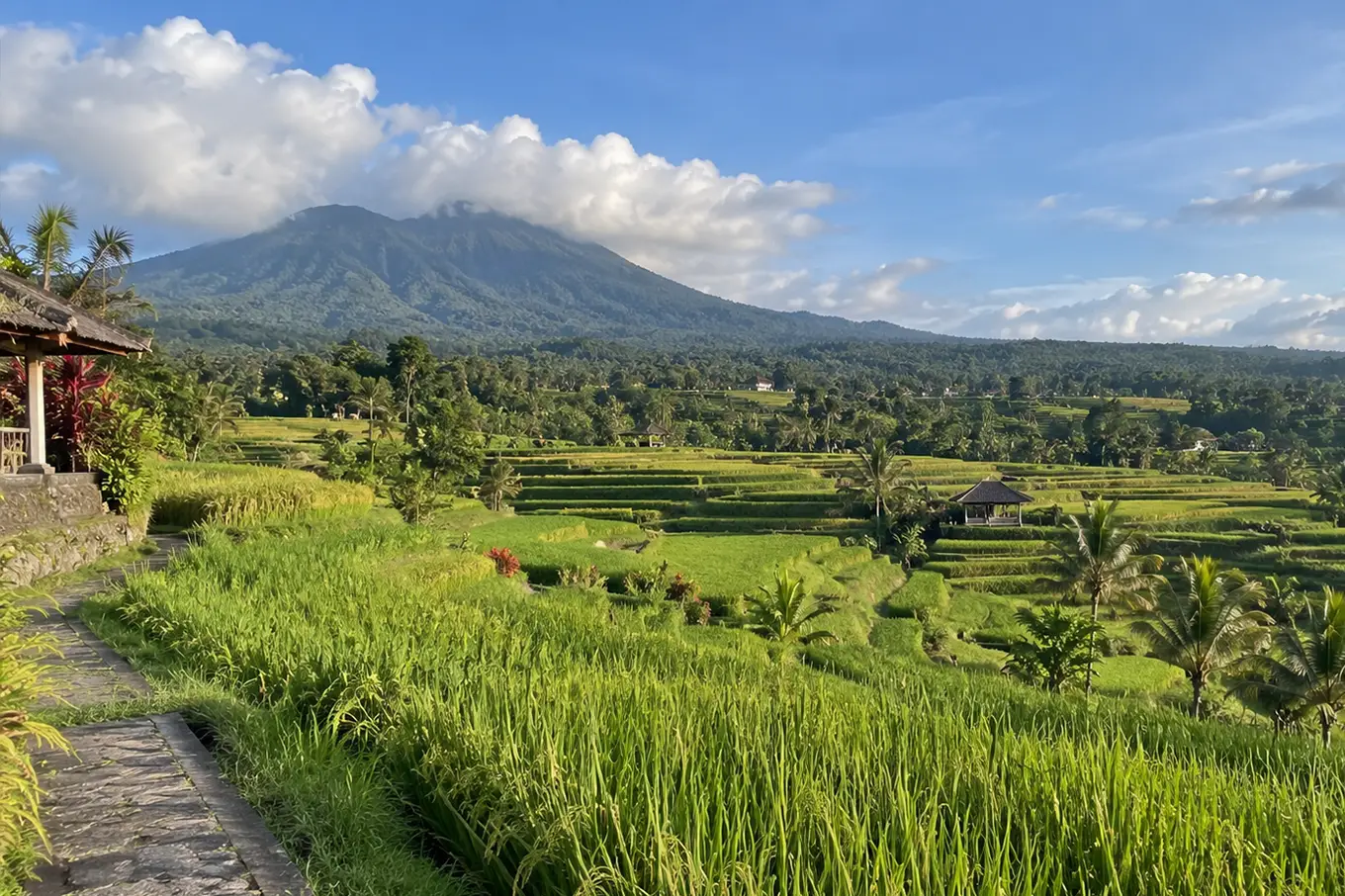
Jatiluwih Tabanan is one of Bali’s most impressive destinations for travelers who want to experience beautiful landscapes, traditional agriculture, and a quieter side of the island. Located in the highlands of Tabanan Regency, this area is famous for its wide rice terraces, green hills, and mountain scenery. Unlike busy beach destinations, Jatiluwih Tabanan offers a peaceful atmosphere where visitors can enjoy nature while learning about traditional farming culture.
What Is Jatiluwih Tabanan Known For?
Jatiluwih Tabanan is best known for its expansive rice terraces and traditional Subak irrigation system. The landscape is more than a collection of rice fields because it represents a long standing agricultural tradition in which local farmers manage water collectively according to customary rules.
The beauty of Jatiluwih Tabanan comes from the combination of carefully shaped terraces, irrigation channels, small villages, and mountain views. During the growing season, the fields can appear bright green, while other periods may show golden rice ready for harvest. This changing scenery makes Jatiluwih Tabanan attractive throughout the year.
The cultural landscape of Jatiluwih Tabanan Bali is also internationally recognized. It forms part of the Bali cultural landscape associated with the Subak system, which is included as a UNESCO World Heritage site. This makes the destination interesting not only for photography but also for travelers who want to understand the connection between nature, culture, and agriculture.
Where Is Jatiluwih Located in Bali?
Jatiluwih Tabanan is located in Penebel District, Tabanan Regency, in central western Bali. The village sits in a cooler highland environment surrounded by farmland, forests, and mountain scenery. Its elevated location gives Jatiluwih Tabanan a refreshing atmosphere compared with Bali’s coastal areas.
Jatiluwih Tabanan Bali is located away from the island’s main tourist centers. From Ubud, Kuta, Seminyak, or Canggu, travelers generally need several hours to reach the area, depending on traffic and road conditions.
The journey itself can be enjoyable because the route passes rural landscapes and traditional Balinese villages. Travelers can choose a private driver, rental vehicle, or organized tour depending on their preferred travel style.
What Can You Do in Jatiluwih?
One of the main activities in Jatiluwih Tabanan is walking through the rice terrace area. Several routes allow visitors to explore the fields while enjoying fresh air, green scenery, and mountain views. A walk through Jatiluwih Tabanan can be a relaxing way to experience Bali’s countryside.
Photography is another popular activity. Early morning and late afternoon can provide attractive natural light, while cloudy weather may create a dramatic atmosphere over the terraces. Visitors should remain on designated paths and avoid entering active farming areas without permission.
Jatiluwih Tabanan also provides opportunities to learn about traditional agriculture. Depending on the season, travelers may see farmers working in the fields, irrigation channels, or local activities. A local guide can make the visit more informative by explaining the role of Subak in everyday Balinese life.
For travelers looking for a peaceful escape, sitting at a viewpoint or enjoying a meal overlooking the fields can also be part of the experience. Jatiluwih Tabanan Bali is particularly suitable for visitors who prefer nature and culture over crowded entertainment.
What is the Best Time to Visit Jatiluwih?
The best time to explore Jatiluwih Tabanan depends on the scenery and activities you prefer. The dry season, generally from April to October, can provide more comfortable conditions for walking and sightseeing, although rainfall can still occur in the highlands.
Travelers who want greener scenery may prefer periods when the rice fields are actively growing. Jatiluwih Tabanan can look especially vibrant after rainfall, but wet conditions may make walking paths slippery. Early morning is a good option for cooler temperatures, softer light, and a quieter atmosphere.
Jatiluwih Tabanan Bali can also be visited during the rainy season if you are comfortable with changing weather. Bring suitable footwear, a light rain jacket, and protection for electronic devices. Checking the weather before leaving is recommended because mountain conditions can change quickly.
How Do You Get to Jatiluwih from other Areas In Bali?
Getting to Jatiluwih Tabanan is easiest by private car, rental vehicle, or guided tour. From southern Bali, including Kuta, Seminyak, and Canggu, the journey can take several hours depending on traffic. From Ubud, the route is generally more convenient, although travelers should still allow enough time for the trip.
Public transportation options to Jatiluwih Tabanan are limited, so independent travelers should arrange transportation in advance. A private driver can be useful for visitors who want to combine the rice terraces with other attractions in Tabanan during the same day.
When planning a trip to Jatiluwih Tabanan Bali, leaving early can help travelers avoid heavier traffic and enjoy more time at the destination. Comfortable shoes, drinking water, sun protection, and a rain jacket are useful because visitors may spend several hours outdoors.
Overall, Jatiluwih Tabanan is a destination where Bali’s natural beauty and cultural traditions come together. Its rice terraces, Subak irrigation system, mountain scenery, and rural atmosphere make it different from the island’s busy coastal areas. Whether you visit for photography, walking, or cultural exploration, Jatiluwih Tabanan can provide a memorable Bali experience.
If you visit Bali, you can stay at Alzeto Co Living, one of the co-living spaces in Bali for tourism who want to relax and connect.
FAQ
-
What is Jatiluwih Tabanan famous for?
Jatiluwih Tabanan is famous for its extensive rice terraces, traditional Subak irrigation system, and beautiful highland scenery.
-
Where is Jatiluwih Tabanan Bali located?
Jatiluwih Tabanan Bali is located in Penebel District, Tabanan Regency, in the central western part of Bali.
-
What can visitors do in Jatiluwih?
Visitors can walk through rice terraces, take photographs, enjoy scenic viewpoints, and learn about traditional Balinese agriculture.
-
When is the best time to visit Jatiluwih?
The dry season from April to October is generally comfortable for outdoor activities, while the rainy season can offer especially green landscapes.
-
How can you get to Jatiluwih from Bali’s tourist areas?
Visitors can reach Jatiluwih by private car, rental vehicle, or guided tour. A private driver is a convenient option for combining several destinations.
Published on 25 September 2026