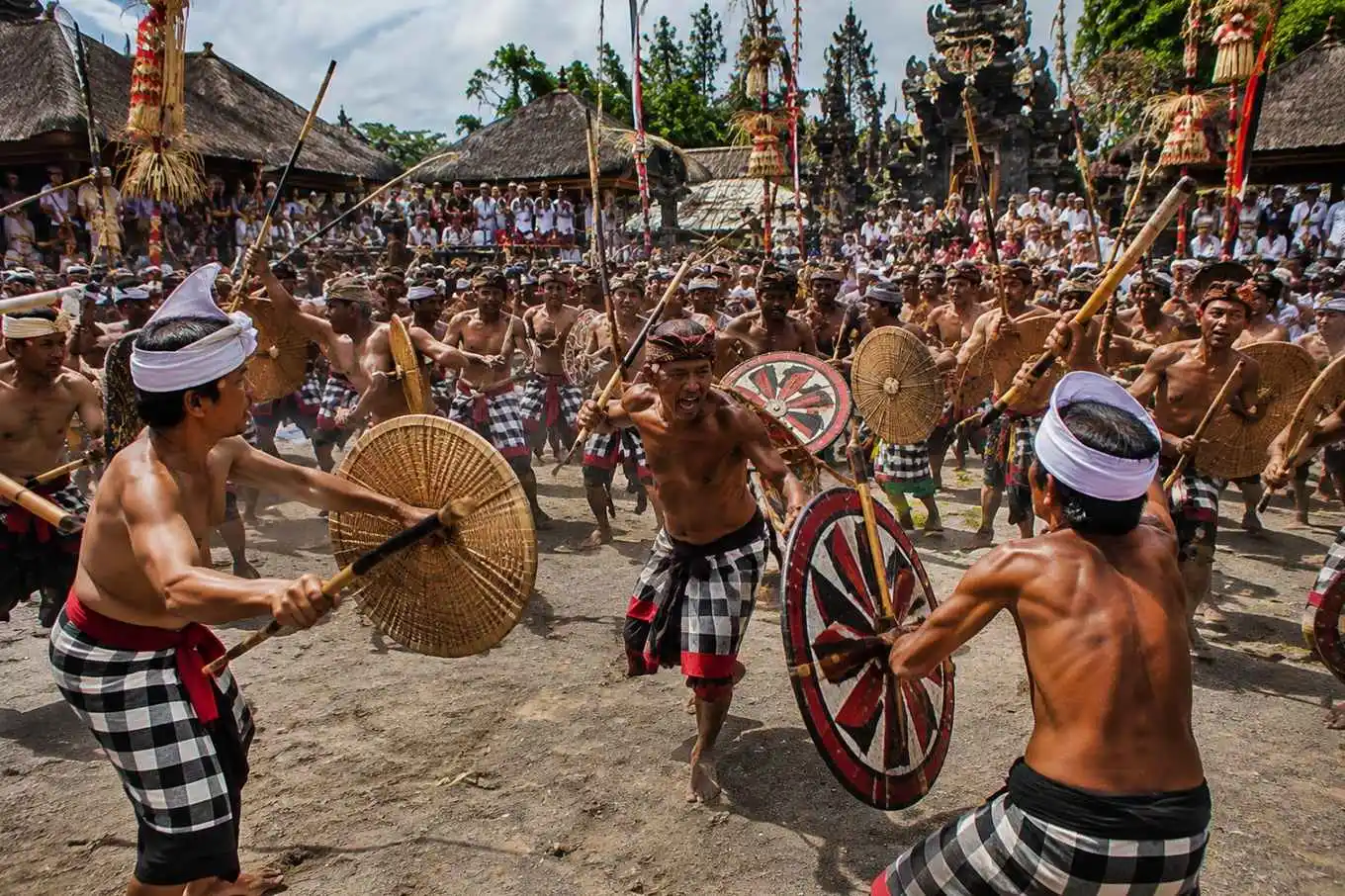
Bali is well known for its breathtaking beaches, majestic temples, and vibrant ceremonies. Beyond these popular attractions, the island is also home to many unique cultural traditions that have been preserved for generations. One of the most fascinating traditions is Gebug Ende, a ceremonial stick fighting performance originating from Seraya Village in East Bali. Unlike a modern sporting event, Gebug Ende combines ritual, history, community values, and entertainment into one remarkable cultural experience.
Today, Gebug Ende continues to attract visitors who want to experience authentic Balinese heritage. The tradition showcases the bravery of local participants while reflecting the spiritual beliefs of the community. For travelers interested in cultural tourism, Gebug Ende offers an unforgettable glimpse into one of Bali's oldest traditions. The famous Gebug Ende Seraya performance remains one of the island's hidden cultural gems.
What is Gebug Ende?
Gebug Ende is a traditional combat ritual performed by the people of Seraya Village in Karangasem Regency, East Bali. The name comes from two local words: "gebug," meaning to strike, and "ende," referring to the shield used during the duel. In a typical Gebug Ende match, two participants face each other while carrying a rattan stick and a round shield.
Rather than representing violence, Gebug Ende symbolizes courage, discipline, and respect. Participants follow strict customary rules, ensuring that every duel remains safe and respectful. The audience gathers around the arena, cheering as fighters demonstrate agility, strength, and sportsmanship.
Historically, Gebug Ende has been practiced for centuries as part of the cultural identity of Seraya Village. The tradition has been passed down from generation to generation, allowing younger community members to appreciate and preserve their ancestral heritage. Today, Gebug Ende Seraya continues to be one of Bali's most recognizable traditional performances outside the island's famous temple ceremonies.
Why is Gebug Ende Performed?
The original purpose of Gebug Ende was not entertainment but ritual. Traditionally, villagers performed Gebug Ende during periods of prolonged drought. The ceremony was believed to honor the gods and request rainfall to nourish crops and ensure successful harvests.
According to local beliefs, the courage displayed during Gebug Ende demonstrated sincerity in prayer and devotion to the divine. Community members gathered together, strengthening social bonds while participating in an important spiritual tradition.
Today, although irrigation systems and modern agriculture have changed village life, Gebug Ende continues to be performed as a cultural celebration. It is often featured during village festivals, cultural events, and tourism programs to preserve local traditions and educate younger generations.
For many Balinese people, Gebug Ende Seraya represents more than a physical contest. It embodies resilience, unity, gratitude, and respect for ancestral customs. Every performance reminds the community of the importance of maintaining harmony between people, nature, and spirituality.
Where Can You Watch Gebug Ende?
The best place to experience Gebug Ende is in Seraya Village, located in Karangasem Regency on the eastern side of Bali. This traditional village remains the cultural home of Gebug Ende Seraya, where local residents continue to organize performances according to customary practices.
Visitors may also encounter Gebug Ende during cultural festivals hosted by the Karangasem regional government or during special tourism events that promote Balinese heritage. Some cultural celebrations invite travelers to witness the ritual firsthand while learning about its historical significance.
Because performances are not held every day, travelers are encouraged to check local event schedules before visiting. Planning ahead allows visitors to enjoy a complete cultural experience while exploring nearby attractions such as beaches, temples, and scenic viewpoints in East Bali.
Watching Gebug Ende Seraya in its original setting provides a much deeper appreciation for the tradition than simply reading about it. The atmosphere, traditional music, enthusiastic spectators, and ceremonial preparations all contribute to a memorable experience.
What Equipment is Used in Gebug Ende?
Although Gebug Ende appears intense, the equipment used is relatively simple and deeply rooted in tradition.
The primary equipment includes:
-
A rattan stick used as the striking weapon.
-
A round shield called "ende," traditionally made from buffalo hide.
-
Traditional Balinese clothing worn by participants.
-
A designated open arena supervised by community elders.
The rattan stick is flexible enough to reduce serious injuries while still demonstrating skill and precision. Meanwhile, the ende shield allows participants to defend themselves throughout the duel.
Every Gebug Ende match is overseen by experienced elders who ensure that participants follow customary rules. If a fighter receives a noticeable strike or the duel becomes too intense, officials immediately intervene to maintain fairness and safety.
Despite its appearance, Gebug Ende Seraya emphasizes self control rather than aggression. Participants respect one another before, during, and after every match, reflecting the values of Balinese culture.
Is Gebug Ende open to tourists?
Yes. Today, Gebug Ende is open to tourists, especially during cultural festivals and organized village events. Visitors are welcome to observe the performances, take photographs respectfully, and learn about the history behind the tradition.
Tourists are encouraged to follow local customs while attending Gebug Ende Seraya. Wearing modest clothing, respecting ceremonial areas, and asking permission before photographing participants help preserve the dignity of the event.
Many cultural travelers consider Gebug Ende one of Bali's most authentic experiences because it offers insight into village life beyond the island's popular tourist destinations. Unlike staged performances designed solely for entertainment, Gebug Ende Seraya remains closely connected to its historical and spiritual roots.
By supporting local cultural events, visitors also contribute to preserving traditional knowledge for future generations. Community participation and responsible tourism ensure that Gebug Ende continues to thrive as an important symbol of Balinese identity.
Experience Bali's Living Heritage
Among Bali's many cultural traditions, Gebug Ende stands out as a remarkable blend of ritual, bravery, history, and community spirit. From its origins as a rain-calling ceremony to its role as a celebrated cultural performance today, Gebug Ende continues to showcase the richness of Balinese heritage.
Whether you are interested in traditional ceremonies, local history, or authentic village experiences, watching Gebug Ende Seraya offers an unforgettable journey into one of East Bali's most treasured customs. The performance reflects values of courage, respect, unity, and cultural preservation that remain relevant today.
If you visit Bali, you can stay at Alzeto Co Living, one of the co-living spaces in Bali for tourism who want to relax and connect.
Published on 13 August 2026

