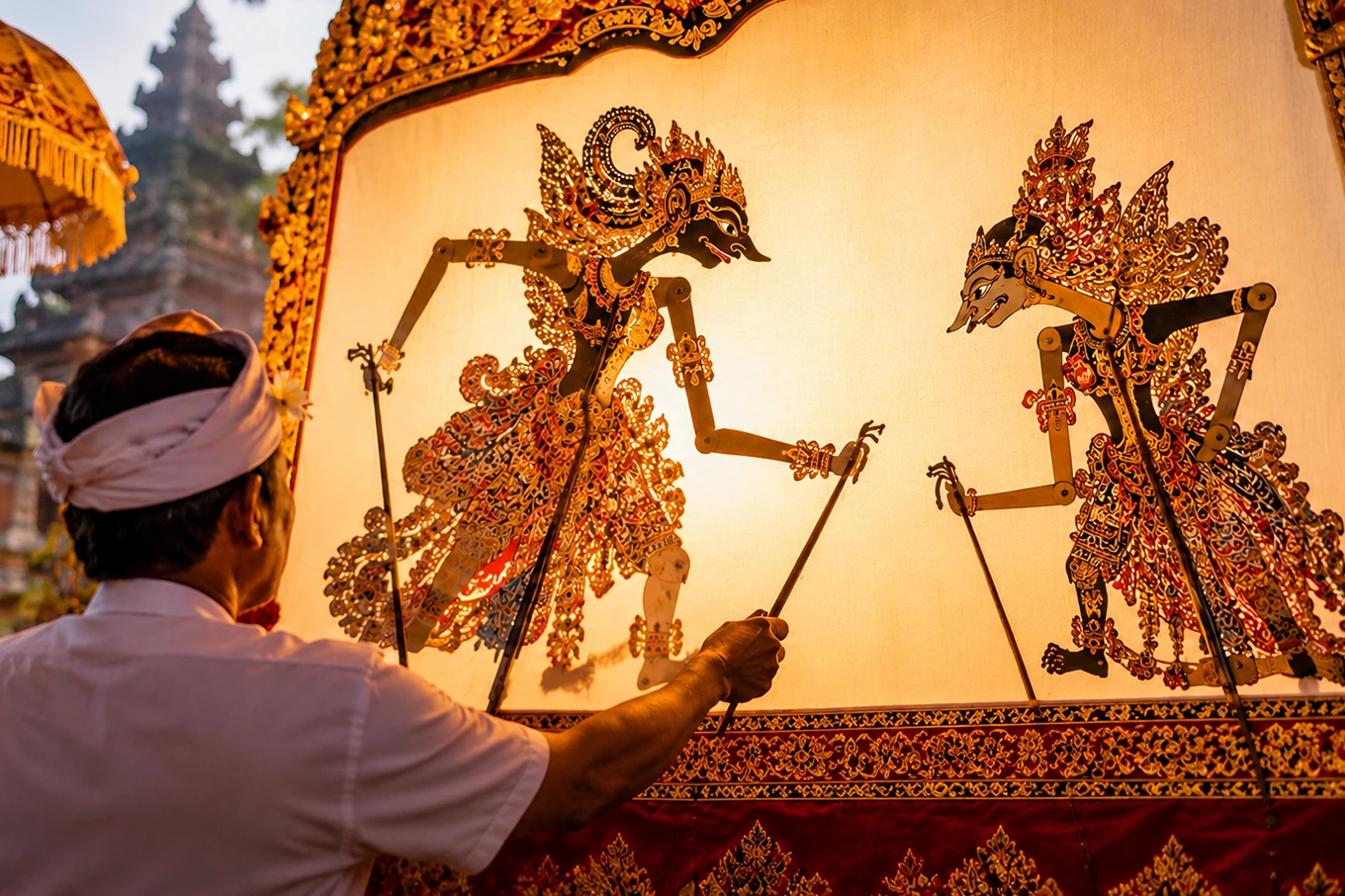
Among Bali's cultural expressions, balinese shadow puppets offer a fascinating way to understand local beliefs and artistic skills. Known as wayang kulit, this performance uses carved leather figures, light, and a screen to turn epic stories into moving scenes. More than entertainment, balinese shadow puppets connect audiences with moral lessons, music, and community traditions. Today, balinese shadow puppets remain an important cultural expression.
Beyond their artistic beauty, these performances reflect Bali's rich cultural heritage and spiritual values. Each character represents different personalities, emotions, and moral teachings that audiences can relate to in everyday life. Accompanied by traditional gamelan music and guided by a skilled puppeteer, the show creates an immersive experience that brings ancient stories to life. For visitors, watching this traditional art is a meaningful way to discover how Balinese communities preserve their cultural identity across generations.
What Are Balinese Shadow Puppets Called?
The performance is called wayang kulit: wayang refers to a shadow or puppet, while kulit means leather. Artisans carve buffalo hide into characters with detailed costumes and movable arms.
A performance is guided by a dalang, or puppeteer and storyteller. Balinese shadow puppets depend on this artist's storytelling skill. The dalang moves figures between a lamp and screen, creating silhouettes. In balinese shadow puppets, the kayonan, a leaf or tree shaped figure, often marks the beginning and end of a performance and represents the cycle of life and storytelling.
What Is the History of Shadow Puppetry in Bali?
Wayang traditions in Java and Bali developed over centuries, with references dating back to at least the ninth century. Cultural connections between Bali and Java helped bring epics such as the Ramayana and Mahabharata into Balinese artistic life.
Over time, balinese shadow puppets became part of community entertainment and religious ceremonies. The tradition has also adapted to changing audiences through shorter presentations and recordings. However, the dalang's skill and the stories' ethical themes remain central.
How Is the Ramayana Story Performed Using Shadow Puppets?
The Ramayana follows Prince Rama, Sita, and Hanuman in a story of loyalty, courage, and the struggle against demon king Ravana. In balinese shadow puppets ramayana performances, selected episodes unfold through dialogue, narration, music, and controlled movement.
Each character has a recognizable shape and movement. Noble figures often use controlled gestures, while powerful or comic characters may move more energetically. A small gamelan ensemble, including gender metallophones, provides rhythm and atmosphere.
Balinese shadow puppets ramayana interpret a familiar epic through Balinese aesthetics and values. Humor, local references, and familiar language make an ancient story feel close to everyday life. The performance is not simply a retelling; it is a conversation between inherited literature and the community. Balinese shadow puppets ramayana also reflect local interpretations of the epic.
What Is the Difference Between Balinese and Javanese Wayang Kulit?
Both traditions use leather puppets, a screen, light, a dalang, and stories from the Ramayana and Mahabharata. However, their visual styles differ. Balinese figures tend to have more naturalistic proportions and expressive movement, while many Javanese figures are highly stylized, with elongated bodies, intricate ornament, and codified gestures.
Music and storytelling also vary. Balinese performances often use a compact gender wayang ensemble and may be connected to temple or family ceremonies. Javanese performances can feature a larger gamelan ensemble and different courtly conventions, languages, and pacing.
For visitors, balinese shadow puppets feel lively through rapid exchanges, comic characters, and music.
Where Can Tourists Watch a Balinese Shadow Puppet Performance?
Visitors may find shows at temple festivals, cultural events, and arts venues. Ubud is a useful place to ask about scheduled cultural performances, while Sukawati is known for its puppet making tradition. Setia Darma House of Mask and Puppets may also host shows or provide information. Schedules can change, so check directly with venues before making plans.
To appreciate balinese shadow puppets, watch both the screen and the puppeteer. At religious ceremonies, follow local guidance, dress respectfully, and ask before taking photographs.
For balinese shadow puppets ramayana, knowing the main characters can help you follow the story. Watching balinese shadow puppets ramayana is a memorable way to experience how Bali keeps traditional storytelling meaningful for new generations.
For visitors, balinese shadow puppets provide a memorable introduction to Bali's artistic heritage, religious imagination, and enduring love of live storytelling.
If you visit Bali, you can stay at Alzeto Co Living, one of the co-living spaces in Bali for tourism who want to relax and connect. It can be a comfortable place to stay while exploring the island's cultural traditions, discovering local communities, and experiencing the spiritual side of Bali.
Published on 18 November 2026

