Galungan and Kuningan: Celebrating Bali’s Spiritual Traditions
Bali is known worldwide as an island rich in spirituality, culture, and deeply rooted religious traditions. Among the many sacred celebrations practiced by Balinese Hindus, galungan and kuningan hold a particularly special place. These two holy days represent harmony, balance, and gratitude values that shape the identity and way of life of the Balinese people. More than just rituals, galungan and kuningan symbolize a continuous connection between humans, ancestors, and the divine.
Galungan and kuningan are celebrated every 210 days according to the Balinese Pawukon calendar. Galungan marks the victory of Dharma (good) over Adharma (evil), while Kuningan concludes the sacred cycle as the moment when ancestral spirits return to the spiritual realm. This cycle of descent and ascension reflects the philosophical essence of Balinese Hinduism: life is sustained through balance, prayer, and spiritual awareness.
Spiritual Meaning Behind the Rituals
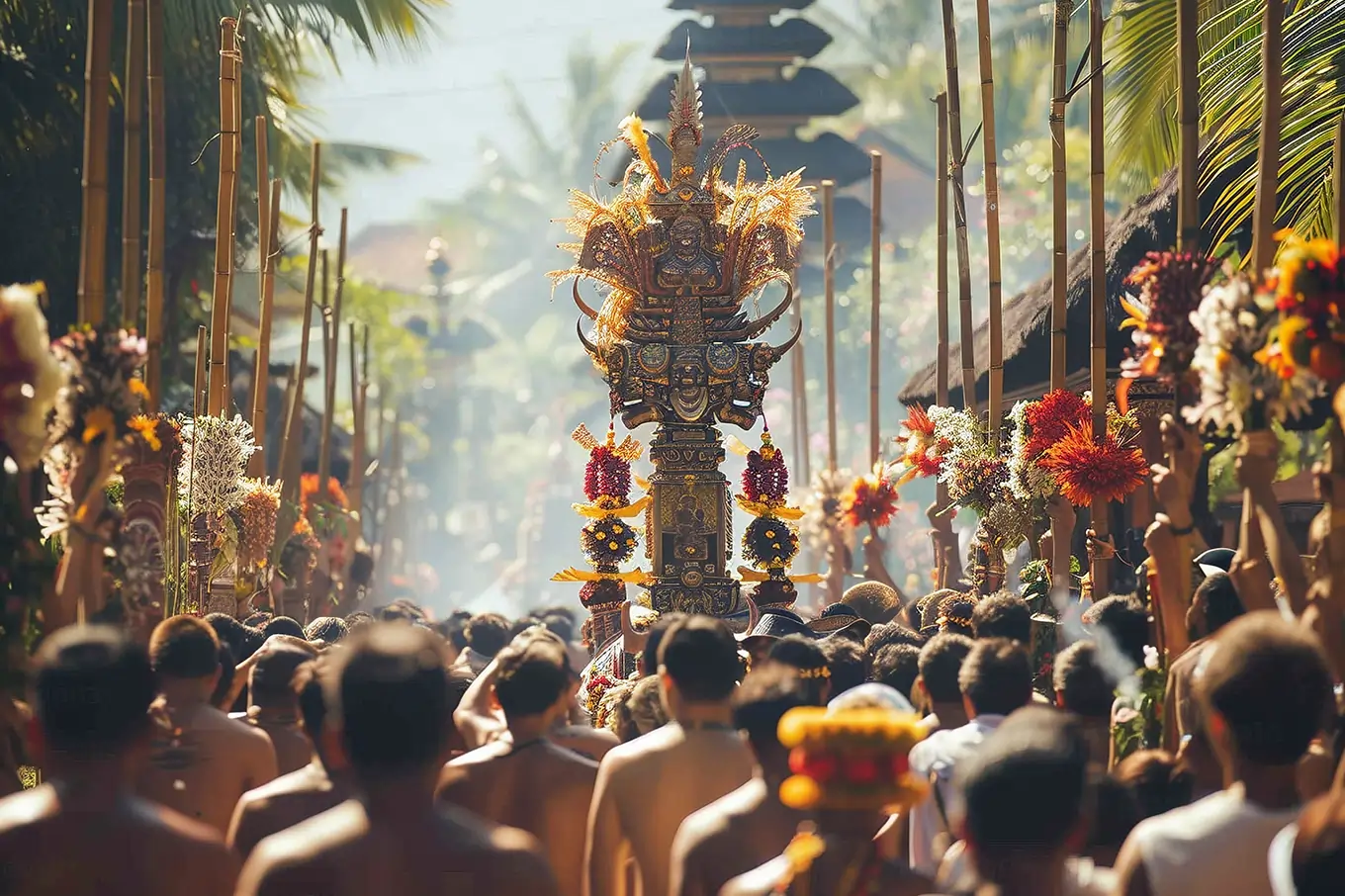
The preparation for galungan and kuningan begins days before the celebration. Families work together to create penjor tall, curved bamboo poles decorated with coconut leaves, fruits, rice, and symbolic ornaments. These penjors, seen lining every street in Bali, represent gratitude, prosperity, and the harmonious connection between heaven and earth.
On Galungan day, families present offerings at home shrines, ancestral temples, and village temples. It is believed that during galungan and kuningan, ancestral spirits descend to visit their loved ones. Offerings are prepared with care, accompanied by prayers to welcome them with respect and warmth.
Kuningan has a more reflective tone. On this day, yellow rice and symbolic items representing prosperity and spiritual protection are offered. The belief is that during galungan and kuningan, particularly on Kuningan, the ancestors ascend back to the divine realm. This creates a spiritual rhythm of welcoming and releasing, teaching humans to appreciate presence while accepting the impermanence of life.
A Celebration That Strengthens Community Bonds
Beyond the rituals, the beauty of galungan and kuningan lies in the unity it brings to the community. Each village has unique traditions that enhance the richness of the celebration. Children dress in traditional attire, musicians play gamelan, and women prepare offerings with artistry and devotion. This collective participation strengthens social harmony in Balinese communities.
For many Balinese families, galungan and kuningan are moments to reconnect. Those who live outside the island often return home to be with their families, visit temples, and share meals together. This tradition reinforces the importance of togetherness and gratitude.
During galungan and kuningan, the island transforms. Penjors decorate every road, the smell of incense drifts through the air, and chants from temples create a serene atmosphere. Visitors who come during this period often feel the island’s spiritual energy in a unique and calming way.
Life Philosophy Embedded in Tradition
To the Balinese, galungan and kuningan are not merely religious events but reminders of life’s essential values. Galungan teaches courage in standing for goodness and truth, while Kuningan teaches sincerity in letting go. These two values complement each other, forming a balanced spiritual foundation.
During galungan and kuningan, another important tradition is ngejot—the act of giving food to neighbors, relatives, and friends. This gesture symbolizes generosity and the belief that blessings are meant to be shared. It also reinforces respect and kindness within the community.
Each offering used during galungan and kuningan carries deep meaning. Flowers represent purity, rice symbolizes sustenance, and fruits reflect abundance. Together, they teach the importance of maintaining balance between human life, nature, and the divine.
Galungan and Kuningan in Modern Times
In today’s fast-paced world, the rituals of galungan and kuningan remain strong and increasingly cherished. Younger generations continue the traditions with pride, recognizing the importance of grounding themselves in cultural values. Many families take the celebration as an opportunity to disconnect from technology and reconnect with one another.
Travelers who visit during galungan and kuningan often gain meaningful cultural insight. Many are fascinated by penjor symbolism, temple ceremonies, and the peaceful atmosphere of Balinese villages. This celebration proves that even in modern times, ancient traditions can remain relevant while preserving their sacred essence.
Honoring Bali’s Spiritual Legacy
As one of the most important celebrations on the island, galungan and kuningan highlight the timeless spiritual wisdom that shapes Balinese life. Through prayer, offerings, and reflection, the Balinese remind the world that peace begins within through harmonious thoughts, words, and actions.
Today, galungan and kuningan stand not only as cultural rituals but as symbols of the enduring spiritual strength of Bali, connecting past, present, and future.
Galungan and Kuningan beautifully capture the heart of Balinese spirituality, blending devotion, community, and vibrant cultural expression. As the island honors the triumph of good over evil, visitors gain a deeper appreciation for Bali’s rich heritage and living traditions. Whether you witness the celebrations firsthand or simply learn about their meaning, these sacred festivals offer a memorable glimpse into the soul of Balinese culture.
If you’re visiting Bali, you can stay at Alzeto Co Living, one of the co-living spaces in Bali designed for tourists who want to relax and connect.
Published on 03 December 2025