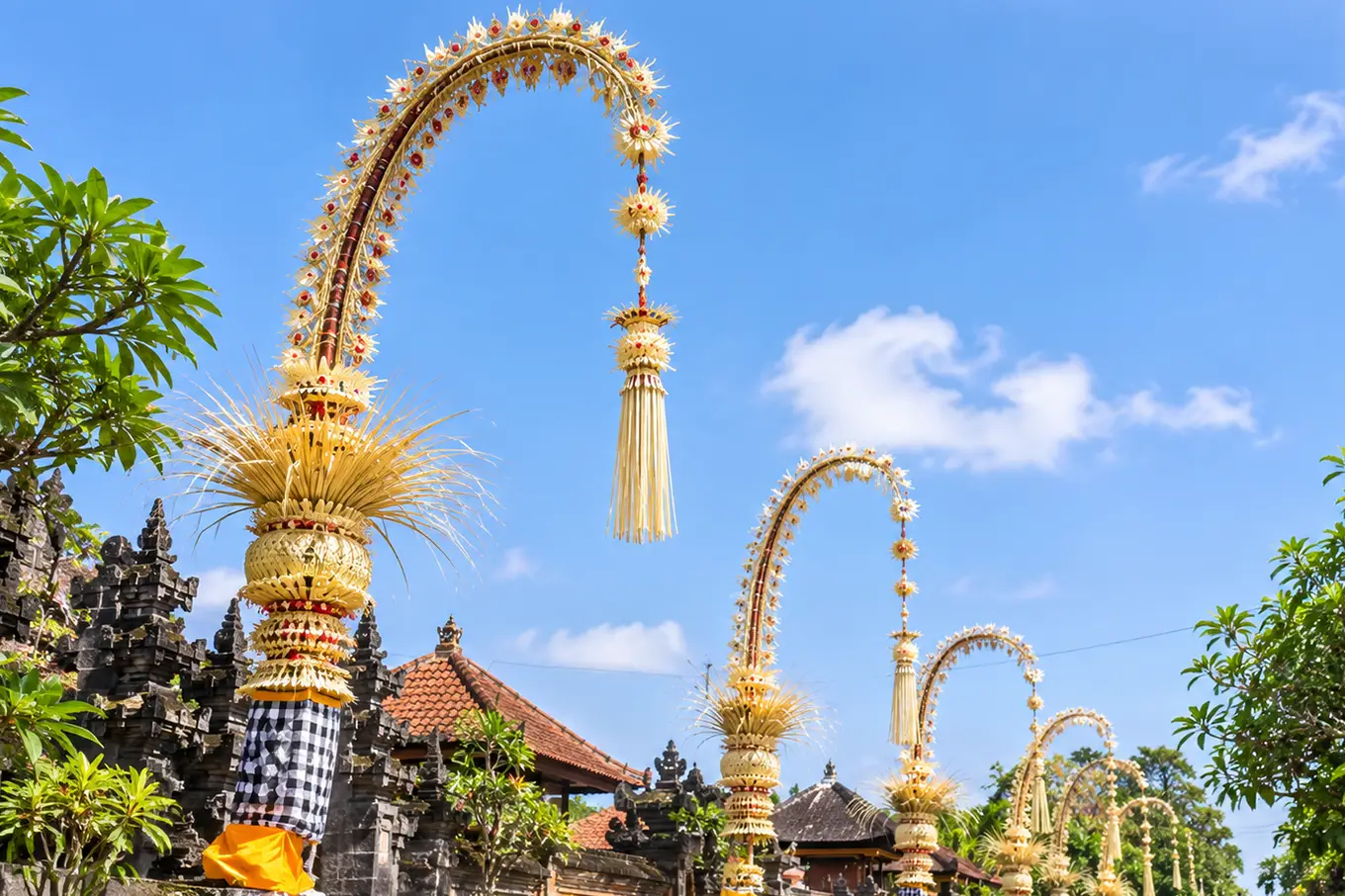
Bali is known for its beautiful landscapes, traditional ceremonies, and unique cultural decorations. One of the most recognizable decorations across the island is Penjor Bali, a tall bamboo pole decorated with coconut leaves, flowers, and various natural materials. These decorations can often be seen standing outside houses, temples, and along village streets, especially during important religious celebrations.
Penjor Bali is more than just a decorative element. It represents gratitude, prosperity, and respect for the blessings of nature. For Balinese Hindus, this traditional ornament also carries deep spiritual meaning connected to their religious beliefs and cultural identity.
Understanding Penjor Bali offers visitors a closer look at how Balinese people express their devotion through everyday traditions. From its symbolic decorations to its connection with religious ceremonies, this cultural practice remains an important part of life in Bali.
What Is Penjor Bali and What Does It Symbolize?
Penjor Bali is a traditional bamboo pole decorated with natural materials and placed outside Balinese Hindu homes and temples. Its curved shape is one of its most distinctive features, making it easy to recognize throughout the island.
The decoration symbolizes Mount Agung, which is considered sacred by Balinese Hindus. Its curved form represents the mountain's natural shape, while the hanging decorations symbolize the abundance of nature and the blessings provided by God.
Every element of Penjor Bali has its own meaning. The bamboo represents strength and stability, while coconut leaves symbolize purity and natural prosperity. Rice, fruits, and other agricultural products represent gratitude for successful harvests.
The presence of these decorations also reflects the Balinese philosophy of maintaining harmony between humans, nature, and the divine. Therefore, Penjor Bali is not simply an ornament but an expression of spiritual devotion and appreciation for life's blessings.
Why Do Balinese People Put Penjor Outside Their Homes?
Balinese people place Penjor Bali outside their homes as a symbol of gratitude and devotion. These decorations are traditionally installed to welcome the blessings of God and honor the spiritual values associated with their religious celebrations.
During Galungan, the decorations can be found along residential streets, creating a distinctive atmosphere throughout Balinese villages. Each household usually prepares its own decoration in front of the entrance, showing participation in the celebration.
There are several reasons why families display this traditional ornament:
-
Expressing gratitude: It represents appreciation for prosperity, food, and blessings received throughout life.
-
Welcoming divine blessings: The decoration symbolizes respect and devotion toward the divine.
-
Preserving cultural traditions: Preparing and installing it allows younger generations to learn about Balinese customs.
-
Creating a festive atmosphere: Rows of decorated bamboo poles make villages look more vibrant during religious celebrations.
Penjor Bali also reflects the strong relationship between family life and religious practices in Bali. Preparing the decoration is often a shared activity involving family members and local communities.
What Materials Are Used to Make a Traditional Bali Penjor?
A traditional Bali penjor is made using bamboo and various natural materials. Although its appearance can differ between households, the basic structure and symbolic elements generally follow traditional customs.
The main materials include:
-
Bamboo pole: A long bamboo stick provides the main structure and creates the characteristic curved shape.
-
Coconut leaves: Young or dried coconut leaves are used to create decorative ornaments around the pole.
-
Rice: Rice represents prosperity and gratitude for agricultural abundance.
-
Fruits and agricultural products: These decorations symbolize the richness of nature and successful harvests.
-
Flowers: Flowers add beauty while representing purity and devotion.
-
Palm leaves: These are often used to create additional traditional decorations.
The materials used in Penjor Bali are not chosen randomly. Each component carries cultural and spiritual significance, reflecting the Balinese belief in respecting nature and appreciating its resources.
Families usually prepare these decorations together before important ceremonies. The process can involve collecting materials, shaping bamboo, weaving coconut leaves, and arranging the offerings.
What Is the Connection Between Penjor and Galungan?
Penjor Bali has a strong connection with Galungan, one of the most important religious celebrations in Balinese Hinduism. Galungan celebrates the victory of dharma, representing goodness and righteousness, over adharma, which represents negative forces.
During this celebration, families install traditional decorations outside their homes as an expression of gratitude and devotion. The decorations also welcome the ancestral spirits who are believed to visit their families during the Galungan period.
The Bali penjor displayed during Galungan is commonly decorated with agricultural products, coconut leaves, and offerings. These elements represent prosperity, fertility, and gratitude for the blessings of life.
The curved bamboo poles create a beautiful visual atmosphere throughout residential areas. Visitors traveling around Bali during this period can easily notice these decorations lining village streets and temple entrances.
Beyond their appearance, these ornaments remind Balinese communities to maintain harmony, practice gratitude, and strengthen their spiritual connection.
How Long Do Balinese People Keep Penjor Decorations?
Traditionally, Penjor Bali decorations installed for Galungan remain standing until the Kuningan celebration, which takes place ten days after Galungan.
During this period, families maintain their decorations as part of the religious observance. The ornaments remain outside their homes, creating a festive atmosphere throughout the island.
After Kuningan, families generally remove the decorations according to local customs. Some parts may be reused or disposed of respectfully, depending on family traditions and community practices.
The duration of these decorations demonstrates their connection with the Galungan and Kuningan celebrations. For visitors, seeing them along village roads offers an opportunity to experience Bali's cultural atmosphere beyond its beaches and tourist attractions.
Understanding the tradition behind Penjor Bali helps travelers appreciate why these decorations hold such an important place in Balinese society. They represent more than visual beauty because every material, shape, and placement carries cultural and spiritual meaning.
Whether you encounter them in traditional villages or residential neighborhoods, these decorations provide a meaningful glimpse into the island's heritage.
If you visit Bali, you can stay at Alzeto Co Living, one of the co-living spaces in Bali for tourism who want to relax and connect. It can be a comfortable place to stay while exploring the island's cultural traditions, discovering local communities, and experiencing the spiritual side of Bali.
Published on 16 November 2026

