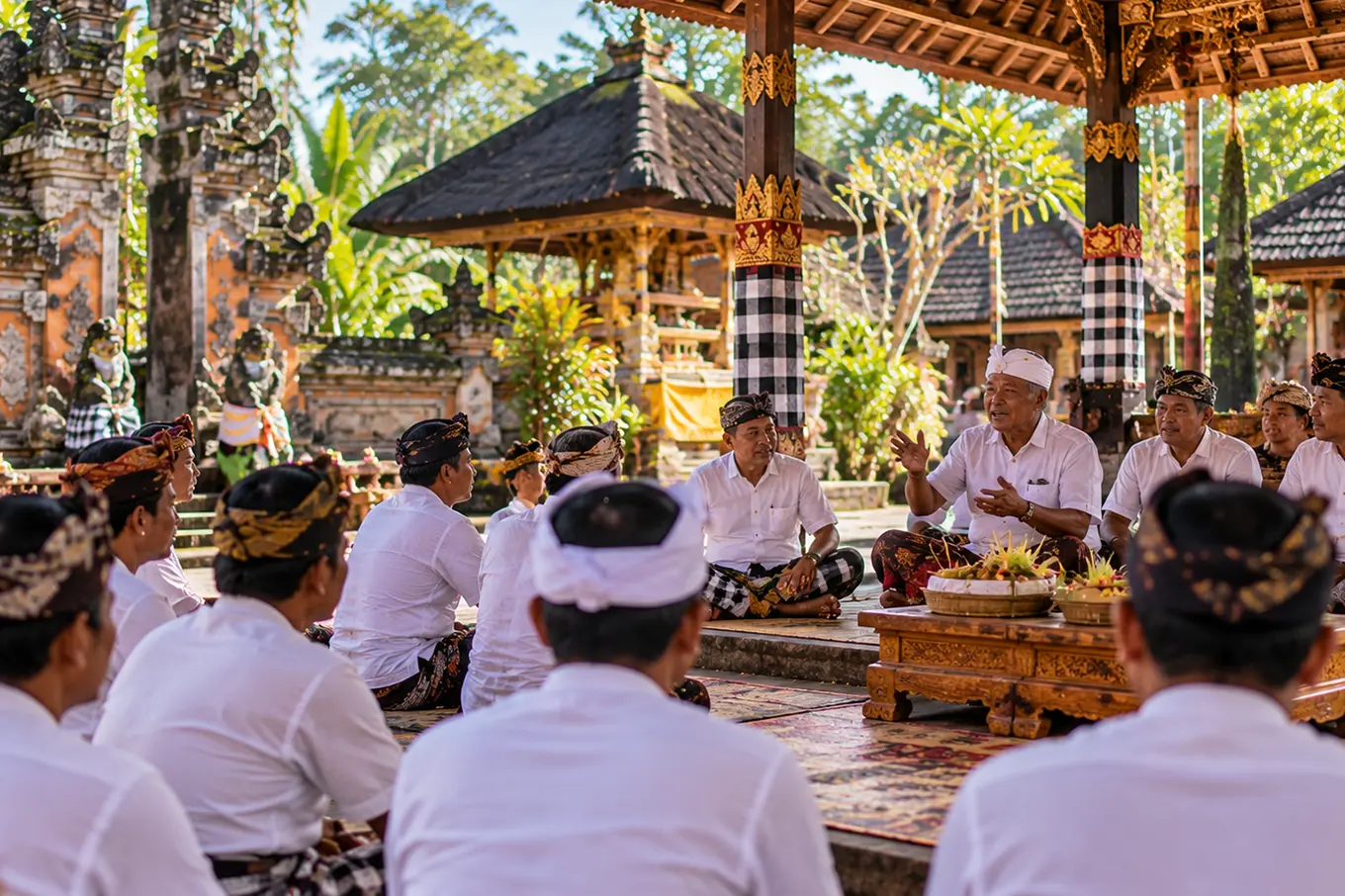
Bali is known for its beautiful beaches, ancient temples, and vibrant cultural traditions. However, beyond its famous attractions, the island has a strong community system that plays an important role in everyday life. One of the most significant parts of this system is the banjar in Bali, a traditional neighborhood organization that brings residents together through social activities, cultural ceremonies, and shared responsibilities.
Understanding the banjar in Bali helps visitors appreciate how local communities preserve their traditions while maintaining harmony among residents. For travelers planning a longer stay, learning about this organization can also provide useful insights into local customs, community expectations, and the way Balinese society operates.
What Is a Banjar in Bali?
A banjar in Bali is a traditional community organization that connects residents within a particular neighborhood or area of a customary village. It serves as a place where people gather, discuss community matters, organize ceremonies, and cooperate on activities that benefit their surroundings.
Unlike a modern neighborhood association that mainly focuses on administrative matters, a traditional banjar has strong cultural and social responsibilities. It helps maintain relationships among residents and supports the continuation of customs passed down through generations.
There are different types of banjar organizations. A banjar adat focuses primarily on customary traditions, religious ceremonies, and cultural responsibilities. Meanwhile, a banjar dinas is associated with administrative and civil matters within the neighborhood.
The structure and responsibilities of each organization can differ depending on the local community. Nevertheless, the banjar in Bali remains an important part of how residents organize their collective lives.
What Is the Purpose of a Banjar?
The main purpose of a banjar in Bali is to strengthen community relationships and coordinate shared responsibilities. Balinese culture places considerable importance on cooperation, mutual assistance, and maintaining harmony between individuals and their surroundings.
A banjar helps put these values into practice through several activities.
-
Preserving cultural traditions: Members work together to prepare religious ceremonies, maintain customary practices, and pass cultural knowledge to younger generations.
-
Supporting community members: Residents often help one another during important life events, including weddings, funerals, and other family occasions.
-
Maintaining shared spaces: Depending on local arrangements, community members may participate in maintaining roads, communal buildings, and other neighborhood facilities.
-
Resolving local concerns: Community meetings provide opportunities to discuss shared problems, coordinate responsibilities, and seek solutions according to applicable customary rules.
These activities demonstrate why the banjar in Bali is more than a neighborhood gathering place. It represents a system of cooperation that helps preserve the island's cultural identity.
How Does a Banjar Work in Balinese Society?
A banjar generally operates through community meetings, customary leadership, and collective participation. Its members discuss upcoming ceremonies, community projects, and responsibilities that require cooperation.
The organization is commonly led by a traditional leader known as a kelian banjar. Depending on the local structure, this person helps coordinate meetings, communicate decisions, and organize activities involving residents.
The bale banjar, a communal pavilion, is often an important gathering place. Residents may meet there to discuss community matters, prepare ceremonies, practice traditional music, or organize cultural performances.
The banjar in Bali also reflects the principle of gotong royong, which means working together for a common purpose. When a community prepares for a major ceremony, for example, residents may contribute their time, skills, or resources.
These responsibilities vary between villages, and not every banjar follows exactly the same arrangements. Local customary rules, known as awig-awig, may establish expectations concerning participation, community conduct, and shared obligations.
For visitors, observing these activities offers a valuable opportunity to understand how Balinese traditions remain part of everyday life rather than being limited to special cultural performances.
Who Can Become a Member of a Banjar?
Membership arrangements depend on the type of banjar and the customary rules of the community. Traditionally, membership in a banjar adat is closely connected to local customary status, family relationships, residence, and community obligations.
Balinese residents who belong to a customary community may participate in its activities according to established rules. Married household representatives have traditionally played an important role in many banjar organizations, although specific arrangements differ between communities.
Foreign visitors and temporary residents should not automatically assume that renting a room or villa makes them formal members of a banjar. Their position may be different from that of customary members.
However, people living in Bali for an extended period may encounter community expectations concerning respectful behavior, neighborhood security, ceremonies, or local contributions. These expectations depend on the location and circumstances.
If you plan to rent accommodation long term, asking your landlord about local customs and community responsibilities can help you understand what to expect before moving in.
What Activities Are Organized by a Banjar?
A banjar in Bali coordinates various activities that bring residents together and maintain community traditions. These activities may be religious, cultural, social, or related to shared neighborhood responsibilities.
Common examples include:
-
Religious ceremonies: Residents cooperate in preparing offerings, organizing temple celebrations, and supporting important Hindu religious observances.
-
Weddings and funerals: Community members may help families coordinate preparations and provide practical support during significant life events.
-
Cultural performances: Traditional music, dance rehearsals, and preparations for cultural festivals may take place at the bale banjar.
-
Nyepi preparations: In many communities, local youth groups and residents help prepare ogoh-ogoh, large artistic effigies associated with the evening before Nyepi.
-
Community meetings: Residents gather to discuss local matters, coordinate upcoming events, and communicate customary expectations.
-
Neighborhood maintenance: Depending on local arrangements, members may participate in cleaning activities, security coordination, and improvements to communal facilities.
Through these activities, the banjar in Bali helps connect generations and encourages residents to take an active role in their community.
What Is a Banjar Fee in Bali?
The phrase what is a banjar fee in Bali commonly refers to a contribution associated with local community activities and customary responsibilities. It is important to understand that there is no single, island-wide standard rate that applies to every household or visitor.
Depending on the community, contributions may support shared facilities, neighborhood security, customary activities, or other locally agreed responsibilities. The amount, frequency, and collection arrangements can differ between villages.
For foreign residents and property owners, whether a contribution is expected depends on the local rules and individual circumstances. Some rental agreements may also specify whether the property owner or tenant is responsible for particular community contributions.
If you are wondering what is a banjar fee in Bali before renting a villa or apartment, ask the property owner to explain any expected payments, what they cover, and who is responsible for paying them. Requesting a written explanation can help avoid misunderstandings.
A banjar contribution should not automatically be confused with a government tax or Bali's separate tourism levy. Visitors staying for a short holiday should not assume that they must pay a banjar fee simply because they enter a neighborhood.
Experience Bali Beyond Its Tourist Attractions
Understanding the banjar in Bali offers a deeper perspective on the island's cultural identity and community values. From religious ceremonies to neighborhood cooperation, this traditional organization demonstrates how residents maintain meaningful connections while preserving their heritage.
For travelers who want to experience Bali at a more relaxed pace, choosing accommodation that encourages comfort and connection can make an extended visit more enjoyable.
If you visit Bali, you can stay at Alzeto Co Living, one of the co-living spaces in Bali for tourism who want to relax and connect. It offers a place to settle in while discovering the island's culture, traditions, and everyday community life.
Frequently Asked Questions
1. What is a banjar in Bali?
A banjar is a traditional Balinese community organization that coordinates cultural ceremonies, social activities, and shared responsibilities among residents.
2. What is the difference between banjar adat and banjar dinas?
Banjar adat focuses on customary traditions and religious activities, while banjar dinas is associated with administrative and civil matters.
3. What is a banjar fee in Bali?
It generally refers to a local community contribution. Its amount and purpose vary by location, and it is not a standardized fee that every tourist must pay.
4. Do tourists need to join a banjar in Bali?
No. Tourists do not automatically become formal banjar members when visiting Bali. However, they should respect local customs and follow applicable rules.
5. Where can visitors learn more about banjar traditions?
Visitors can learn about banjar traditions by observing community activities respectfully, visiting cultural villages, and asking local guides to explain customary practices.
Published on 20 October 2026

