Why Balinese Water Temples Are Bali’s Most Enchanting Destinations
Bali is widely known for its beaches and vibrant culture, but one of its most profound attractions lies inland, balinese water temples. These sacred sites are not only places of worship but also symbols of harmony between humans, nature, and spirituality. Scattered across rivers, lakes, and rice terraces, balinese water temples offer a unique glimpse into Bali’s ancient belief system that continues to thrive today.
What makes balinese water temples so captivating is their ability to blend natural beauty with spiritual meaning. Flowing water, moss-covered stone shrines, and serene surroundings create an atmosphere that feels timeless. For travelers seeking more than sightseeing, these temples provide a deeply enriching experience.
The Spiritual Meaning Behind Balinese Water Temples
At the heart of balinese water temples is the Balinese Hindu philosophy of Tri Hita Karana, which emphasizes balance between humanity, nature, and the divine. Water is considered sacred, believed to purify the body and soul. This is why balinese water temples are often built near natural springs, lakes, or rivers.
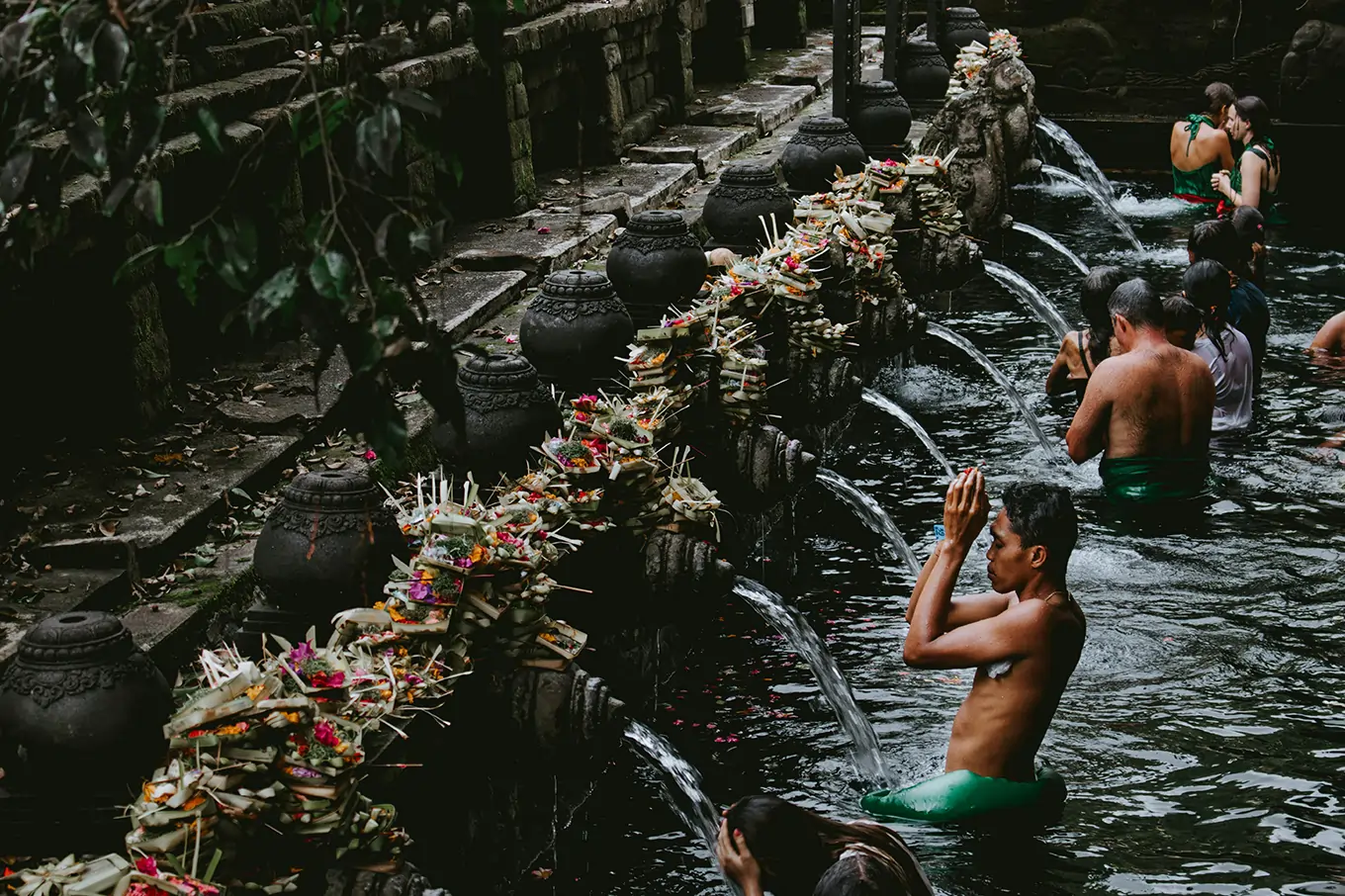
Many locals visit balinese water temples to perform melukat, a traditional purification ritual. During this ritual, holy water flows over the body to cleanse negative energy and restore spiritual balance. Witnessing or participating in this ceremony offers travelers a deeper understanding of Balinese culture and belief systems.
Architectural Beauty and Natural Harmony
The architecture of balinese water temples is another reason they are considered among Bali’s most enchanting destinations. Stone carvings depicting deities, mythical creatures, and floral motifs decorate temple walls. These structures are designed to complement the surrounding environment rather than dominate it.
Surrounded by lush greenery, rice fields, or mountain backdrops, balinese water temples appear as natural extensions of the landscape. The sound of flowing water and birdsong enhances the tranquil atmosphere, making these temples ideal places for reflection and relaxation.
Famous Balinese Water Temples to Visit
Some of the most iconic Balinese water temples in Bali include Tirta Empul, Ulun Danu Beratan, and Taman Ayun, each offering a distinct atmosphere and cultural significance.
1. Tirta Empul
Tirta Empul is one of the most significant Balinese water temples, famous for its sacred spring that continuously flows with clear water used for ritual purification. Visitors and local worshippers gather at the temple to perform melukat, a traditional cleansing ceremony believed to remove negative energy and restore spiritual balance.
2. Ulun Danu Beratan
Ulun Danu Beratan is renowned for its stunning location on the shores of Lake Beratan in the highlands of Bedugul, where the temple appears to float gracefully on the water’s surface. Dedicated to Dewi Danu, the goddess of lakes and rivers, this temple plays a vital role in Bali’s traditional irrigation system, which supports local agriculture. The cool mountain air, misty surroundings, and reflective lake create a peaceful atmosphere that enhances the spiritual experience.
3. Taman Ayun
Taman Ayun is a royal water temple located in Mengwi, known for its elegant design, expansive gardens, and surrounding water channels that give the complex a serene and balanced appearance. The temple was historically used by the Mengwi kingdom for ceremonial purposes and remains an important spiritual center today. Its beautifully tiered shrines, manicured landscapes, and reflective ponds represent the traditional Balinese philosophy of balance between the spiritual and natural worlds.
Cultural Significance in Daily Balinese Life
Beyond their visual appeal, balinese water temples play a vital role in irrigation through the traditional subak system. This ancient water-sharing network ensures fair distribution of water to rice fields, guided by spiritual principles.
Priests at balinese water temples oversee ceremonies that regulate agricultural cycles, reinforcing the idea that farming is both a physical and spiritual practice. This integration of religion and sustainability is one reason balinese water temples are recognized as cultural treasures.
A Peaceful Experience for Modern Travelers
For modern travelers, balinese water temples offer a rare opportunity to slow down. Away from crowded tourist hubs, these sacred spaces encourage mindfulness and inner calm. Walking through a balinese water temple complex often feels like stepping into a living meditation.
Many visitors report feeling refreshed after spending time at balinese water temples, even without participating in rituals. The calm environment, combined with the spiritual energy of the place, leaves a lasting impression that goes beyond photographs.
Why Balinese Water Temples Remain Timeless
Despite modernization, balinese water temples remain deeply respected and carefully preserved. They continue to serve their original purpose while welcoming visitors from around the world. This balance between tradition and openness is what keeps balinese water temples relevant and enchanting.
As Bali evolves, balinese water temples stand as reminders of the island’s spiritual roots and its commitment to harmony with nature.
If you visit Bali, you can stay at Alzeto Co-Living, one of the co-living spaces in Bali for tourists who want to relax and connect.
Published on 18 December 2025

