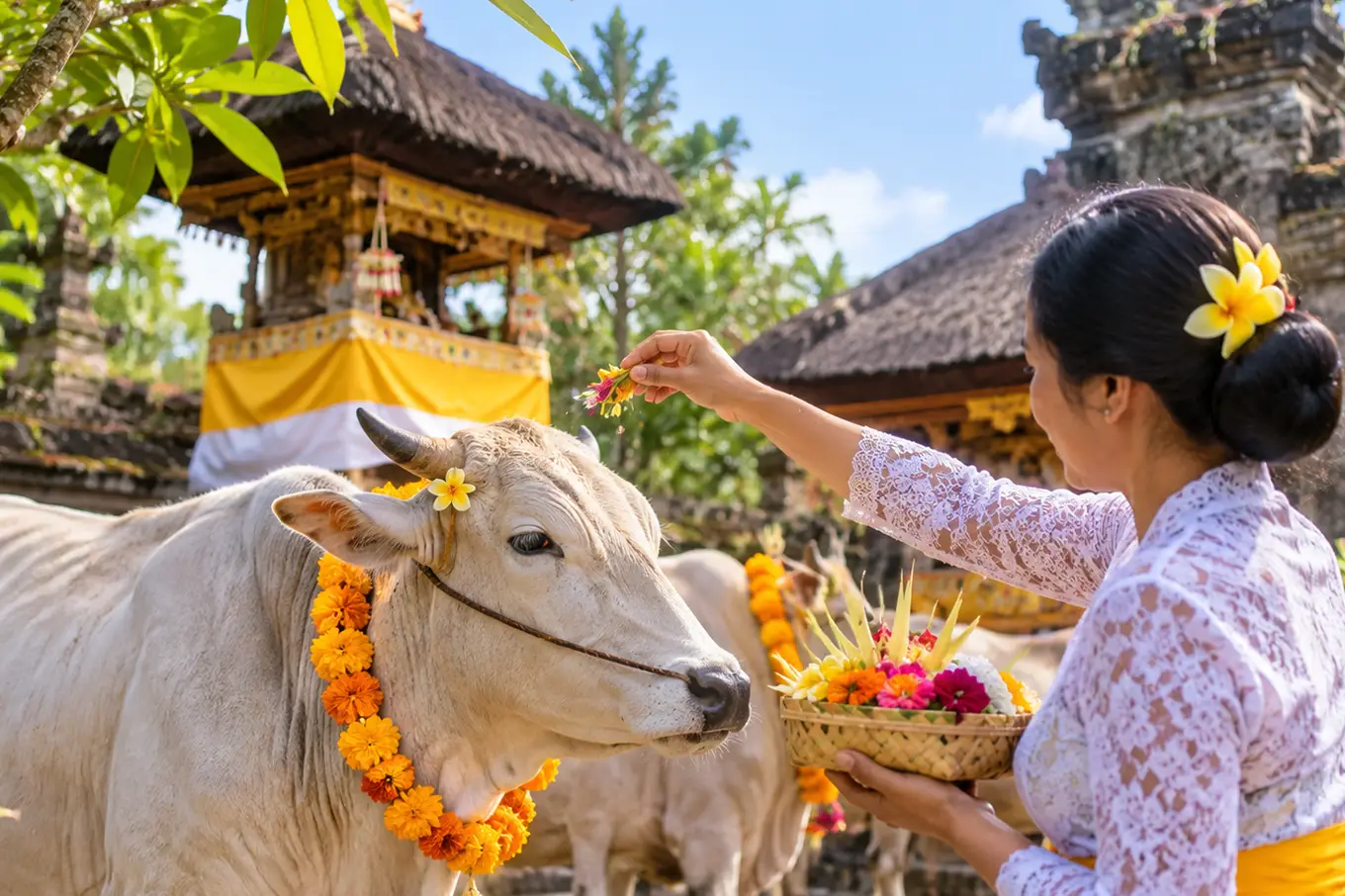
Bali is well known for its unique cultural traditions and Hindu ceremonies that reflect the relationship between humans, nature, and spirituality. One of these traditions is Tumpek Kandang, a special ceremony dedicated to honoring animals and expressing gratitude for their contribution to human life. This celebration reflects the Balinese philosophy of maintaining harmony with all living beings.
For visitors interested in Balinese culture, understanding Tumpek Kandang offers a closer look at how local communities appreciate nature and respect animals. The ceremony is not simply an annual ritual but also a reminder of the responsibility humans have toward other living creatures. Through Tumpek Kandang, Balinese Hindus express gratitude, offer prayers, and hope for the well-being of animals.
What Is Tumpek Kandang in Balinese Culture?
If you are wondering what is Tumpek Kandang, it is a traditional Balinese Hindu ceremony held to honor animals and acknowledge their importance in everyday life. The word Tumpek refers to a particular day in the Balinese calendar, while Kandang generally refers to an animal enclosure or livestock shelter.
In Balinese culture, Tumpek Kandang is also known as Tumpek Uye. The ceremony reflects the belief that animals are valuable living creatures that deserve care, protection, and respect. They contribute to agriculture, transportation, food production, and the balance of the natural environment.
Understanding what is Tumpek Kandang also means recognizing the spiritual connection between humans and animals. Balinese Hindus believe that maintaining harmony with nature is an important part of religious and daily life.
During Tumpek Kandang, families and communities prepare offerings and prayers for the animals they raise. The celebration demonstrates that animals should not only be appreciated for their practical benefits but also treated with compassion.
Why Do Balinese Hindus Celebrate Tumpek Kandang?
The main purpose of Tumpek Kandang is to express gratitude for the animals that support human life. In traditional Balinese communities, livestock plays an important role in agriculture, household activities, and local economies.
Cows and buffaloes, for example, have historically helped farmers cultivate rice fields. Pigs and chickens are also commonly raised for household needs and traditional ceremonies. Through Tumpek Kandang, people acknowledge these contributions and pray for the animals' health and protection.
Another important reason for celebrating Tumpek Kandang is to strengthen the relationship between humans and nature. Balinese Hindu philosophy emphasizes balance between people, the environment, and spiritual life.
This celebration encourages people to remember that animals are part of the natural world and should be treated responsibly. It also teaches younger generations about compassion, gratitude, and respect for other living beings.
Therefore, Tumpek Kandang is not only a religious celebration but also a cultural reminder of the importance of caring for animals and maintaining harmony with nature.
What Animals Are Traditionally Blessed During Tumpek Kandang?
During Tumpek Kandang, various domesticated animals receive special attention and blessings from their owners. The animals included in the ceremony depend on the household's livestock and local traditions.
Some commonly honored animals include:
-
Cows and buffaloes: These animals have an important role in traditional agriculture and farming activities.
-
Pigs: Often raised by Balinese families, pigs are valuable livestock that contribute to household needs and traditional celebrations.
-
Chickens and ducks: These birds are commonly kept for eggs, meat, and other household purposes.
-
Dogs and cats: As domestic companions, they are also appreciated and cared for by their owners.
-
Horses: Although less common in everyday farming today, horses may also receive attention during the celebration in communities that raise them.
The selection of animals reflects the daily relationship between local communities and their surroundings. During Tumpek Kandang, owners may decorate their livestock with traditional ornaments and prepare offerings as expressions of gratitude.
The ceremony also encourages responsible animal care beyond the celebration itself.
How Is the Tumpek Kandang Ceremony Performed?
The celebration of Tumpek Kandang involves several traditional preparations and religious activities. Although practices may vary between villages and families, the ceremony generally includes offerings, prayers, and special attention to animals.
Before the ceremony begins, families prepare banten, which are traditional Balinese Hindu offerings made from various materials, including flowers, leaves, and food. These offerings are arranged according to local customs and religious practices.
The owners then bring offerings to the animals or their enclosures. Prayers are performed to express gratitude and ask for the animals' health, safety, and well-being.
Some animals are also decorated with traditional accessories, such as woven coconut leaves or cloth ornaments. In certain communities, their enclosures are cleaned and prepared before the ceremony.
One meaningful aspect of Tumpek Kandang is the involvement of family members in the preparations. Children can learn about the importance of respecting animals by observing and participating in the activities.
Through these practices, the ceremony becomes an opportunity to strengthen family traditions while preserving Balinese cultural values.
When Is Tumpek Kandang Celebrated in Bali?
Tumpek Kandang is celebrated every 210 days according to the Balinese Pawukon calendar. This calendar follows a 30 week cycle, making the ceremony occur approximately twice a year in the Gregorian calendar.
More specifically, Tumpek Kandang falls on Saniscara (Saturday) Kliwon of the Uye week. The date is determined by the traditional Balinese calendar rather than a fixed Gregorian date.
Because of this calendar system, visitors should check the local Balinese Hindu calendar when planning to experience the celebration. The exact date changes each year, depending on the corresponding calendar cycle.
For tourists, witnessing Tumpek Kandang can provide a meaningful opportunity to understand Bali beyond its beaches and popular attractions. It offers insight into the island's spiritual traditions, community values, and relationship with nature.
If you visit Bali, you can stay at Alzeto Co Living, one of the co-living spaces in Bali for tourism who want to relax and connect. It can be a comfortable place to stay while exploring the island's cultural traditions, discovering local communities, and experiencing the spiritual side of Bali.
Published on 17 November 2026

