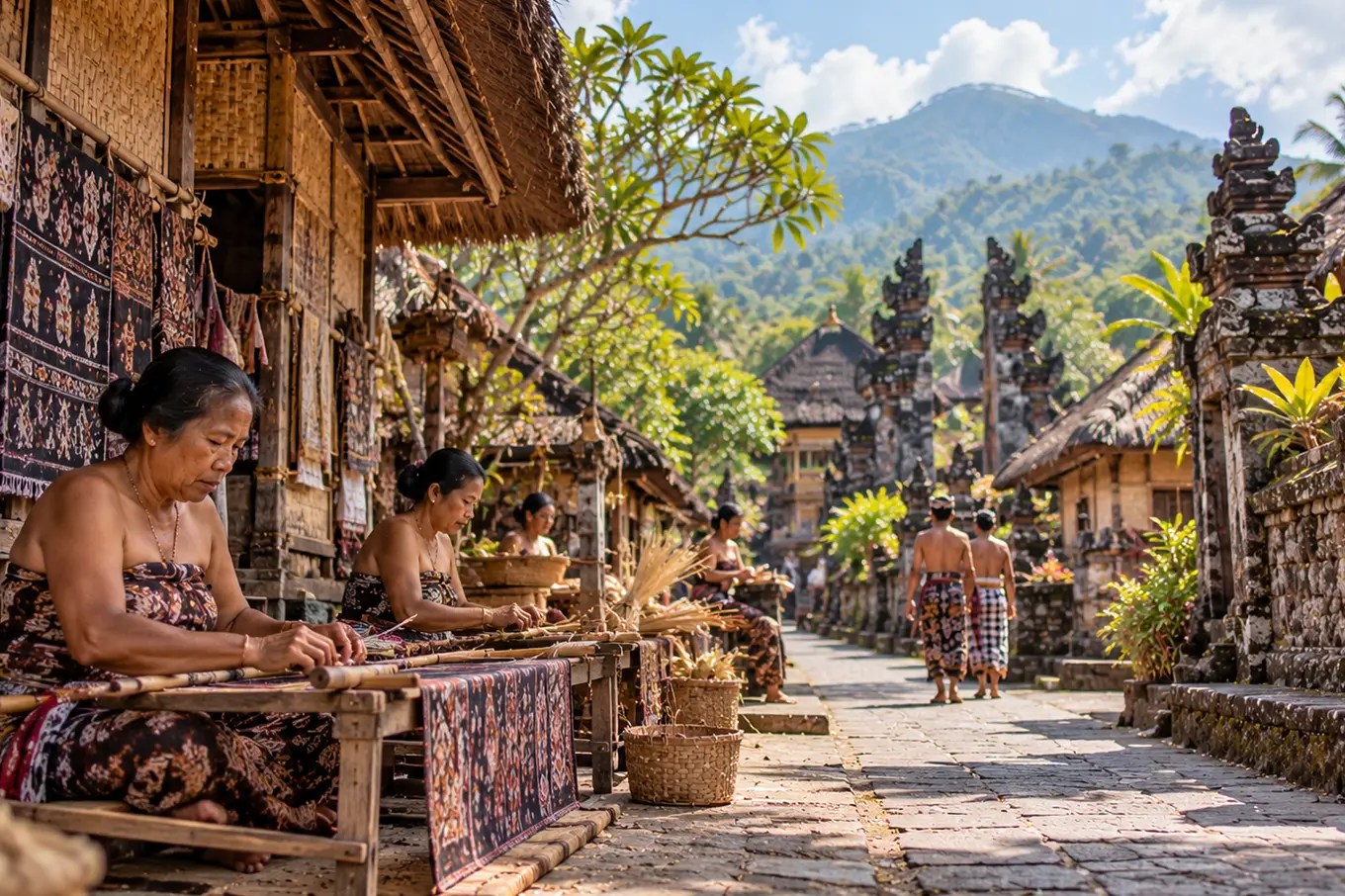
Bali is famous for its beautiful beaches, tropical landscapes, and vibrant cultural traditions. However, travelers looking for a deeper understanding of the island’s heritage can explore traditional communities that preserve their ancestral customs. Tenganan Pegringsingan Village is one of the most fascinating cultural destinations in East Bali, offering a glimpse into the distinctive way of life of the Bali Aga people.
Unlike many popular tourist areas, Tenganan Pegringsingan Village maintains traditional customs, community regulations, and distinctive craftsmanship passed down through generations. From the famous Gringsing textile to the energetic Mekare-kare ceremony, the village offers visitors an opportunity to understand Balinese culture beyond its well-known temples and beaches.
What Is Tenganan Pegringsingan Village Known For?
Tenganan Pegringsingan Village is best known for its Bali Aga heritage, traditional village layout, and rare Gringsing woven textiles. The Bali Aga community is associated with some of Bali’s older cultural traditions, making this destination particularly interesting for travelers who want to discover the island’s historical roots.
One of the village’s most recognizable cultural treasures is Gringsing cloth, which is created using the double ikat weaving technique. This demanding process involves preparing and dyeing both the warp and weft threads before weaving them together. Because it requires considerable skill and time, Gringsing is valued for its craftsmanship and cultural significance.
Another important attraction is Mekare-kare, commonly known as the Pandan War. This traditional ceremony features participants using thorny pandan leaves and rattan shields in symbolic combat. The ritual honors Dewa Indra and forms part of the village’s traditional ceremonial calendar. Together, these traditions make Tenganan Pegringsingan Village an important destination for cultural exploration.
Where Is Tenganan Pegringsingan Village Located?
Tenganan Pegringsingan Village is located in Manggis District, Karangasem Regency, in the eastern part of Bali. Its position makes it a worthwhile stop for travelers exploring East Bali, particularly those visiting Candidasa and other destinations along the island’s eastern coast.
The village is approximately five kilometers from Candidasa and around 65 kilometers from Denpasar, although actual travel times depend on traffic and road conditions. Visitors can reach the area by private car, motorbike, or a hired driver.
Compared with Bali’s busier southern tourist districts, Tenganan Pegringsingan Village offers a quieter atmosphere surrounded by hills, green landscapes, and agricultural areas. Its setting allows travelers to combine cultural sightseeing with a relaxed journey through the countryside.
Before visiting, consider checking local access arrangements and ceremonial schedules. This is a living traditional community rather than simply an outdoor museum, so respecting residents and their daily activities is essential.
What Makes Tenganan Different From Other Villages in Bali?
The main difference is the community’s commitment to preserving its ancestral traditions and customary regulations. Tenganan Pegringsingan Village maintains a distinctive social structure and traditional settlement pattern that reflect its Bali Aga identity.
Its architecture is another notable feature. Houses and communal buildings follow an established layout, while shared spaces support meetings, ceremonies, and community activities. These arrangements demonstrate how traditional planning connects daily life with social responsibilities and cultural values.
Customary regulations, known as awig-awig, also help guide community life. They establish expectations for residents and support the preservation of local traditions and shared resources. Rather than treating culture as something reserved for festivals, the community incorporates customary principles into everyday life.
The village’s textile making traditions further distinguish it from other destinations. Tenganan Pegringsingan is widely recognized for Gringsing cloth, which holds cultural importance beyond its appearance as a handmade product. Its combination of customary governance, traditional architecture, and specialized craftsmanship makes the village particularly distinctive.
What Can You See and Do in Tenganan Pegringsingan?
There are several ways to experience Tenganan Pegringsingan Village while learning about its cultural heritage.
-
Explore the traditional settlement: Walk through the village’s main paths and observe its distinctive architecture, communal pavilions, and organized layout.
-
Discover Gringsing weaving: Learn about the double ikat process and see how local artisans preserve this demanding textile tradition.
-
Learn about Mekare-kare: If your visit coincides with the ceremony, you may have an opportunity to observe this important cultural event. Check the schedule with local sources before planning your trip.
-
See traditional crafts: Look for handmade products and learn about the skills and knowledge passed between generations.
-
Enjoy the surrounding scenery: Take time to appreciate the green hills and agricultural landscapes around the settlement.
Visitors can also join guided village experiences when available. These activities may provide explanations of traditional buildings, local crafts, and cultural practices that are easy to overlook when exploring independently. At Tenganan Pegringsingan Village, taking time to listen to local explanations can make the visit more meaningful.
What Is the Traditional Culture of Tenganan Village?
Traditional culture in Tenganan Pegringsingan Village is closely connected to community life, ancestral beliefs, craftsmanship, and customary ceremonies. These elements work together to maintain the village’s identity across generations.
Mekare-kare is among its most significant traditions. Held as part of the Usaba Sambah ceremonial period, the ritual expresses devotion to Dewa Indra and reflects the community’s distinctive spiritual heritage. Its symbolic combat should be understood within its cultural and religious context rather than viewed solely as a tourist performance.
Gringsing weaving is another essential part of local heritage. The cloth is associated with traditional ceremonies and cultural beliefs, while its intricate production process demonstrates the importance of patience, skill, and inherited knowledge.
Customary rules also influence how residents organize their community and maintain shared traditions. For visitors, understanding these practices offers a more respectful perspective on Tenganan Pegringsingan and the diversity of Balinese culture.
When visiting, dress appropriately, ask permission before photographing residents or ceremonies, and follow local guidance around sacred spaces. Being considerate helps ensure that cultural tourism supports appreciation rather than disrupting community life.
Exploring Tenganan Pegringsingan Village offers more than a sightseeing experience. It introduces travelers to a community where traditional craftsmanship, customary values, and cultural ceremonies remain part of everyday life. Whether you are interested in Gringsing textiles, village architecture, or Balinese heritage, this destination offers a rewarding addition to an East Bali itinerary.
If you visit Bali, you can stay at Alzeto Co Living, one of the co-living spaces in Bali for tourism who want to relax and connect. It is a welcoming option for travelers who want to enjoy the island while making time to explore its culture, local communities, and beautiful surroundings.
Published on 20 October 2026

