Pagerwesi Bali is an important Hindu celebration that focuses on strengthening the mind and protecting spiritual knowledge. Observed by Balinese Hindus, this sacred day reminds people to maintain inner strength, follow good values, and protect themselves from negative influences. The celebration is closely connected to religious teachings, family traditions, and the spiritual life of local communities.
For travelers, learning about Pagerwesi Bali offers a deeper understanding of the island's Hindu culture beyond its beaches and popular attractions. During this celebration, families may prepare offerings, visit temples, and participate in prayers. Understanding its meaning and traditions can help visitors appreciate the cultural significance of Pagerwesi while exploring Bali respectfully.
What Is Pagerwesi in Bali?
Pagerwesi is a Hindu holy day celebrated in Bali to honor spiritual strength, knowledge, and protection. The name comes from two words: pager, meaning fence, and wesi, meaning iron. Together, they symbolize an iron fence that represents a strong spiritual defense against negative influences.
Pagerwesi Bali takes place every 210 days according to the Balinese Pawukon calendar, specifically on Wednesday Kliwon Sinta. The date changes each year when viewed on the Gregorian calendar because the Balinese calendar follows its own cycle.
This celebration is closely associated with Dewa Siwa Guru, who represents divine guidance and spiritual wisdom in Balinese Hindu traditions. Devotees use this day to strengthen their connection with religious teachings and reflect on the importance of maintaining a disciplined mind.
Although the ceremonies may vary between villages and families, prayers and offerings are central to the observance. For Balinese Hindus, Pagerwesi is a reminder that spiritual protection begins with knowledge, self control, and the commitment to follow positive values.
What Is the Meaning of Pagerwesi?
The meaning of Pagerwesi Bali is often understood as building a strong spiritual barrier to protect the mind and soul. Just as an iron fence protects a physical space, spiritual knowledge helps people recognize harmful influences and make wiser decisions.
In Balinese Hindu philosophy, knowledge is not only about learning information. It also involves understanding religious teachings, developing good character, and applying wisdom in everyday life. Pagerwesi encourages devotees to strengthen these qualities so they can maintain balance when facing challenges.
The celebration also highlights the importance of self reflection. People are encouraged to consider their behavior, control negative thoughts, and remain committed to their spiritual responsibilities. This makes Pagerwesi meaningful beyond the ceremonies themselves.
For many families, the observance is an opportunity to pray for guidance and protection. It reinforces the belief that a strong spiritual foundation can help individuals live more responsibly and maintain harmonious relationships with others.
Visitors who learn about Pagerwesi Bali can recognize how Balinese religious traditions connect spiritual beliefs with everyday values. The celebration reflects the importance of wisdom, discipline, and inner strength in local culture.
How Is Pagerwesi Celebrated in Bali?
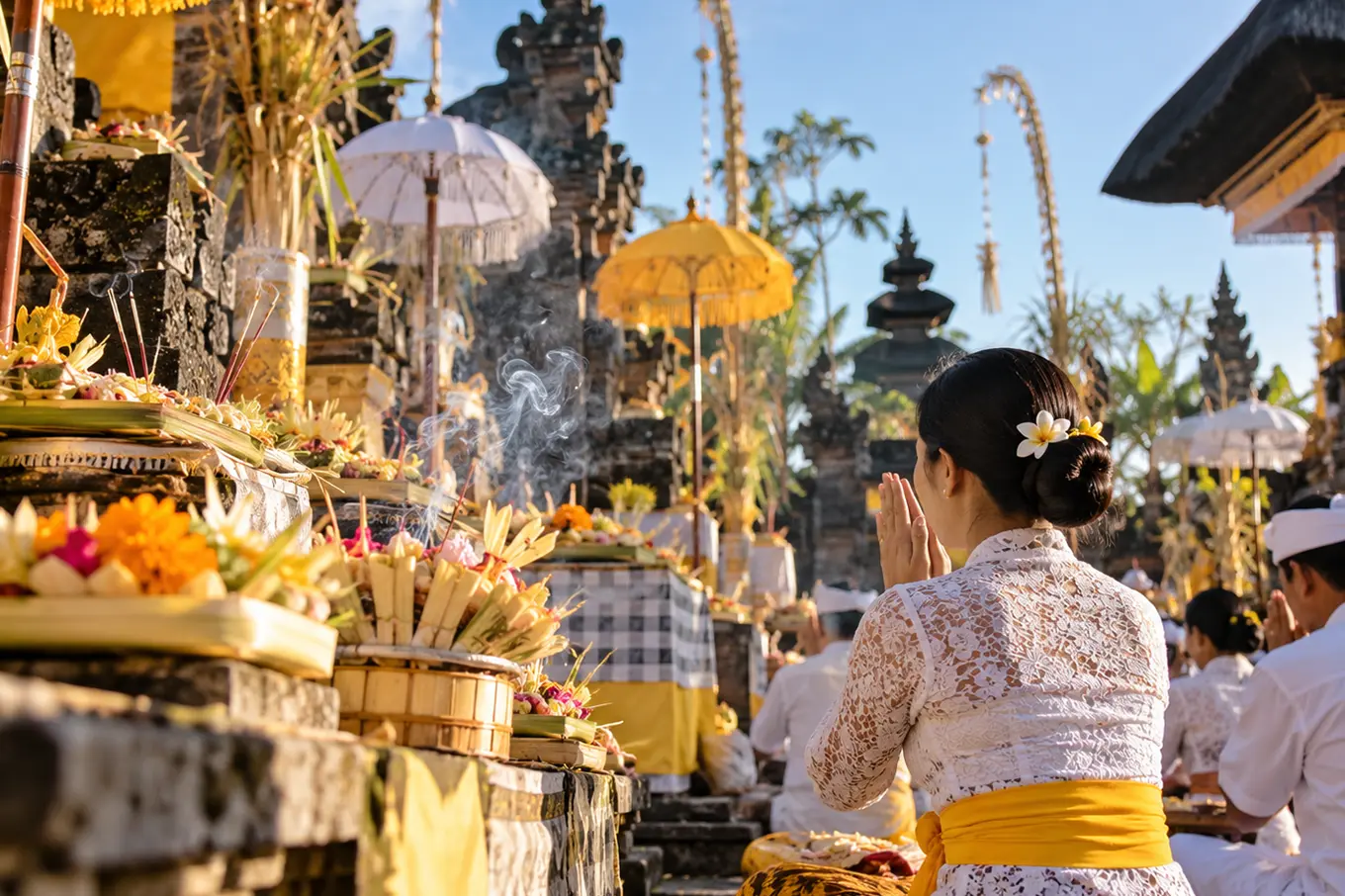
Pagerwesi is celebrated through prayers, offerings, and religious activities at temples and family shrines. While each community may have its own customs, the main purpose remains the same: expressing devotion and strengthening spiritual awareness.
Common traditions during Pagerwesi Bali include:
-
Offering prayers: Devotees pray for spiritual protection, wisdom, and guidance.
-
Preparing banten: Families arrange traditional offerings using flowers, fruits, and other ceremonial materials.
-
Visiting temples: Many people visit local temples to participate in prayers and religious observances.
-
Gathering with family: Relatives may come together to pray and maintain family religious traditions.
-
Reflecting on spiritual values: Devotees consider how knowledge and religious teachings can guide their daily lives.
The atmosphere can vary depending on the location. Some temples and communities may hold more elaborate ceremonies, while other families observe the day through prayers at home.
Travelers exploring Bali during Pagerwesi may notice traditional clothing, offerings, and increased religious activity around temples. These customs provide an opportunity to learn about the island's spiritual heritage, provided visitors observe ceremonies respectfully.
What Do Balinese People Do on Pagerwesi?
On Pagerwesi Bali, many Balinese Hindus focus on prayer, spiritual reflection, and maintaining their connection with religious teachings. The activities often begin with preparing offerings and visiting a family shrine or temple.
Families may pray together and ask for protection against negative influences. They may also express gratitude for the knowledge and guidance that help them make responsible choices. These practices reflect the belief that spiritual strength must be maintained through regular devotion and good conduct.
Preparing offerings is another important activity. Flowers, incense, fruits, and carefully arranged ceremonial items are used according to family and local traditions. Each offering represents devotion and respect rather than serving as decoration alone.
Some communities also use the occasion to reinforce religious values among younger family members. Parents and elders can explain the meaning of Pagerwesi and encourage children to respect traditions, develop good character, and understand the importance of spiritual knowledge.
The specific activities are not identical throughout Bali. If you visit during Pagerwesi, you may see different forms of observance depending on the village or temple. Asking local residents about their customs can help you understand the celebration more accurately.
What Is the Difference Between Pagerwesi and Galungan?
Pagerwesi and Galungan are both important Hindu celebrations in Bali, but they have different meanings and spiritual focuses.
Galungan celebrates the victory of dharma, or righteousness, over adharma, or unrighteousness. It is associated with the triumph of good over evil and the importance of maintaining moral and spiritual balance. During Galungan, families decorate their homes with penjor, visit temples, and make offerings.
In contrast, Pagerwesi emphasizes strengthening spiritual knowledge and building inner protection. Its symbolism encourages devotees to develop wisdom and discipline to resist negative influences.
The two celebrations also occur on different days in the Balinese Pawukon calendar. Galungan takes place on Wednesday Kliwon Dungulan, while Pagerwesi falls on Wednesday Kliwon Sinta.
Although their central themes differ, both celebrations reinforce the importance of religious devotion, family traditions, and positive behavior. They are valuable opportunities for Balinese Hindus to reconnect with spiritual teachings and preserve their cultural heritage.
Discover Balinese Traditions During Pagerwesi
Pagerwesi Bali offers a meaningful way to understand how Balinese Hindu traditions emphasize spiritual protection, knowledge, and inner strength. Through prayers, offerings, and family gatherings, the celebration reminds devotees to maintain wisdom and live according to positive values.
If you visit Bali, you can stay at Alzeto Co Living, one of the co-living spaces in Bali for tourism who want to relax and connect. It can be a comfortable place to stay while exploring the island's cultural traditions, discovering local communities, and experiencing the spiritual side of Bali.
Published on 16 October 2026