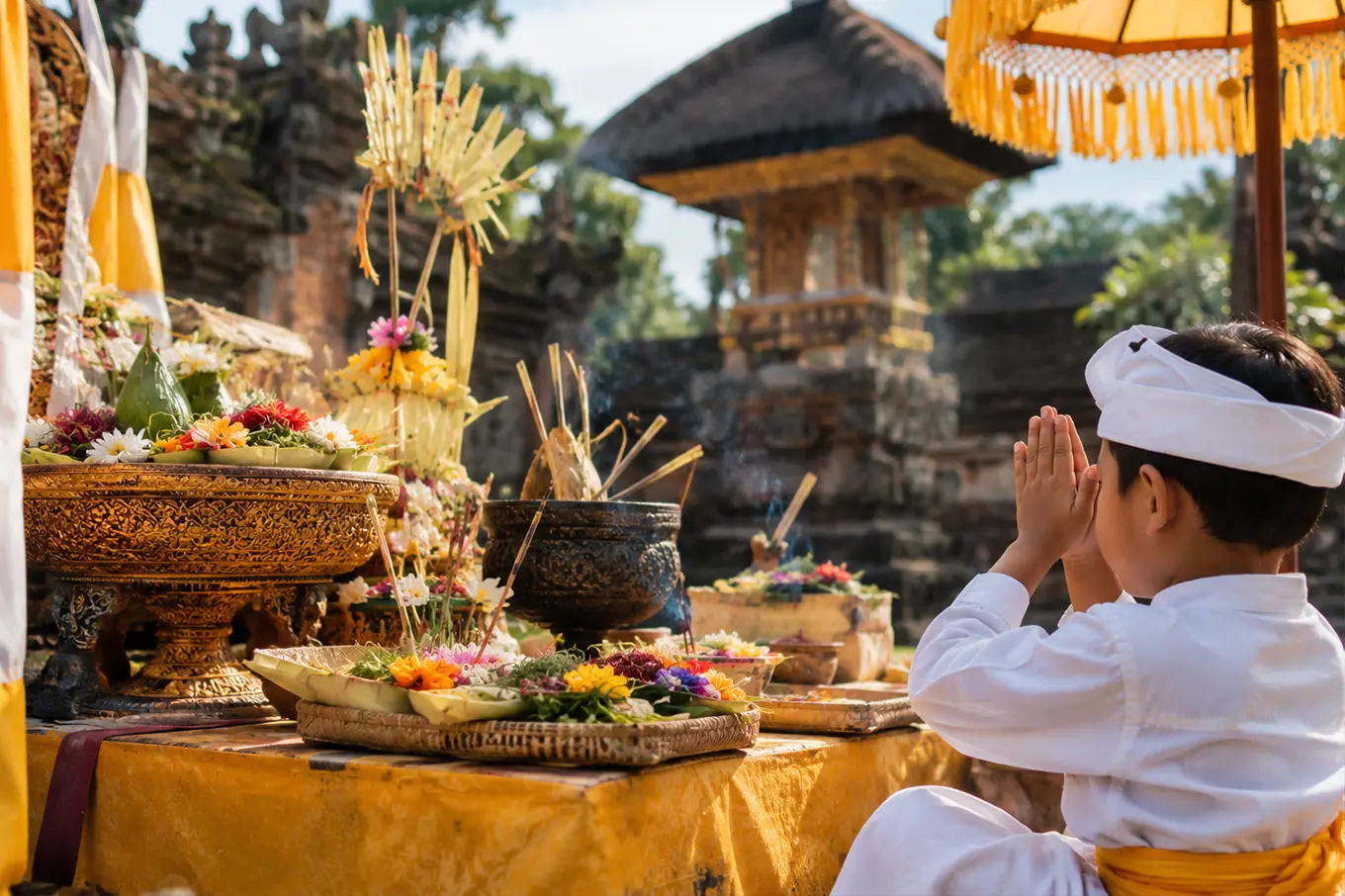
Bali is known for its unique traditions, spiritual beliefs, and ceremonies that remain an important part of everyday life. Among these traditions, Otonan holds a special place in Balinese Hindu culture. Unlike a birthday celebration based on the Gregorian calendar, this ceremony follows the traditional Balinese calendar and focuses on a person's spiritual well being, gratitude, and connection with God.
For visitors who want to understand Balinese culture beyond its beaches and temples, learning about otonan bali offers an opportunity to appreciate the island's spiritual heritage. The ceremony brings families together to pray, make offerings, and express hopes for a person's health, happiness, and spiritual growth. Although the rituals may vary between families, the central meaning remains closely connected to gratitude and maintaining harmony in life.
What Is Otonan in Bali?
Otonan is a traditional Balinese Hindu birthday ceremony that marks a person's birth according to the Balinese Pawukon calendar, a 210-day calendar used to determine auspicious days and religious observances. Rather than celebrating a birthday every 365 days, Balinese Hindus observe this important milestone every 210 days.
The word refers to a person's birth anniversary within this traditional calendar system. During otonan bali, family members usually gather at home to perform prayers and present offerings as a way of expressing gratitude for the person's life.
This ceremony is not simply a birthday party. It has a spiritual meaning that emphasizes the importance of living responsibly, maintaining good behavior, and respecting the relationship between humans, nature, and the divine.
The celebration may be simple or elaborate, depending on family traditions, personal circumstances, and local customs. Some families conduct a modest ceremony at home, while others invite a priest or religious leader to guide the prayers. Regardless of its scale, Otonan remains a meaningful tradition passed from one generation to another.
What Is the Purpose of the Otonan Ceremony?
The primary purpose of Otonan is to express gratitude for life and pray for continued protection, health, and well being. In Balinese Hindu belief, human life is part of a broader spiritual relationship involving God, ancestors, other living beings, and the natural environment.
Through this ceremony, families hope to support a person's spiritual development and encourage positive qualities throughout their life. It also provides an opportunity to reflect on personal responsibilities and the importance of maintaining harmony.
Several purposes are associated with otonan bali, including:
-
Expressing gratitude: Families give thanks for the person's life and the opportunity to continue growing.
-
Praying for protection: Prayers ask for safety, health, and guidance in daily life.
-
Supporting spiritual balance: The ceremony encourages individuals to maintain harmony in their thoughts, actions, and relationships.
-
Strengthening family bonds: Relatives gather to participate in prayers and preserve shared traditions.
-
Passing down cultural values: Younger generations learn about Balinese Hindu beliefs and ceremonial practices.
For many Balinese families, Otonan is also a reminder that a birthday is not only about getting older. It is an opportunity to appreciate life and consider how to live with greater awareness and responsibility.
How Often Is Otonan Celebrated?
Otonan is traditionally celebrated every 210 days, following the Pawukon calendar. This means a person may celebrate this spiritual birthday approximately twice within a Gregorian calendar year, although the exact dates depend on the calendar.
The Pawukon system consists of 30 weeks, each lasting seven days. These weeks have traditional names and are used alongside other Balinese calendar systems to determine religious observances and auspicious occasions.
Because of this system, the date of otonan bali does not remain the same on the Gregorian calendar. Families generally consult a Balinese calendar or local religious guidance to identify the appropriate day for the ceremony.
Some families observe every cycle with a simple prayer and offering, while others may organize more elaborate celebrations for particular milestones. The scale of the event depends on family customs, available resources, and individual preferences.
Understanding the 210 day cycle helps visitors recognize why Balinese birthday traditions differ from those commonly practiced in other countries.
What Happens During an Otonan Ceremony?
The activities during Otonan generally involve prayer, offerings, and blessings. Although specific practices differ between households, the ceremony usually takes place at the family home or a family shrine.
Before the ceremony begins, family members prepare the necessary offerings and arrange a suitable space for prayer. A priest or family member familiar with the rituals may lead the proceedings, depending on the family's tradition.
Typical activities include:
-
Preparing offerings: Family members arrange flowers, food, incense, and other ceremonial items.
-
Offering prayers: Participants pray to God and express gratitude for the person's life.
-
Receiving blessings: The person celebrating their Otonan may receive prayers and blessings from family members or a religious leader.
-
Participating in purification rituals: Depending on family customs, certain rituals may be performed to symbolize spiritual cleansing and renewal.
-
Gathering with family: Relatives come together to share the occasion and reinforce their cultural and spiritual connections.
Not every ceremony follows precisely the same sequence. The rituals may depend on the person's age, family tradition, and local religious practices.
For visitors, it is important to remember that Otonan is a religious occasion rather than a tourist performance. Anyone invited to observe should follow the family's guidance, dress respectfully, and ask permission before taking photographs.
What Offerings Are Used During Otonan?
Offerings play an important role in otonan bali because they represent devotion, gratitude, and respect toward the divine. Known broadly as banten in Balinese Hindu tradition, these offerings can contain different materials depending on the purpose of the ritual and the customs followed by the family.
Common items used during Otonan include:
-
Canang sari: Small offerings arranged with flowers, leaves, and other materials to express gratitude and devotion.
-
Flowers: Different flowers are used as part of the offerings and carry symbolic significance in Balinese Hindu worship.
-
Incense: Burning incense accompanies prayers and forms part of many daily and ceremonial offerings.
-
Food and fruit: Prepared food, rice, and fruit may be included as expressions of gratitude and respect.
-
Holy water: Used in many Balinese Hindu rituals for blessings and purification.
-
Traditional cakes and other offerings: Certain families prepare additional foods or ceremonial items according to their traditions.
The exact offerings are not identical in every household. Their types, arrangements, and quantities depend on the ceremony's requirements and the guidance of family members or religious practitioners.
More than their physical appearance, these offerings reflect the spiritual values behind Otonan. Preparing them allows family members to participate actively in the ceremony and maintain traditions that have been practiced across generations.
Experience the Cultural Traditions of Bali
Otonan is an important part of Balinese Hindu life, combining gratitude, prayer, family connections, and cultural heritage. Celebrated every 210 days, this traditional birthday ceremony reminds people to appreciate their lives, seek spiritual guidance, and maintain harmony with the world around them.
Understanding otonan bali also provides visitors with a deeper appreciation of the island's traditions beyond its popular tourist attractions. From preparing offerings to participating in family prayers, every aspect of the ceremony reflects values that continue to shape Balinese society.
If you visit Bali, you can stay at Alzeto Co Living, one of the co-living spaces in Bali for tourism who want to relax and connect. It is a place to enjoy your stay while discovering the island's cultural heritage, local traditions, and unique way of life.
Published on 16 October 2026