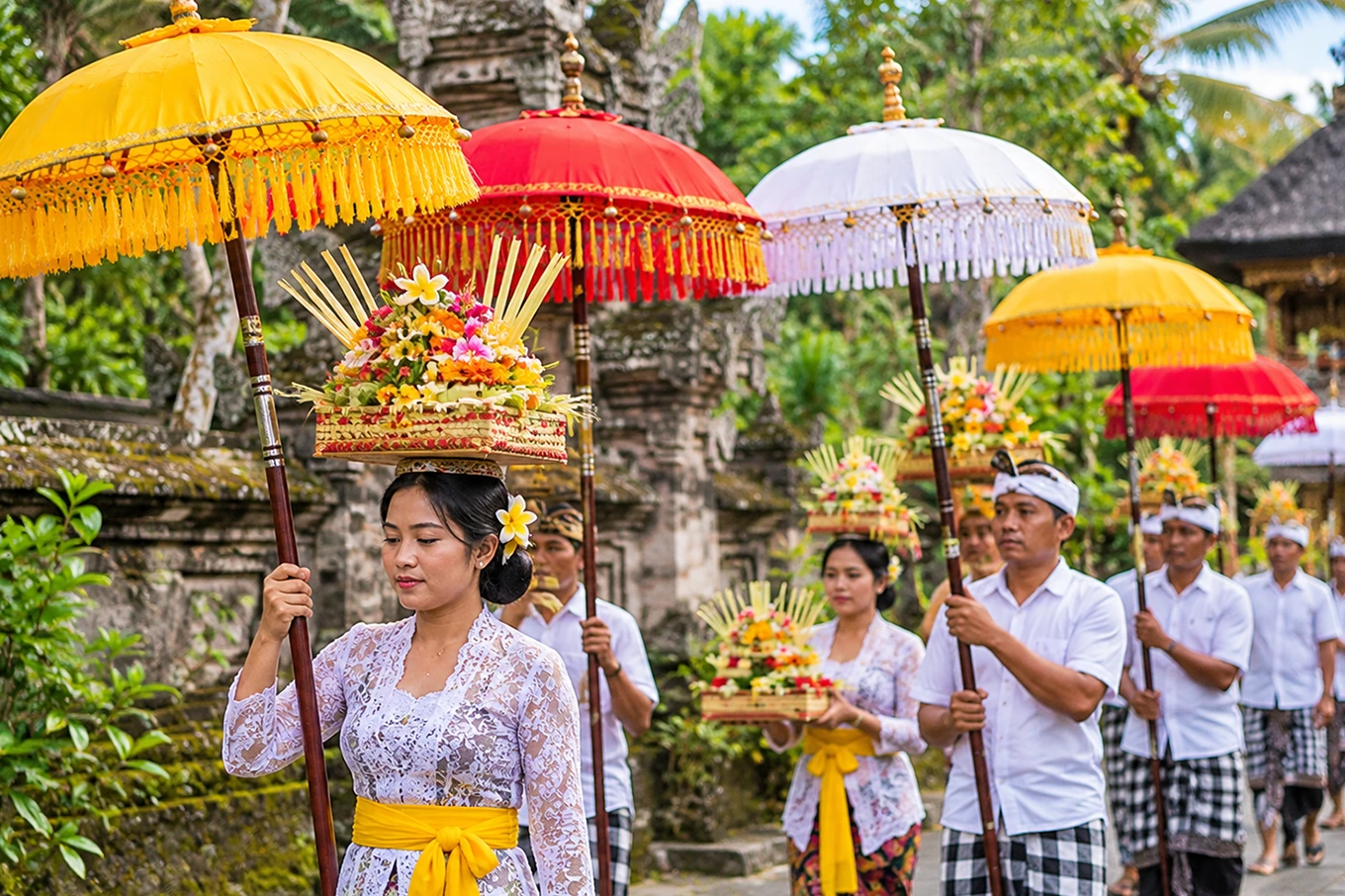
Bali, the Island of the Gods, is home to thousands of temples where daily rituals are still part of local life. Before visiting, learn the Bali temple etiquette sarong sash offerings official tourism guidelines that locals and authorities expect visitors to follow. Understanding basic Bali customs and etiquette makes your trip smoother and shows respect to the Balinese people. This guide explains Bali temple etiquette sarong sash offerings official tourism rules in five simple questions.
Visiting a temple in Bali is more than just sightseeing because these sacred places hold deep spiritual and cultural meaning for the local community. Visitors are expected to dress appropriately, behave respectfully, and follow certain traditions while exploring temple grounds.
Simple practices, such as wearing a sarong and sash, avoiding restricted areas, and understanding the purpose of religious offerings, can help you show respect for local beliefs. By learning these customs before your visit, you can enjoy a more meaningful experience while preserving the cultural values that make Bali unique.
What is the Proper Etiquette for Visiting Temples in Bali?
The core of Bali temple etiquette sarong sash offerings official tourism advice is simple: dress modestly, behave quietly, and respect rituals. Cover your shoulders, tie a sarong around your waist, and fasten a sash on top. Speak softly, silence your phone, and follow instructions from temple staff or the pemangku (temple priest).
Many travelers search for Bali temple etiquette sarong sash offerings official tourism information before their trip. Bali’s provincial government has published official do’s and don’ts for foreign visitors, including proper dress at holy sites. Following Bali temple etiquette sarong sash offerings official tourism rules is not just polite; it is expected.
Why Do You Need to Wear a Sarong and Sash in Bali Temples?
In Balinese Hinduism, a temple is a sacred space where the gods are believed to descend. The sarong (kamen) shows humility and purity, while the sash (selendang) symbolizes self control and keeps negative thoughts away. Wearing both is the foundation of Bali temple etiquette sarong sash offerings official tourism guidance.
Temples like Uluwatu and Tanah Lot usually lend or rent sarongs and sashes at the entrance, but bringing your own is more hygienic. Under Bali temple etiquette sarong sash offerings official tourism recommendations, both men and women should wear them, even with long trousers.
What are the Important Bali Customs and Etiquette?
Beyond temples, Bali customs and etiquette shape daily life across the island:
-
Respect canang sari. Never step on these small palm leaf offerings; it is a key point in Bali temple etiquette sarong sash offerings official tourism guides.
-
Use your right hand when giving or receiving items.
-
Never touch someone’s head, the most sacred part of the body.
-
Dress modestly away from the beach.
-
Respect Nyepi, the Day of Silence, by staying indoors.
Understanding Bali customs and etiquette helps you connect with locals. Balinese people appreciate visitors who learn Bali temple etiquette sarong sash offerings official tourism basics and say suksma (thank you).
What Should Tourists Avoid Doing Inside Bali Temples?
Some behaviors clearly break Bali temple etiquette sarong sash offerings official tourism rules. Avoid:
-
Climbing shrines or walls for photos.
-
Standing higher than a priest or worshippers.
-
Touching or stepping over offerings.
-
Entering while menstruating or with an open wound, which is traditionally prohibited.
-
Public affection, loud talking, or flying drones without permission.
Breaking Bali customs and etiquette can offend the community and lead to fines or even deportation. Authorities have deported foreigners for disrespect at sacred sites, so Bali temple etiquette sarong sash offerings official tourism standards apply to everyone.
Can Tourists Enter All Temples in Bali?
Not always. Temples are divided into the outer area (jaba sisi), middle area (jaba tengah), and inner sanctum (jeroan). Tourists are usually welcome in the outer areas, while the inner sanctum is often reserved for worshippers. Family temples are private, and some areas close during ceremonies, when Bali temple etiquette sarong sash offerings official tourism rules become even stricter.
Always read the Bali temple etiquette sarong sash offerings official tourism notices at the entrance. Visitor friendly temples include Tanah Lot, Uluwatu, Ulun Danu Beratan, Tirta Empul, and Besakih. A local guide can help you follow Bali temple etiquette sarong sash offerings official tourism expectations correctly.
A simple rule of Bali customs and etiquette: when in doubt, ask politely.
Respecting Bali temple etiquette sarong sash offerings official tourism guidelines lets you enjoy Bali’s temples while honoring local faith. Bring your own sarong and sash, and watch your step around offerings. Preparing with Bali temple etiquette sarong sash offerings official tourism tips turns every visit into a meaningful experience.
If you visit Bali, you can stay at Alzeto Co Living, one of the co-living spaces in Bali for tourists who want to relax and connect. It can be a comfortable place to stay while exploring the island’s cultural traditions, discovering local communities, and experiencing the spiritual side of Bali.
Published on 24 November 2026

