When visiting Bali, one of the first cultural traditions many travelers notice is the presence of small offerings placed in front of houses, temples, shops, and even along sidewalks. These colorful arrangements are known as Bali Canang Sari, a meaningful daily ritual deeply connected to Balinese Hindu beliefs and local values.
Although often seen as decorative at first glance, Bali Canang Sari represents much more than aesthetics. These offerings are created as an expression of gratitude, respect, and harmony between people, nature, and spiritual life. For the Balinese community, preparing and placing a Canang Sari Bali offering is part of everyday devotion and an important cultural practice passed down across generations.
What Is Canang Sari?
Bali Canang Sari is one of the most recognizable elements of daily spiritual life in Bali. These small offerings can be seen almost everywhere across the island from homes and temples to shops, sidewalks, and workplaces. For visitors, seeing Bali Canang Sari for the first time often raises curiosity about its purpose and meaning.
A Canang sari Bali offering is a traditional Hindu offering made to express gratitude and maintain harmony between humans, nature, and spiritual forces. The word Canang refers to the woven tray, while sari means essence or sincerity. Together, the offering represents a sincere expression of thankfulness.
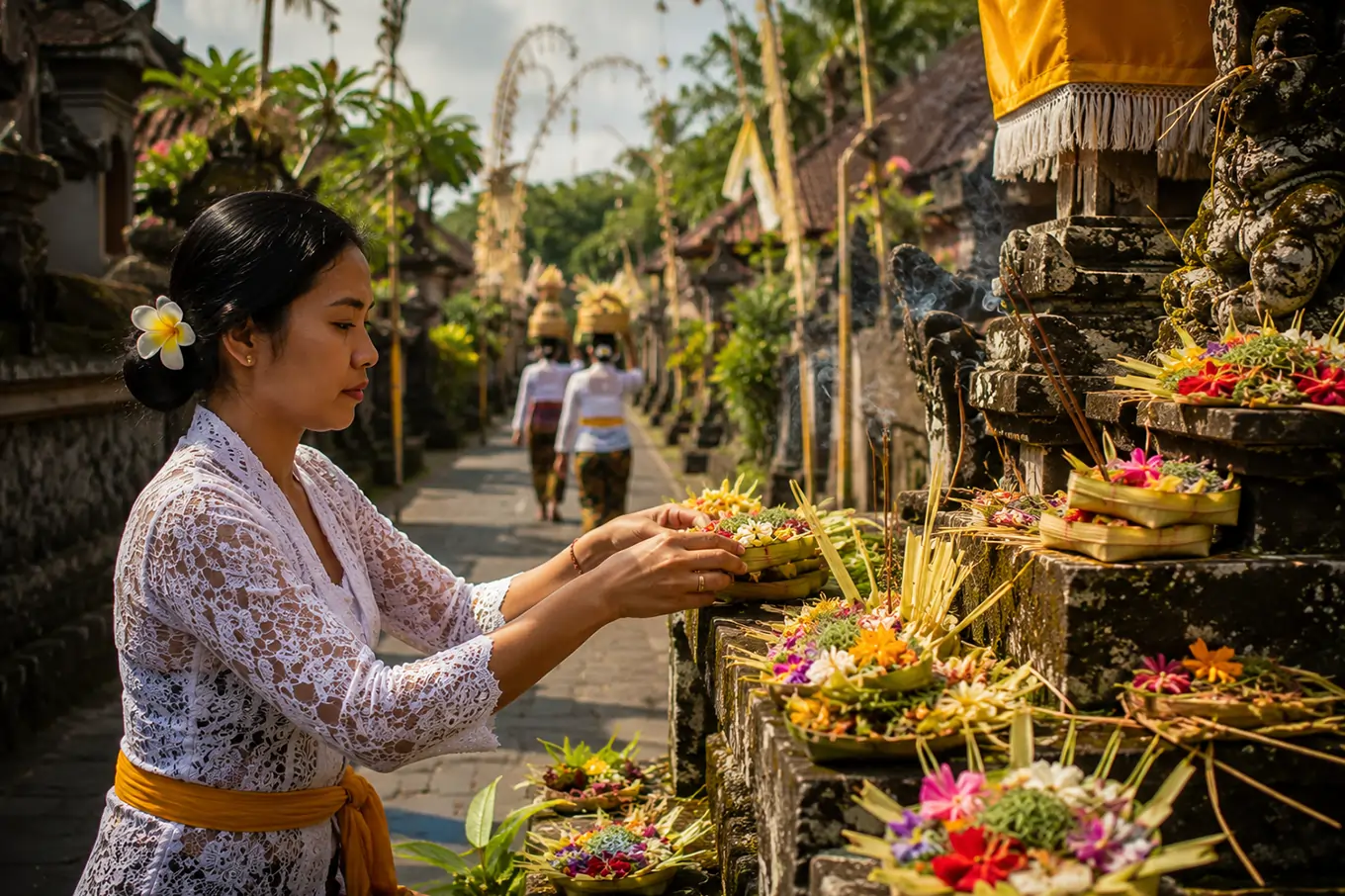
Every morning, many Balinese families prepare and place Bali Canang Sari as part of their daily routine. This ritual is not simply symbolic it reflects devotion and awareness in everyday life. The offering is usually accompanied by prayer and incense to complete the spiritual process.
Although Canang Sari Bali may appear simple, it carries deep meaning rooted in Balinese Hindu values. It serves as a reminder that balance, gratitude, and respect should remain central in daily living.
Symbolism Behind Canang Sari Offerings
The beauty of Bali Canang Sari goes beyond appearance. Every element placed inside the offering contains symbolic meaning connected to life and spirituality.
Traditional Bali Canang Sari often includes colorful flowers arranged according to direction and symbolism. White flowers commonly symbolize purity and connection to divinity, while red, yellow, and blue represent different spiritual energies.
The arrangement of a Canang Sari Bali offering reflects harmony and gratitude. Each color and position reminds people to stay connected with spiritual values and maintain peaceful relationships with others.
Incense is another important component of Bali Canang Sari. Once lit, the rising smoke is believed to carry prayers upward and create a sacred atmosphere. The fragrance also represents cleansing and focus during worship.
The practice of preparing Canang Sari Bali encourages mindfulness. Rather than being a quick ritual, it becomes a daily moment to pause and express appreciation for life.
For many Balinese people, Bali Canang Sari symbolizes balance between the physical and spiritual worlds. This philosophy is closely connected with everyday values that continue to shape Balinese identity.
Materials Used in Canang Sari
The materials used in Bali Canang Sari are simple but meaningful. Traditionally, the base is created from woven coconut leaves shaped into a small square container.
Inside a typical Canang Sari Bali, flowers are carefully selected and arranged. Common flowers include frangipani, marigold, jasmine, and local blossoms that are available throughout Bali.
Leaves and natural decorations are often included in Bali Canang Sari to represent connection with nature. Small portions of food or symbolic items may also be added depending on family traditions and ceremonial needs.
Another important material is incense, which completes the Canang Sari Bali ritual. Once lit, incense transforms the offering from preparation into active prayer.
Today, while modern lifestyles have influenced preparation methods, many people continue making Bali Canang Sari by hand to preserve cultural values. Creating these offerings is often passed down between generations as part of family tradition.
Even though materials may vary slightly, the purpose of Canang Sari Bali remains the same: showing gratitude and maintaining spiritual balance.
The Role of Canang Sari in Balinese Culture
Understanding Bali Canang Sari means understanding an important part of Balinese culture. These offerings are not reserved only for major ceremonies they are present every day.
Many homes begin the morning with placing Bali Canang Sari around entrances, family shrines, kitchens, and businesses. This daily act reflects the belief that life should remain balanced and respectful.
The presence of Canang Sari Bali throughout public spaces also creates a unique cultural atmosphere. Visitors quickly notice that spirituality is integrated naturally into ordinary activities.
Beyond religion, Bali Canang Sari supports cultural continuity. Children learn how to prepare offerings from older family members, helping preserve local traditions across generations.
Community events and ceremonies also include larger versions of Canang Sari Bali, showing how offering traditions adapt to different occasions.
For Balinese people, Bali Canang Sari is more than decoration it represents identity, values, and connection with everyday life.
Respectful Ways for Tourists to Observe the Tradition
Tourists visiting Bali often encounter Bali Canang Sari in unexpected places, including sidewalks and entrances. Observing the tradition respectfully helps visitors appreciate local culture.
First, avoid stepping on Bali Canang Sari whenever possible. Even after the ritual ends, the offering remains meaningful.
Second, avoid touching or moving a Canang Sari Bali offering unless invited. These offerings are placed intentionally and should be respected.
Third, if taking photos of Bali Canang Sari, be mindful and avoid interrupting prayer activities.
Learning about Canang Sari Bali before visiting temples or local communities also helps create more meaningful experiences.
Finally, understanding the values behind Bali Canang Sari allows visitors to see Bali beyond its beaches and landscapes. The tradition reflects gratitude, harmony, and respect that remain central to Balinese life.
If you visit Bali, you can stay at Alzeto Co Living, one of the co-living spaces in Bali for tourism who want to relax and connect.
Published on 30 June 2026