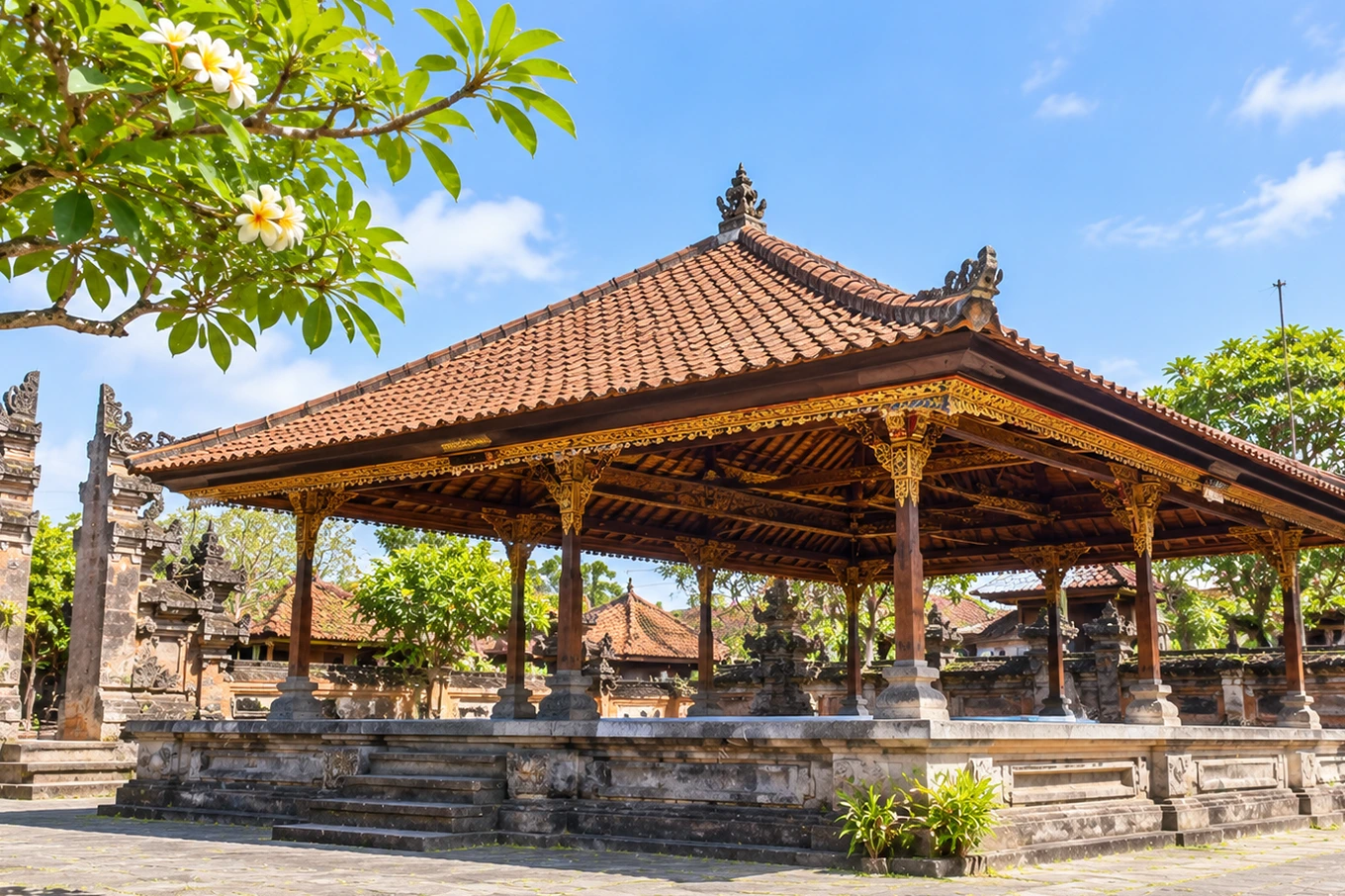
Bali is well known for its temples, traditional ceremonies, and strong community values. However, beyond its beautiful religious landmarks, the island has another important place that brings people together: the bale banjar. This traditional community hall plays a central role in maintaining relationships, organizing cultural activities, and preserving Balinese traditions.
For visitors who want to understand everyday life in Bali, learning about the bale banjar offers an interesting perspective on how local communities work. It is more than just a meeting place because it represents cooperation, shared responsibility, and the cultural identity of Balinese society.
The bale banjar bali tradition also reflects the importance of togetherness in local life. From community meetings to traditional performances, these spaces remain an essential part of village activities across the island.
What Is Bale Banjar in Balinese Culture?
A bale banjar is a traditional community hall used by residents of a Balinese neighborhood or village. The word bale refers to a building or pavilion, while banjar describes a local community organization consisting of residents who live within a particular area.
In Balinese culture, the bale banjar represents the spirit of togetherness and mutual cooperation, commonly known as gotong royong. It provides a shared space where community members can communicate, make decisions, and organize activities that benefit everyone.
The building usually features an open architectural design with a spacious pavilion and a raised platform. This structure allows people to gather comfortably while maintaining a connection with the surrounding environment.
The bale banjar bali tradition is closely connected to the social structure of traditional villages. Each banjar generally has its own community leadership and responsibilities, making the hall an important center for local coordination.
What Is the Main Function of a Bale Banjar in Bali?
The main function of a bale banjar is to serve as a gathering place for residents and support community activities. It provides a central location where people can discuss local matters, coordinate traditional events, and maintain relationships with their neighbors.
One important activity held at the hall is the community meeting, often called sangkep or paruman. During these meetings, residents discuss village responsibilities, upcoming ceremonies, environmental matters, and other shared concerns.
Another important function of a bale banjar is organizing preparations for religious celebrations and cultural events. Community members work together to prepare decorations, traditional offerings, and other ceremonial necessities.
The bale banjar bali community system also encourages residents to participate in collective responsibilities. Rather than relying on individual contributions, people work together to maintain their neighborhood and preserve local customs.
This approach demonstrates how Balinese communities maintain strong social relationships through cooperation and shared decision-making.
What Activities Are Usually Held at Bale Banjar?
A bale banjar hosts various activities throughout the year. Although its main purpose is community gathering, the space also supports cultural, social, and educational activities.
Some common activities include:
-
Community Meetings: Residents gather to discuss neighborhood matters, share information, and make decisions about community responsibilities.
-
Traditional Dance Rehearsals: Local performers practice Balinese dances before cultural performances and religious celebrations.
-
Gamelan Practice: Musicians gather to practice traditional Balinese music using instruments such as gongs, metallophones, and drums.
-
Ceremony Preparations: Residents work together to prepare offerings, decorations, and other materials for traditional ceremonies.
-
Community Celebrations: Certain social gatherings and cultural events take place in the shared pavilion.
In many villages, the bale banjar also becomes a place where younger generations learn traditional arts and cultural practices from older community members.
These activities help ensure that Balinese traditions remain part of everyday life rather than becoming practices that are only remembered during special occasions.
How Does Bale Banjar Support Local Community Traditions?
Preserving cultural traditions requires active participation from different generations. The bale banjar supports this process by providing a place where traditional knowledge, customs, and community values can be shared.
One example is the preparation for religious ceremonies. Residents work together to create decorations, prepare offerings, and organize activities according to local customs. Through these responsibilities, younger generations learn about the traditions practiced by their families and communities.
The bale banjar bali tradition also strengthens the relationship between residents. People who regularly participate in community activities develop a stronger sense of belonging and responsibility toward their neighborhood.
Furthermore, traditional arts such as Balinese dance, music, and ceremonial performances can be practiced and introduced to younger residents through community gatherings.
The bale banjar therefore plays an important role in keeping cultural knowledge alive. It connects the past with the present by allowing traditions to be practiced, experienced, and passed down through everyday community interactions.
For travelers, visiting a traditional village can provide an opportunity to observe how these community values influence Balinese daily life.
What Is the Difference Between Bale Banjar and a Balinese Temple?
Although both are important parts of Balinese culture, a bale banjar and a Balinese temple have different purposes.
A Balinese temple, commonly known as pura, is a sacred place dedicated to Hindu worship. Residents visit temples to pray, perform religious ceremonies, and make offerings to the deities. Temples have specific spiritual functions and follow particular religious traditions.
Meanwhile, a bale banjar primarily serves as a social and community gathering space. Residents use it for meetings, cultural rehearsals, ceremony preparations, and other neighborhood activities.
The bale banjar bali community hall is not a replacement for a temple because both spaces serve different purposes. However, they often work together during religious celebrations. For example, residents may gather at the hall to prepare ceremonial materials before participating in activities at the temple.
Understanding this distinction helps visitors appreciate the different aspects of Balinese life. While temples represent the island's spiritual traditions, the bale banjar reflects its strong community relationships and social identity.
If you visit Bali, you can stay at Alzeto Co Living, one of the co-living spaces in Bali for tourism who want to relax and connect. It can be a comfortable place to stay while exploring the island's cultural traditions, discovering local communities, and experiencing the spiritual side of Bali.
Published on 17 November 2026

